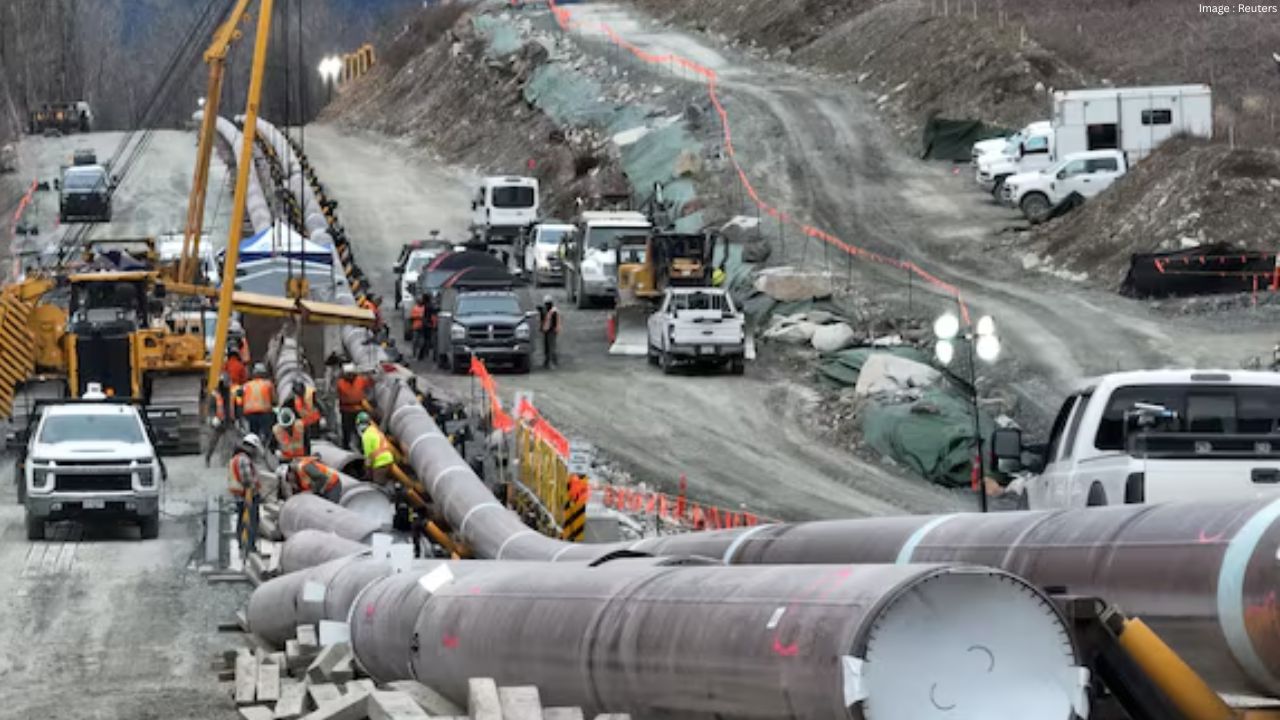
Canada’s Trans Mountain oil pipeline system is expected to reach full capacity much earlier than originally planned, driven by rising global energy demand and ongoing disruptions linked to the Middle East conflict. The pipeline, which transports oil from Edmonton, Alberta, to Burnaby, British Columbia, is now projected to operate at full capacity as early as April and May.
This development marks a significant milestone for the pipeline, which was previously expected to reach full utilization between 2027 and 2028. Just a year ago, the system was operating at around 80 to 90 per cent capacity, but recent global events have accelerated demand for Canadian oil exports.
Industry experts say the surge in demand is largely due to supply constraints caused by geopolitical tensions in the Middle East. Restrictions in key oil transit routes, including the Strait of Hormuz, have disrupted global supply chains, pushing countries—especially in Asia—to seek alternative and reliable energy sources.
Asian markets, including China and other regional economies, have shown increased interest in Canadian oil. As energy shortages impact global markets, buyers are turning to North America to secure stable supplies, making Canada a key player in meeting this demand.
The Trans Mountain pipeline system, which includes both the original line built in the 1950s and its recent expansion completed in 2024, currently has the capacity to transport approximately 890,000 barrels of oil per day. With the system nearing full capacity, operators are now exploring ways to further increase throughput.
Plans are already underway for additional expansions. One proposal involves the use of drag-reducing agents to boost capacity by up to 10 per cent. This project is expected to begin construction later this year and could be completed by early 2027.
A second, more extensive expansion plan includes the installation of additional pumping stations along the pipeline route. This project aims to significantly increase overall capacity, with a target completion timeline of 2028, subject to regulatory approvals.
Experts note that even if tensions in the Middle East ease, global energy markets may take time to stabilize. In the meantime, Canada’s energy infrastructure, including the Trans Mountain pipeline, is playing an increasingly important role in supporting international supply needs.
Overall, the early move to full capacity highlights both the growing importance of Canadian oil in global markets and the impact of geopolitical events on energy demand worldwide.