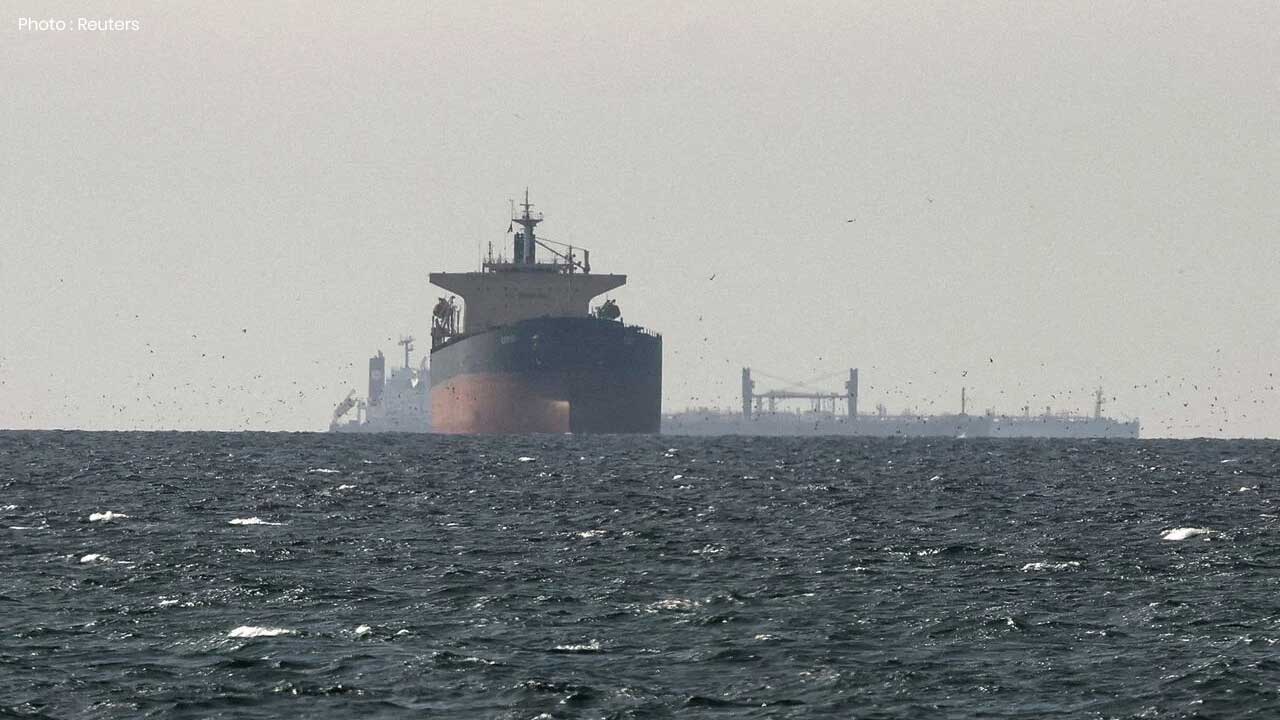
Canada and several global allies have said they are ready to help ensure safe passage through the Strait of Hormuz as tensions continue to rise due to the ongoing Iran war. In a joint statement with countries including the United Kingdom, France, Germany, Italy, the Netherlands, and Japan, the nations called for an immediate stop to attacks on civilian infrastructure, especially oil and gas facilities.
The countries said they are willing to take part in “appropriate efforts” to keep the Strait of Hormuz safe. However, they did not clearly explain what actions they may take. The Strait of Hormuz is one of the most important sea routes in the world, with nearly one-fifth of global oil and gas passing through it.
This statement comes just days after U.S. President Donald Trump urged NATO and other allies to send warships to protect oil tankers in the region. He had earlier expressed frustration that many countries, including Japan, were not ready to support the move. However, Trump later said that Japan may now be stepping forward, especially with discussions about sending minesweepers.
Trump also pointed out that many countries depend heavily on oil passing through the Strait of Hormuz, and said it is only fair that they help protect it. He suggested that while the U.S. has been leading efforts, other nations should also take responsibility.
Canada’s Foreign Affairs Minister Anita Anand said that NATO did not receive any formal request from the United States for help in the Gulf region. At the same time, she and Defence Minister David McGuinty said Canada is open to supporting allies and countries in the Middle East if needed.
The situation in the region has become more serious after recent U.S.-Israeli airstrikes on Iran. In response, Iran reduced traffic through the Strait of Hormuz and targeted major fuel shipping areas. This led to a sudden rise in global oil prices and increased concerns about supply disruptions.
Defence Minister McGuinty said Canada was not consulted before the conflict began and does not plan to join the war directly. However, he did not rule out possible military support if nearby countries request help. He added that the situation is very risky and changes quickly, making it hard to get clear information.
Meanwhile, political reactions in Canada have also emerged. Conservative MP Shuv Majumdar criticized Prime Minister Mark Carney for joining the joint statement later than other countries. He accused the government of not acting quickly during an important global crisis.
Anita Anand also shared that Canada is working on plans to reduce tensions. She said she will present a “document of principles” to G7 officials in Paris to encourage peaceful discussions and possible solutions. The Canadian government says its main focus remains the safety of its citizens in the region and supporting efforts to avoid further conflict.
As the Iran war continues, the global focus remains on keeping the Strait of Hormuz open and secure, as any disruption could impact energy supplies and economies around the world.