Photo:AP
Introduction: A Name Restored After Three Decades of Silence
In a powerful and poignant resolution to a mystery that has spanned more than three decades, authorities in Missouri have finally given a name to an unknown man pulled from the waters of the Mississippi River in 1994. For 31 years, he was simply "John Doe," a silent figure in an unmarked grave, his story lost to time. Now, through a remarkable convergence of determined police work and the revolutionary power of forensic genealogy, he has been identified as Benny Leo Olson. This long-awaited breakthrough has not only closed a cold case but has also brought a measure of somber closure to a family that had spent a lifetime grappling with the uncertainty of a loved one's disappearance.
The Discovery: An Unsolvable Puzzle from 1994
The story began on a day in 1994 when a body was discovered floating in the Mississippi River, just south of St. Louis. In an era before the widespread use of DNA databases, investigators were faced with a daunting and ultimately insurmountable task. With the body decomposed by the water, traditional methods of identification proved fruitless. There were no dental records to match, no clear fingerprints to run, and no missing persons reports that seemed to fit the circumstances. The man had no identification on him, leaving investigators with nothing but the silent remains of a life interrupted.
After exhausting all available leads, the case went cold. The unidentified man was laid to rest in an anonymous "John Doe" grave at Friedens Cemetery in St. Louis, his name and story seemingly lost forever. He became one of the tens of thousands of unnamed individuals in morgues and cemeteries across the country, a statistic in a national crisis of the unidentified.
A New Hope: Reopening a Cold Case with Modern Tools
Decades passed, but the file on the Mississippi River John Doe was not entirely forgotten. In a testament to the persistence of law enforcement, the Jefferson County Sheriff's Office decided to reopen the case, driven by the hope that modern science could succeed where the methods of the past had failed.
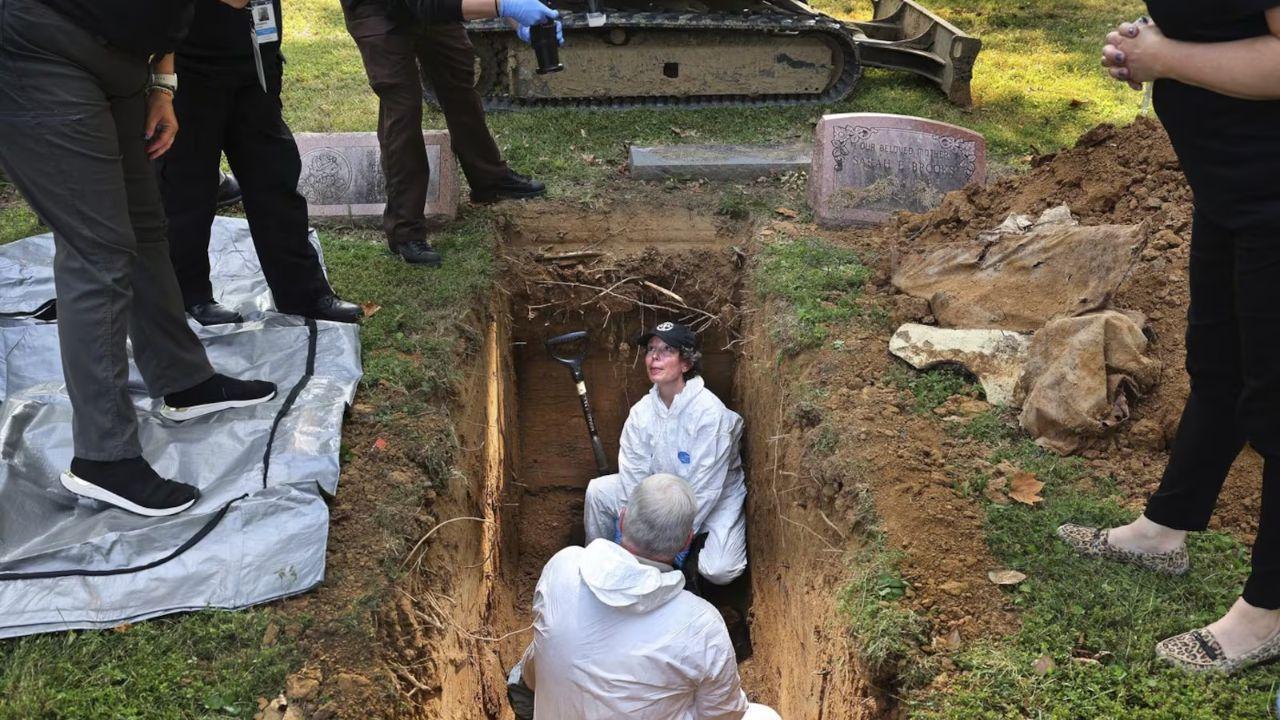
A critical step was taken in September 2024. Investigators, led by forensic anthropologist Lindsay Trammell, made the decision to exhume the remains from Friedens Cemetery. It was a delicate and respectful process, a second chance to give this unknown man his identity back. The goal was to obtain new, higher-quality DNA samples from the bone material that could be analyzed using cutting-edge forensic technology.
The Breakthrough: The Power of Investigative Genetic Genealogy
The DNA samples were sent to a specialized lab, where technicians embarked on a process known as investigative genetic genealogy. This revolutionary technique involves creating a DNA profile of the unidentified person and uploading it to public genealogy databases, where millions of people have voluntarily submitted their own DNA to trace their ancestry. The goal is to find a match, no matter how distant—a second, third, or even fourth cousin who shares a segment of DNA with the John Doe.
In this case, the strategy paid off. The lab found a partial DNA match to a distant relative of the unknown man. This single lead was the key that unlocked the entire mystery. Using this match as a starting point, genealogists were able to build out a vast family tree, painstakingly tracing ancestral lines forward and backward through generations. Through a process of elimination and further research into public records, they narrowed their focus to a specific branch of the family and to a man who had seemingly vanished decades earlier: Benny Leo Olson, who would have been 76 years old today.
The Final Confirmation: A Fingerprint from the Past
While the genealogical evidence was strong, investigators needed a definitive, scientific confirmation. They found it in an unlikely place: a criminal case file from 1980. In a troubled period of his life, Olson had been charged with a serious crime—attempting to hire someone to set fire to his stepmother's house. As part of that investigation, his fingerprints had been taken and preserved.
In a moment of profound irony, this record of a past transgression became the key to restoring his identity in death. The decades-old fingerprints were meticulously compared with the DNA evidence, and the match was confirmed. The John Doe from the Mississippi River was, without a doubt, Benny Leo Olson of Edwardsville, Illinois, a suburb just across the river from where his body was found.
A Life Remembered: The "Perpetual Student" and a Family's Lingering Questions
With his name restored, the silent John Doe once again became a person with a story. His half-sister, Catherine Heston, shared memories of Olson with the St. Louis Post-Dispatch, painting a picture of a complex and intelligent man. She described him as a "perpetual student," someone who was always intellectually curious and had attended several colleges, including St. Louis Community College-Meramec and Southern Illinois University Edwardsville.
However, his life was also shadowed by significant struggles with mental illness. The 1980 arson-for-hire charge was a clear manifestation of a difficult period in his life, hinting at personal turmoil that his family may not have fully understood. For Heston and her family, the news of his identification brought a complex mix of emotions: sadness for the life he lived and the way it ended, but also a profound sense of relief that the years of uncertainty were finally over. "We knew something must have happened," she said, expressing the quiet anguish familiar to so many families of the missing, "but you never really know."
No Foul Play Suspected: A Focus on Closure
The Jefferson County Sheriff's Office has stated that they do not suspect any foul play was involved in Olson's death. While the exact cause and manner of his death are not publicly detailed, the investigation is no longer a search for a potential killer. Instead, it has transitioned into a process of providing final closure for his family, allowing them to finally lay him to rest with the dignity of his own name.
How Science Gives a Voice to the Voiceless
The identification of Benny Leo Olson is a powerful and moving testament to the incredible advancements in forensic science and the unwavering dedication of investigators who refuse to let a case go cold. It demonstrates how modern DNA technology, particularly investigative genetic genealogy, is becoming one of the most powerful tools for solving the most challenging of mysteries. Each time a John or Jane Doe is identified, it does more than just close a file; it restores a person's humanity, gives answers to a grieving family, and offers a ray of hope to the countless other families who are still waiting, still wondering, and still searching for their own lost loved ones.