The Strait of Hormuz crisis is deepening as Iran launched missile attacks against Israel and several targets across the Middle East on Wednesday. The attacks came while multiple ships in the Gulf were struck by unknown projectiles, raising fears of further disruption to global energy supplies.
The latest escalation shows that Iran still has the ability to respond to attacks despite intense military strikes carried out by the United States and Israel in recent days. The conflict between the countries has now continued for nearly two weeks, increasing tension across the region and raising concerns about the global economy.
The Strait of Hormuz crisis is particularly worrying for the world because the narrow waterway is one of the most important energy routes on the planet. Nearly one-fifth of the world’s oil passes through this route every day. However, shipping traffic has been severely disrupted as vessels avoid the area due to safety risks.
So far, ships have not resumed normal movement through the strait. This situation marks the worst disruption to global oil supplies since the oil crises of the 1970s. Iran has warned that it will not allow ships to pass through the waterway until the United States and Israel stop their military attacks.
The Pentagon said that Tuesday’s strikes on Iran were the most intense of the conflict so far. The attacks reportedly targeted military sites and other key facilities in Iran. In response, Iranian officials announced that they would target American and Israeli banking interests across the Middle East.
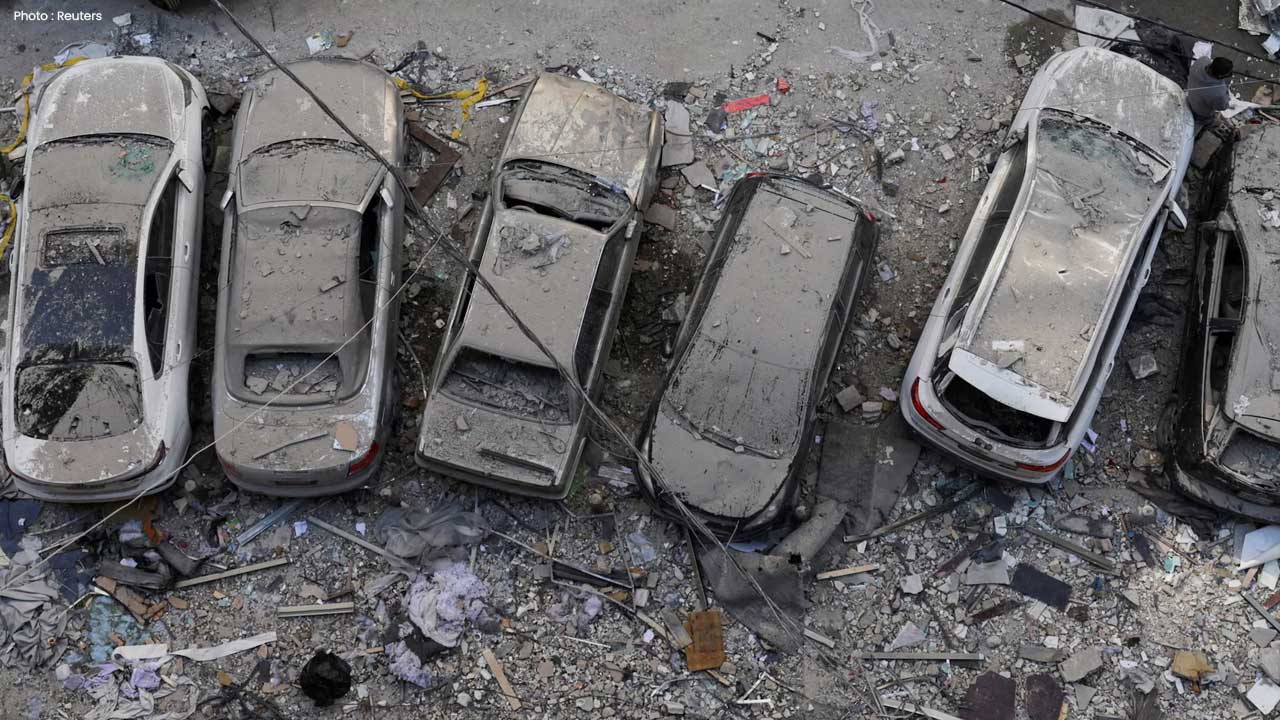
Iran’s military also confirmed that it launched missiles toward several locations. These included a U.S. military base in northern Iraq, the headquarters of the U.S. Navy in Bahrain, and the city of Be’er Ya’akov in central Israel. Explosions were reported in Bahrain, while two drones crashed near Dubai’s international airport, injuring four people.
At the same time, the Strait of Hormuz crisis worsened as three more commercial ships were hit in the Gulf by unknown projectiles. Maritime security agencies reported that the total number of ships damaged since the conflict began has now reached fourteen.
In one incident, a Thai-flagged bulk cargo ship caught fire after an explosion on board. The crew had to evacuate the vessel for safety. Two other ships, one flying a Japanese flag and another registered in the Marshall Islands, also suffered damage.
The rising conflict has also caused panic among residents in several cities. In Iran’s capital Tehran, many people have left the city and moved to rural areas to escape the nightly airstrikes. Thick smoke from burning oil facilities has reportedly caused dark rain in some parts of the city.
Some residents say they are slowly getting used to the constant sound of explosions. One resident told reporters that although bombings continued overnight, people are trying to continue daily life despite the fear.
Meanwhile, the global oil market has been closely watching the Strait of Hormuz crisis. Oil prices briefly surged earlier this week and nearly reached 120 dollars per barrel. However, prices later dropped to below 90 dollars as investors hoped that diplomatic efforts might soon end the war.
Energy experts warn that if the conflict continues and shipping remains blocked, the global economy could face serious problems. To prevent a major energy crisis, the International Energy Agency is reportedly considering releasing up to 400 million barrels of oil from emergency reserves around the world.
This would be the largest release of emergency oil reserves in history. However, experts say that even such a large amount would only replace about three weeks of oil flow through the Strait of Hormuz.
The human cost of the conflict is also rising. According to Iranian officials, more than 1,300 civilians have been killed since the United States and Israel began airstrikes on February 28. There have also been casualties in Israel and Lebanon as missiles and rockets continue to be fired across borders.
As the Strait of Hormuz crisis continues, global leaders are urging restraint and diplomatic talks to avoid a wider war. However, both sides remain firm in their positions, leaving the region and the world watching closely for what happens next.