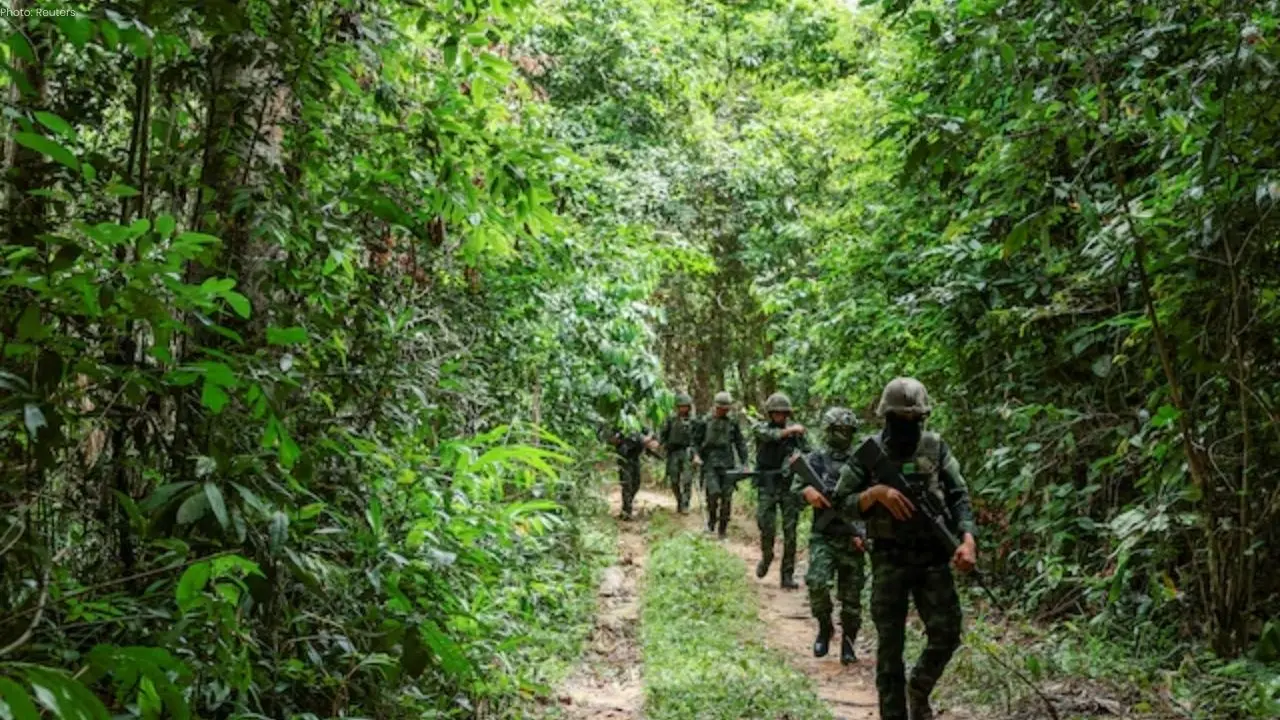
The Thai military continues to occupy parts of Cambodia, obstructing key areas with barbed wire and shipping containers. This situation threatens the peace deal between the nations, following conflicts last year. Cambodian Foreign Minister Prak Sokhonn reported that around 4,000 families are stranded near the border due to the presence of Thai forces, despite a ceasefire agreed upon in December.
In remarks from Phnom Penh, Prak Sokhonn identified at least four locations where Thai soldiers have encroached on Cambodian territory. While he acknowledged the overall calm, he expressed concern about potential risks, urging Thailand to adhere to the peace terms.
The Thai military and government rejected Cambodia's allegations, asserting that their soldiers are compliant and maintaining their designated locations post-ceasefire. They emphasized that this should not be interpreted as territorial encroachment.
The conflict in December featured aerial bombardments, rocket strikes, and heavy artillery, which escalated after earlier clashes in July that were de-escalated through intervention by U.S. President Donald Trump. The December fighting resulted in 101 fatalities and displaced over half a million individuals from both sides, marking a significant chapter in the ongoing border conflict.
Cambodia has sought a session of the Joint Boundary Commission to address these border issues; however, Thailand is yet to confirm its participation. Prak Sokhonn emphasized the urgency of resolving the matter of occupied areas to facilitate the return of displaced residents.
The Thai foreign ministry announced plans for discussions to commence after the new government takes office following the February 8 elections. They reiterated their commitment to resolving disputes through dialogue and aimed to renew the Joint Boundary Commission promptly.
The peace agreement dated December 27 stipulated that neither country would deploy additional troops to the border and allowed displaced individuals to return home. Prak Sokhonn marked the extensive devastation caused by the conflict, impacting lives and destroying educational institutions, bridges, religious sites, roads, and other infrastructures.
While Trump aided in quelling the July hostilities and advocated for a ceasefire in October, he was unable to immediately halt the violence in December. Alongside Trump and Malaysian Prime Minister Anwar Ibrahim, China also played a role in peace efforts, dispatching special envoys to both nations in late December.