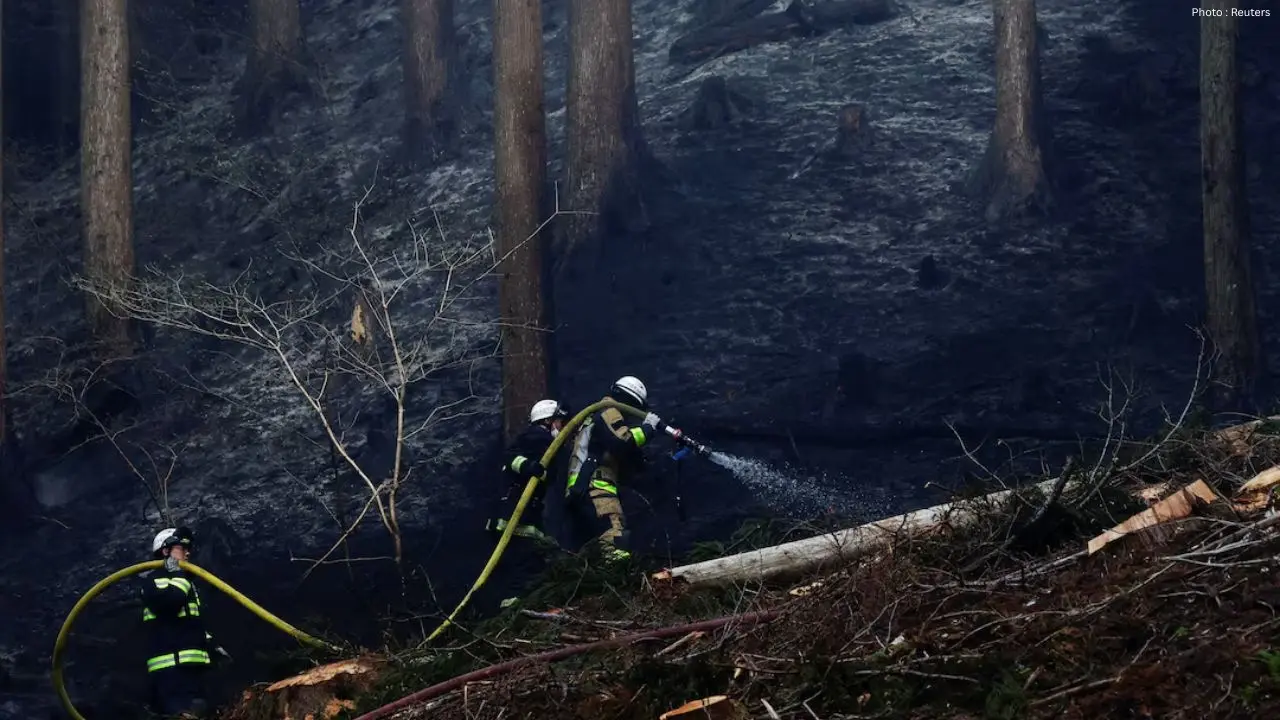
The wildfires in northern Japan have triggered a significant crisis, with extensive blazes sweeping across Iwate Prefecture. Thousands have been compelled to leave their homes while firefighting teams exert every effort to regain control.
These fires have persisted for several days, remaining far from full containment. Reports indicate the deployment of over 1,000 firefighters, alongside helicopters and emergency responders. However, fierce winds and dry conditions complicate their firefighting efforts.
Otsuchi town emerges as one of the hardest-hit areas, with flames encroaching perilously close to residential sectors. Authorities have ordered approximately one-third of the town's inhabitants to evacuate, leading to a total of over 3,000 local residents being relocated to safety.
The blazes are thought to have initiated in mountainous and wooded regions, spreading rapidly due to the prevailing weather patterns. Prolonged dry vegetation and high winds have allowed the fires to move swiftly, hindering emergency response efforts.
Ground teams strive to halt the fires' advance toward homes and critical infrastructure, employing helicopters to release water on the burning zones. Nonetheless, challenging terrain presents additional hurdles for firefighters navigating the battleground.
As the safety of local residents hangs in the balance, many have evacuated with scarce personal items. Evacuation centers have been established to provide necessary shelter, nourishment, and assistance. Authorities emphasize the necessity for compliance with safety notifications, urging individuals to forgo returning to hazardous areas.
This wildfire outbreak raises alarms over environmental devastation. Tree cover is being lost, alongside vital animal habitats. Smoke plumes have drifted into surrounding regions, impacting air quality and daily life.
Japan has faced similar wildfire adversities in the past, but specialists claim that shifting weather patterns could be increasing both the frequency and severity of such occurrences. Prolonged dry spells and elevated temperatures enhance the potential for forest fires in the region.
The current scenario underscores the critical nature of disaster readiness. The prompt action by emergency services has mitigated potential devastation, yet the extent of the fires illustrates the complex challenges posed by natural disasters.
Efforts from authorities to contain these fires and safeguard affected neighborhoods continue. The upcoming days will be pivotal in determining how swiftly the fires can be managed and when displaced residents may return home safely.
The wildfire crisis enveloping Iwate serves as a powerful reminder of the unpredictable impact natural disasters can have. It also highlights the imperative for robust emergency frameworks, public diligence, and ongoing strategies to confront environmental difficulties.