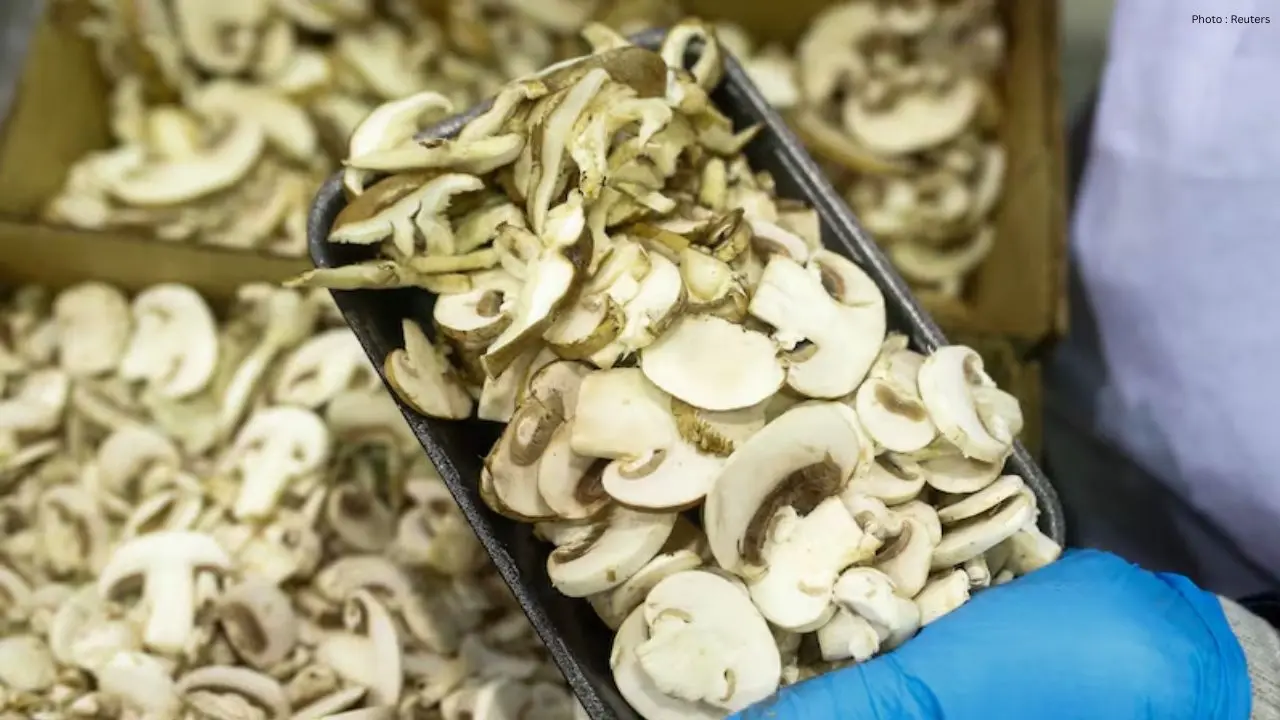
The United States government is preparing to impose new tariffs on Canadian mushroom exports, raising concerns among growers and agricultural leaders about the future of cross-border farm trade between the two countries. Canadian industry representatives warn the decision could create broader risks for agriculture by increasing trade tensions and adding uncertainty for farmers already dealing with rising production costs and international competition.
According to industry reports, the U.S. Department of Commerce plans to introduce preliminary countervailing duties on fresh Canadian white button and portobello mushrooms. American officials argue that Canadian mushroom producers receive unfair advantages because some agricultural operations in Canada are exempt from certain sales taxes. The tariffs are expected to range from approximately 1.6 percent to five percent on imported Canadian mushrooms.
The complaint against Canadian mushroom exporters was reportedly filed by an American industry group known as the Fresh Mushrooms Fair Trade Coalition. The organization claims Canadian growers benefit from government-supported advantages that make it more difficult for American producers to compete fairly in the U.S. market. As a result, U.S. importers may soon be required to pay additional cash deposits on Canadian mushroom shipments entering the country.
Canadian mushroom producers strongly rejected the allegations and described the U.S. decision as unfair and economically harmful. Mushrooms Canada CEO Ryan Koeslag said Canadian farmers are operating under normal agricultural tax rules that are similar to systems already available to American growers. Industry leaders argued that Canadian mushroom farms are not receiving unusual subsidies and warned the tariffs could damage long-standing agricultural trade relationships between the two countries.
The dispute is especially important because the United States remains the largest export market for Canadian mushrooms. Nearly half of Canada’s mushroom production is exported, with most shipments going directly to American buyers. Ontario is Canada’s largest mushroom-producing province, while British Columbia also plays a major role in the industry. Officials say the mushroom sector generates hundreds of millions of dollars annually for the Canadian economy and supports thousands of jobs connected to farming, packaging, transportation, and food distribution.
Agricultural groups are now warning that the mushroom dispute could become part of a larger pattern of trade conflicts affecting Canadian farming industries. The tariffs arrive during a period of broader economic tensions between Canada and the United States, including disagreements involving steel, aluminum, automobiles, and agricultural products. Some experts fear additional sectors could face similar investigations if trade disputes continue growing.
Farm industry representatives also expressed concern that smaller agricultural businesses may struggle to absorb new export costs. Higher tariffs could reduce profits for growers, increase prices for consumers, and make Canadian products less competitive in American markets. Some producers worry the uncertainty may also discourage future investment in Canadian agriculture.
Trade experts noted that the case is still ongoing and final decisions have not yet been completed. The U.S. Department of Commerce must still issue final rulings on both countervailing and anti-dumping measures, while the U.S. International Trade Commission will decide whether Canadian imports are causing material harm to American mushroom producers. If regulators decide there is insufficient evidence of damage, the proposed duties could eventually be cancelled.
The dispute comes at an important time for North American trade relations as Canada, the United States, and Mexico prepare for future discussions connected to the Canada-United States-Mexico Agreement (CUSMA). Agricultural leaders say stable trade relationships remain critical for farmers on both sides of the border because modern food supply systems depend heavily on cross-border cooperation and exports.