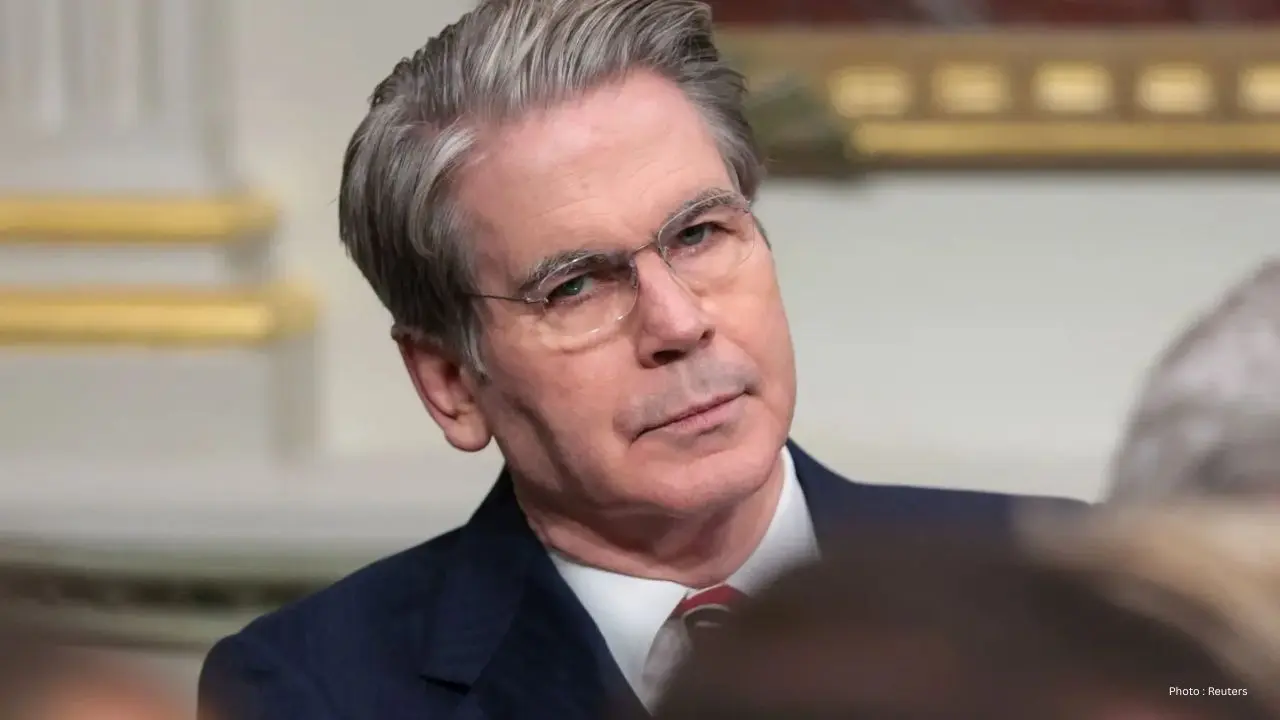
U.S. Treasury Secretary Scott Bessent said the United States is prepared to hold discussions with China on artificial intelligence safety and regulation because America currently remains ahead in advanced AI development. His comments came as both countries reportedly explore possible international safety protocols aimed at reducing risks connected to rapidly advancing AI technologies.
Speaking during an interview with CNBC, Bessent said the United States can engage confidently in AI negotiations because American companies and research institutions still lead globally in many critical areas of artificial intelligence. He argued that maintaining technological leadership gives Washington a stronger position while discussing future standards, security concerns, and responsible AI development with Beijing.
The comments arrive during a period of growing global competition between the United States and China over artificial intelligence, semiconductor technology, cybersecurity, and advanced computing systems. Both countries see AI as one of the most important strategic technologies shaping future economic growth, military capabilities, and global influence.
Bessent emphasized that while competition with China remains serious, communication between the two countries is still necessary to prevent dangerous misunderstandings or uncontrolled technological escalation. He suggested that AI safety cooperation could become similar to earlier international discussions involving nuclear security or arms control, where rival powers still maintained dialogue despite broader geopolitical tensions.
According to reports, American and Chinese officials are discussing possible frameworks involving AI safety standards, risk management systems, and emergency communication protocols. The goal would be to reduce the chances of highly advanced AI systems being used irresponsibly or creating unexpected international security threats.
The United States has repeatedly expressed concerns about China’s use of artificial intelligence in surveillance systems, cyber operations, military modernization, and information control. Washington has also introduced restrictions limiting China’s access to advanced semiconductor technology needed for powerful AI systems.
At the same time, China has accelerated investment in domestic AI development, with major Chinese technology companies competing aggressively in areas including machine learning, robotics, facial recognition, autonomous systems, and generative AI platforms. Beijing views artificial intelligence as central to its long-term economic and geopolitical strategy.
Technology experts say AI competition between the United States and China is likely to shape global power dynamics for decades. Both countries are investing billions of dollars into AI infrastructure, research, data systems, and talent recruitment while also attempting to influence future international regulations.
Bessent’s comments reflected growing concern among world leaders about the speed of AI advancement and the possible risks associated with uncontrolled development. Governments worldwide are increasingly debating issues involving AI safety, misinformation, cybersecurity threats, military applications, and job displacement.
Some analysts support limited cooperation between Washington and Beijing on AI safety issues, arguing that global standards may become necessary as AI systems grow more powerful. Others remain skeptical and warn that technological rivalry between the two countries could make meaningful cooperation difficult.
The discussion also highlights the broader balance the United States is attempting to maintain with China — competing aggressively in advanced technologies while still preserving diplomatic communication on global risks. Similar debates are taking place around cybersecurity, climate change, trade, and military stability.
Business leaders and AI researchers have repeatedly warned that the absence of international safety agreements could increase risks involving autonomous systems, AI-generated misinformation, financial disruptions, or even military escalation involving advanced machine decision-making systems.
Despite ongoing tensions, officials from both countries appear to recognize that artificial intelligence is becoming too powerful and globally important to manage entirely through competition alone. Analysts say future AI diplomacy could eventually become one of the most important areas of international relations in the coming years.
As negotiations and discussions continue, the United States remains focused on maintaining its technological advantage while also attempting to shape the global rules that may govern the future development of artificial intelligence.