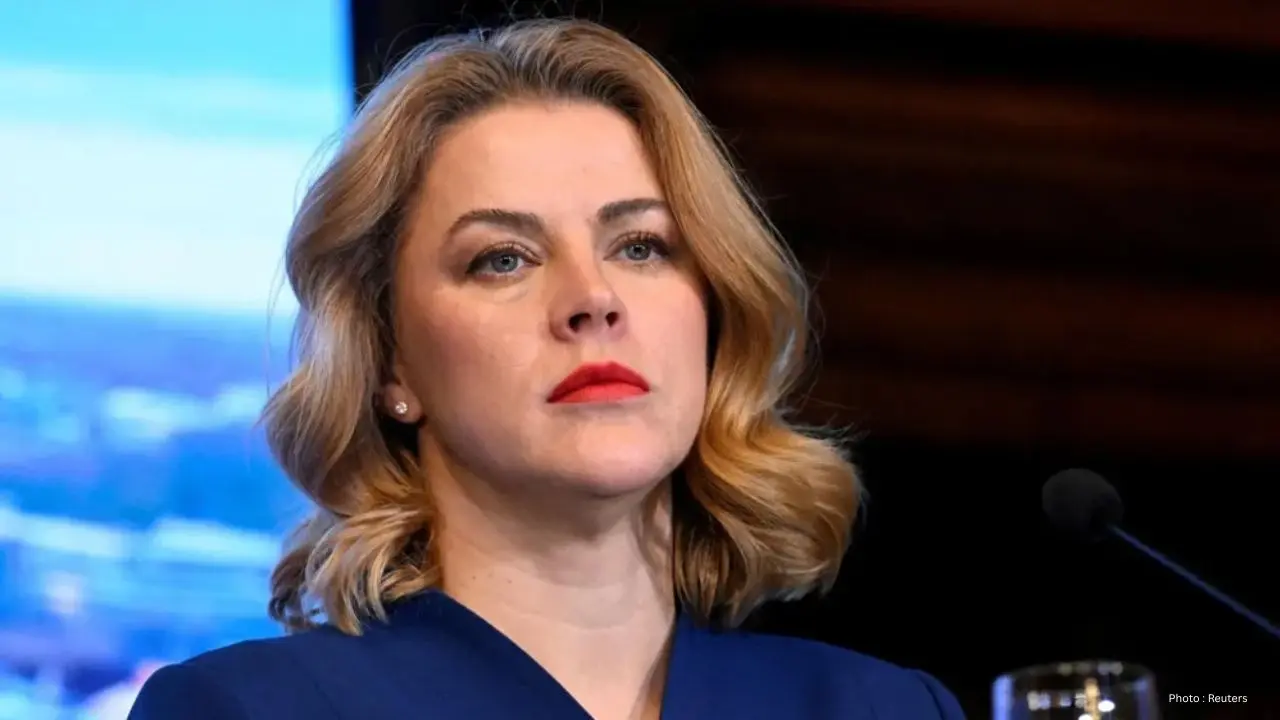
Latvia’s prime minister has resigned following growing political controversy surrounding stray Ukrainian military drones that reportedly entered Latvian territory, triggering national debate over border security, defense preparedness, and the government’s handling of regional tensions linked to the war in Ukraine.
The resignation came after weeks of criticism from opposition parties and security analysts who questioned how unauthorized drones were able to cross into Latvian airspace without an immediate and effective response from authorities. The issue quickly became politically sensitive because Latvia is a NATO member located close to Russia and Belarus, making regional security concerns especially serious.
According to reports, the controversy began after several drones believed to be connected to Ukrainian military operations or conflict-related activity were detected near or inside Latvian territory. Officials said the drones may have strayed off course due to navigation problems, electronic interference, or military activity connected to the ongoing war between Ukraine and Russia.
Although authorities stated there was no indication the drones were part of a deliberate hostile act against Latvia, critics argued the incident exposed weaknesses in the country’s air defense systems and emergency response coordination. Opposition leaders accused the government of reacting too slowly and failing to communicate clearly with the public during the security scare.
The prime minister faced increasing pressure in parliament and from coalition partners as public debate intensified over national defense readiness. Political opponents argued that Latvia, given its strategic location near the eastern border of NATO, must maintain stronger monitoring systems and faster response capabilities for unauthorized aircraft or drone activity.
In announcing the resignation, the prime minister said the decision was made in the interest of political stability and national unity. Government officials stressed that Latvia remains fully committed to supporting Ukraine while also strengthening domestic security measures.
The incident reflects broader concerns across Eastern Europe about the growing risks created by the ongoing Russia-Ukraine war. Several countries bordering the conflict zone have reported cases involving missiles, drones, or military debris accidentally crossing into neighboring territories during combat operations.
NATO members in the region have significantly increased military surveillance, air defense cooperation, and border monitoring since the start of the war. The alliance continues emphasizing the importance of protecting member states from any unintended spillover effects connected to the conflict.
Latvia has been one of Ukraine’s strongest supporters since Russia launched its full-scale invasion. The Baltic nation has provided military assistance, humanitarian aid, and political backing for Kyiv while also warning about broader regional security threats posed by the war.
Despite Latvia’s support for Ukraine, the drone controversy created domestic concerns about whether the country is adequately prepared to manage modern aerial threats, including drones, missiles, and electronic warfare systems increasingly used in current conflicts.
Security experts noted that drone technology has become a major challenge for governments worldwide because small unmanned aircraft can travel long distances, avoid detection, and create uncertainty even when incidents are accidental. Eastern European countries near active conflict zones remain especially vulnerable to such incidents.
Political analysts said the resignation highlights how security-related events can quickly reshape domestic politics in countries located near geopolitical flashpoints. Public expectations regarding defense readiness have risen sharply across Europe since the start of the Ukraine war.
Latvian officials are now expected to review air defense procedures, border surveillance systems, and emergency communication protocols following the controversy. NATO allies may also increase coordination with Baltic states to strengthen regional monitoring and rapid response capabilities.
The government transition comes at a time when Europe continues facing heightened military and political uncertainty linked to the war in Ukraine. Latvia’s next leadership will likely face continued pressure to balance strong support for Kyiv with growing public demands for tighter national security protections.