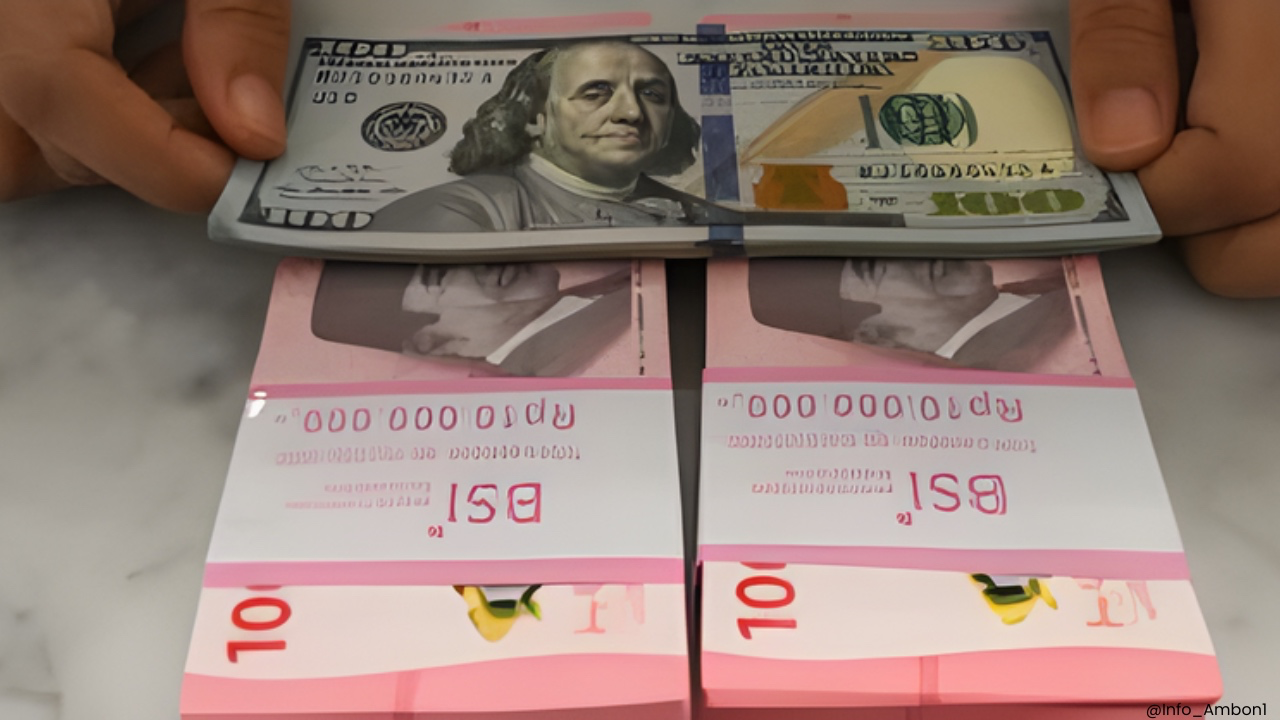
Photo : X / @Info_Ambon1
A shifting landscape in currency values is unveiling new financial opportunities for millions of expatriates in the UAE. The decline of currencies like the Indian rupee, Philippine peso, and Pakistani rupee has led to a surge in remittance values. What appears to be a negative economic trend in their home countries actually allows expats to gain more from every dirham they send abroad. As exchange rates hover near multi-year lows, households are reevaluating their remittance strategies, transferring funds to leverage the beneficial currency conditions.
This remittance advantage emerges from the broader depreciation of several Asian currencies against the UAE dirham, which is fixed to the US dollar. Economic challenges globally, including inflation and capital flow dynamics, have diminished the value of currencies like the rupee and peso, while the dirham has gained purchasing power. Notably, the Indian rupee nears historic lows of around 25+ per dirham, with the Philippine peso trading near 16—a situation that significantly boosts the amounts families receive back home for each transfer. This shift is part of a wider trend shaped by global economic factors, such as oil price fluctuations and investor sentiment. Expatriates are witnessing immediate benefits, achieving higher value without increasing the amounts sent.
With these favorable exchange rates, expats based in the UAE are being increasingly strategic in their remittance timing. Rather than sending a fixed monthly sum, many are choosing to optimize their transfers—sometimes by timing remittances or splitting them into multiple transactions to protect against potential future shifts. This marks a shift towards more mindful financial practices, where remittances are not routine tasks, but strategic financial moves. Families are actively tracking exchange rate trends, carefully considering whether to transfer funds now or wait, reflecting an evolved approach to financial planning among expatriates.
The positive effects of this remittance uptick reach far beyond single households. An influx of foreign currency can provide critical support to economies grappling with currency depreciation, thereby enhancing consumption and local spending. Families receiving funds enjoy higher purchasing power and improved financial flexibility. As remittances often serve as lifelines, they help cover essential costs like education and healthcare. On a broader scale, consistent remittance inflows can bolster economic resilience, especially in nations where overseas workers contribute significantly to national income.
Although primarily a financial phenomenon, these remittance trends are entwined with global systems, including transportation and logistics. Cross-border money flows are linked to migration patterns and labor mobility, both of which depend on infrastructure and transportation networks. Regions like the Gulf, with substantial expatriate populations, are bolstered by aviation and urban mobility systems, allowing currency movements to influence travel trends, spending habits, and overall economic activity. Increased remittance flows can lead to heightened financial circulation, affecting various sectors—from retail to transportation. This connection underscores how financial flows and physical mobility represent two interconnected facets of the global economy.
Despite the current upswing, experts emphasize that currency trends can fluctuate quickly, making timing essential. While the rupee, peso, and other currencies continue to face pressure, global economic conditions could change, diminishing the remittance advantage. For now, the opportunity remains, prompting many expats to act decisively, taking advantage of favorable rates while possible. The upcoming weeks will be pivotal in determining whether this trend stabilizes, potentially presenting more significant opportunities or risks for those sending remittances.
As currency fluctuations become a hallmark of the global economy, expatriates in the UAE are embracing a new level of financial awareness. Remittances have transformed from routine obligations into strategic financial choices shaped by global trends, economic indicators, and personal aspirations. This evolution signifies a broader shift in how individuals engage with international markets, turning everyday transactions into chances for financial optimization and growth. The weakening of currencies may hint at economic troubles in some regions; however, for UAE expats, it also represents a moment of financial empowerment, where timing and awareness can convert volatility into value.