Photo: Reuters
In early August 2025, many small Canadian business owners spoke out about the struggles they’re facing due to new U.S. tariffs. These extra charges were introduced by the U.S. government under former President Donald Trump. They apply to goods sent from Canada to the U.S. if those products don’t qualify under the US-Mexico-Canada Agreement (USMCA)
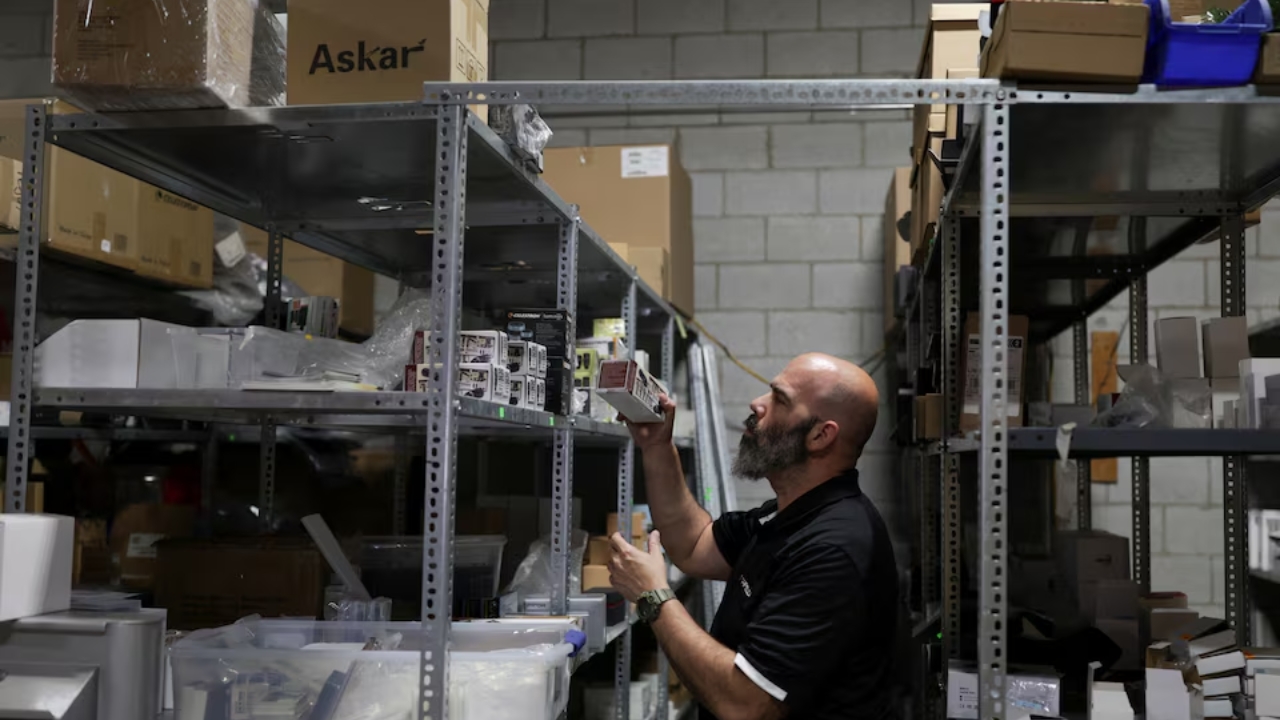
One such business owner is Steve Mallia, who runs StarField Optics in Toronto. His company makes equipment using parts from countries outside North America. Because of this, his goods do not qualify under the free trade rules of USMCA. That means he now pays a 25% tariff on everything he sends to the U.S.
This huge tax makes it almost impossible for him—and many others like him—to compete in the American market.
Big Oil and Large Companies Mostly Safe
While small businesses are struggling, large industries like oil and gas are still doing well. Canada’s oil exports to the U.S. continue with almost no extra charges. In fact, in June 2025, 99% of oil shipments from Canada to the U.S. were not taxed.
This shows a clear difference: small producers are being hit hard, while big companies are largely untouched.
Why Small Businesses Are Hit the Hardest
The USMCA only allows tariff-free trade if goods are made mostly from materials within North America. But many small businesses buy parts or ingredients from other countries like China or Germany, which makes their products ineligible for these benefits.
Here are some facts:
- Around 92% of all Canadian exports are still tariff-free—but that’s mostly oil and energy.
- When you remove energy, only about 60% of goods meet the trade rules. The rest get taxed.
For businesses like furniture makers, food producers, or chemical companies, it’s very hard and expensive to change where they get their supplies. The paperwork alone can be overwhelming for small teams.
Big Economic and Emotional Costs
- Groups that support small Canadian businesses say the damage is growing fast:
- Around 70% of small Canadian importers now have to pay full tariffs on American goods.
- On the export side, about 63% of small businesses are hit with extra costs.
Many businesses are losing thousands of dollars each month. A recent report showed that a typical small business exporting to the U.S. has already lost about $22,500 this year.
Some business owners say they may have to stop exporting to the U.S. completely if things don’t improve. Others are cutting staff or shrinking their operations just to stay afloat.
Trying to Break U.S. Dependence
- To survive, many small companies in Canada are changing strategies. Some are:
- Selling more to Europe and Asia, where trade rules are less strict.
- Finding new Canadian suppliers to replace imported parts.
- Rewriting contracts to protect themselves from cost increases.
But experts warn that moving away from the U.S. is not easy. For many companies, the American market is still their biggest source of income.
Canadian Government Offers Help
The Canadian government has started offering financial support to industries facing the worst of the tariff hit.
For example:
- The softwood lumber industry has been promised $1.2 billion in loans and market support.
- A wider program worth $6.5 billion is helping businesses find new buyers outside the U.S.
- This support includes:
- Low-interest loans
- Help with export paperwork
- Market research assistance
- The goal is to protect jobs and keep small firms from going under.
‘De Minimis’ Rule Ends – More Trouble
Another big problem began with the removal of the "de minimis" rule. This rule used to allow small shipments (under $800 USD) to enter the U.S. without paying any customs tax.
That ended on August 29, 2025. Now, even small packages going to U.S. customers will face tariffs and full customs checks.
This is especially bad for:
- Craft sellers
- Online stores
- Makers of custom or one-of-a-kind items
These business owners say the cost and paperwork will slow down deliveries and may stop some cross-border sales entirely.
Big Oil Keeps Winning
At the same time, oil companies are not feeling the pinch. Big oil exporters follow all the trade rules and already have systems in place to meet USMCA standards.
They also export huge volumes, making it easier for them to qualify and negotiate deals. So, while small businesses are getting hit with high taxes, big oil exports are moving freely.
Uneven Impact Across Canada
Not all parts of Canada are affected equally. Tariffs are hitting some cities and provinces harder than others.
- Cities like:
- Calgary
- Saint John
—are seeing the biggest problems. These areas rely heavily on manufacturing and oil, both of which are caught up in the trade fight.
Economists say this could cause the local economy to shrink by 0.3% to 0.4% in 2025.
Canadians Rally Around Local Goods
- There is also a wave of “Buy Canadian” support. A recent survey showed that:
- 85% of Canadians are now choosing Canadian-made goods when they shop.
- Some apps help people avoid buying U.S. products.
- More shops and online stores are using “Made in Canada” labels to attract buyers.
- This movement is helping small businesses stay alive—but it may not be enough without policy changes.
Why the U.S. Won’t Tax Oil
- Oil is too important for the U.S. to target with tariffs.
- Midwestern states in America depend heavily on Canadian crude oil. Their refineries are designed to process this type of fuel. If tariffs were added to oil:
- Gas prices in the U.S. would rise
- Fuel shortages could occur in some areas
- Energy supply would be disrupted
This is why oil has been left out of most of the new trade rules.
Timeline of the Trade Dispute
- Here’s how the conflict has grown:
- February 1, 2025: The U.S. added 25% tariffs on Canadian goods and 10% on Canadian energy.
- Canada hit back with 25% tariffs on American products worth C$30 billion.
- At first, some Canadian goods under USMCA were safe—but now, many small businesses find they don’t qualify.
- Tariffs have since been raised on steel, cars, and aluminum.
- The result is a trade war that’s hurting families, jobs, and cross-border friendships.
Why Small Businesses Are the Most Exposed
- Small firms are especially vulnerable because:
- They can’t afford teams to handle complex paperwork.
- They often use parts from outside North America, disqualifying them from trade deals.
- They have thin profit margins, so even a small cost increase can shut them down.
- This makes it nearly impossible for them to survive without government help or new trade opportunities.
What Might Happen Next
- People are watching several things:
- Whether Canada and the U.S. can make a deal to lower or remove some tariffs.
- If the U.S. government will offer more exemptions for small businesses.
- How quickly Canadian companies can shift to new markets.
- Whether Ottawa gives more support to vulnerable sectors like furniture, food, and crafts.
- The Canadian government says it is open to talks, but no breakthrough has happened yet.
Topic Key Point
- Tariffs on exports Small firms face 25% taxes; most oil stays tariff-free
- Why small firms hurt Complex rules, global suppliers, lack of resources
- Cost impact $22,500 average loss for small exporters
- End of de minimis rule Small parcels now face taxes, hurting online sellers
- Government help C$6.5B relief offered, especially for lumber and exports
- Public response 85% of Canadians now buy local; “Made in Canada” rising
- Uneven effects Cities like Calgary and Saint John hit hardest
- Oil stays exempt U.S. depends on Canadian oil—no tariffs added
- What’s next Talks, aid, and market shifts may shape future trade
This is not just a trade problem. It’s a life-changing moment for thousands of small business owners in Canada. While oil companies continue to grow, the heart of Canada’s local economy—its small businesses—is under real pressure.