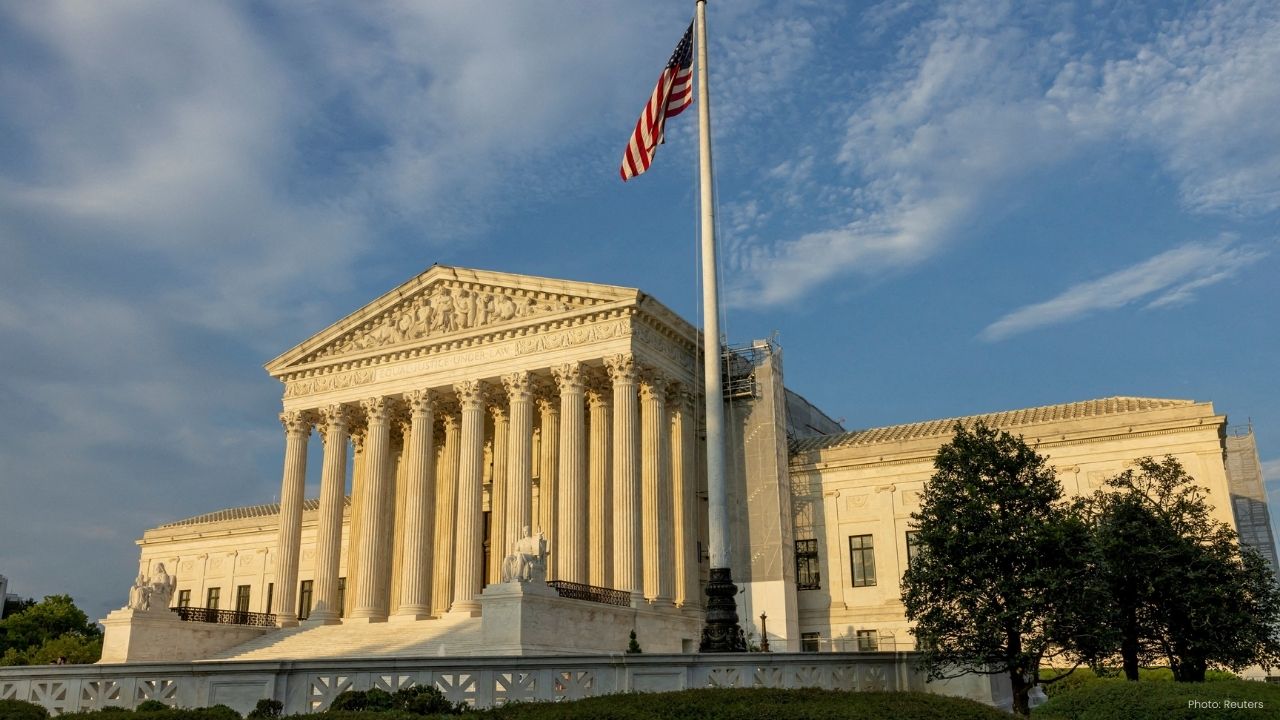
Former President Donald Trump has asked the United States Supreme Court to overturn a lower court decision that ruled many of his broad tariffs were illegal. This move could have a major impact on US trade, the economy, and the president’s ability to set import taxes.
In a petition filed late Wednesday, the Trump administration asked the Supreme Court to quickly step in and confirm that the president has the authority to impose tariffs on foreign nations. The administration argued that the decision by the lower court disrupted ongoing trade negotiations and created uncertainty for US businesses and foreign policy.
Court of Appeals Strikes Down Tariffs
Last week, the United States Court of Appeals for the Federal Circuit, in a 7-4 decision, ruled against Trump’s tariffs. The court said that the tariffs, which were imposed under the International Emergency Economic Powers Act (IEEPA), were beyond the president’s powers. The judges said that setting import taxes is “a core Congressional power,” not something the president can do alone.
The appellate court, however, delayed the ruling from taking effect immediately. This postponement gave the Trump administration time to file an appeal to the Supreme Court.
Trump’s Justification for Tariffs
Trump justified the tariffs under the International Emergency Economic Powers Act, which allows the president to take action during “unusual and extraordinary” threats. In April, he declared an economic emergency, claiming that the US was losing manufacturing jobs and facing trade imbalances that were harmful to national security.
The tariffs included a baseline 10% tax on imports from more than 90 countries. In addition, Trump introduced “reciprocal” tariffs, which were designed to balance trade and address unfair practices by other nations.
Impact on US Businesses
Small businesses and a coalition of US states challenged the tariffs in court, arguing that they were unlawful and caused serious harm. Lawyers representing these businesses said they were confident the courts would rule in their favor.
“These unlawful tariffs are inflicting serious harm on small businesses and jeopardizing their survival,” said Jeffrey Schwab from the Liberty Justice Center. He emphasized the need for a quick resolution to protect US companies.
Scope of the Tariffs
The appellate court decision affects tariffs on Canada, Mexico, and China, which Trump had claimed were necessary to prevent drug importation and protect national security. However, the ruling does not impact all US tariffs. Duties on steel and aluminum, imposed under a separate presidential authority, are not affected.
The tariffs have raised significant revenue for the US government, but the exact amount is debated. They are designed to influence trade balances and protect domestic industries.
Previous Court Rulings
Earlier in May, the Court of International Trade in New York also declared Trump’s tariffs unlawful. That decision was temporarily paused during the appeal process, allowing the tariffs to remain in effect for the time being.
The Supreme Court now has the opportunity to review the case. If the justices decide not to hear it, the lower court’s ruling could take effect as soon as 14 October, forcing the US government to potentially refund billions of dollars in collected tariffs.
Stakes for US Trade and Economy
According to Solicitor General John Sauer, “The stakes in this case could not be higher.” He wrote that the lower court’s ruling disrupted “highly impactful, sensitive, ongoing diplomatic trade negotiations” and created legal uncertainty over the president’s efforts to protect the US economy.
The case is closely watched because it could change the way US presidents impose tariffs in the future. It also affects trade relations, domestic businesses, and overall economic policy.
Trump’s appeal to the Supreme Court seeks to protect his authority to impose tariffs, which were previously ruled illegal by lower courts. The case highlights the balance of power between Congress and the president, the economic impact on small businesses, and ongoing US trade relations with foreign nations.