The administration under President Donald Trump has officially categorized four European left-wing and anarchist groups as terrorist organizations, furthering its ongoing campaign to combat extremist entities involved in political violence. This decision represents one of the most significant international measures taken by the administration in response to the assassination of conservative figure Charlie Kirk, which triggered widespread political turmoil.
The newly designated organizations, all operating in Europe, have been connected to various violent events over the last two decades—ranging from bombing plots and attempted assassinations to organized assaults on neo-Nazi factions. Although none are active within the U.S., this classification enables U.S. authorities to monitor and restrict any financial backing originating from American sources.
Four Groups Included in Trump’s Designation
The networks now included on the U.S. terror roster comprise an Italian anarchist collective responsible for mailing explosive devices to high-ranking European officials in the early 2000s, two Greek factions linked to bomb attacks on police and state structures in Athens, and a German anti-fascist coalition whose members faced prosecution for violent acts against extremists in Dresden.
The most notorious among them is the International Revolutionary Front, commonly referred to as the Informal Anarchist Federation, which gained infamy after targeting then-European Commission President Romano Prodi with explosive packages in 2003. The group reemerged in 2012 when it was involved in an assault on the CEO of an Italian nuclear engineering company—this calculated move intended to intimidate rather than kill, echoing violent tactics from the 1970s.
Over the years, the organization has also claimed responsibility for letter bombs sent to the former head of Deutsche Bank and several European embassies.
In Greece, two additional groups—Armed Proletarian Justice and Revolutionary Class Self-Defense—have been linked to multiple bombings targeting police stations, labor offices, and transport agencies. In every instance, warnings about the explosives were communicated in advance, which is believed to have prevented casualties.
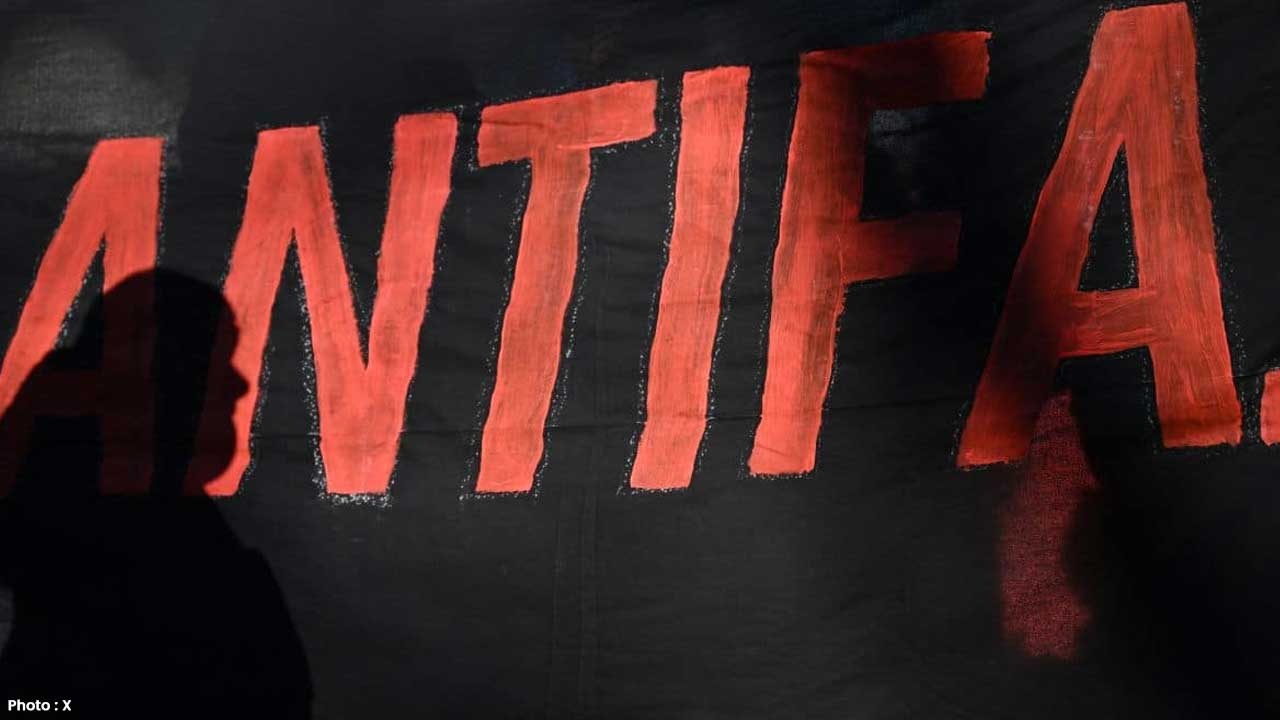
The fourth organization, Antifa Ost, or “Antifa East,” is recognized for its physical confrontations with neo-Nazi factions in Germany and Eastern Europe. Several of its members were imprisoned in 2023 for participating in coordinated hammer attacks. Recent allegations suggest the group may have expanded its operations into Budapest.
Trump Points to ‘Escalating Extremist Threats’
The Trump administration defended its stance by asserting that “anarchist militants have conducted terror operations in both the U.S. and Europe,” accusing them of working to undermine Western democracies through targeted violent actions. Officials maintain that while these networks are geographically removed, they share an ideological connection with individuals who endorse political violence across borders.
This declaration follows Trump’s previous designation of antifa as a domestic terror entity following the fatal shooting of Charlie Kirk—an identification that remains largely symbolic since domestic groups cannot be included on the State Department’s list of foreign terrorist organizations.
Response from Europe and Historical Context
Authorities in Italy, Germany, and Greece have yet to issue formal reactions, though many of the mentioned organizations have long been under investigation or legal action. Greece, in particular, has a longstanding history of anarchist and far-left violence, with several groups previously labeled as terrorist organizations by the U.S.
Despite periodic spikes in left-wing violence throughout Europe, studies within the U.S. suggest that recent political violence has more frequently stemmed from far-right groups. Still, the Trump administration has increasingly highlighted left-wing extremism after Kirk’s assassination, a murder that prosecutors assert was spurred by the attacker’s opposition to Kirk’s political beliefs.
Implications of the Designation
This terror classification enables U.S. agencies to freeze assets, block financial transactions, and take action against anyone providing material support to these identified networks. While these groups lack operational presence in the United States, the administration argues that this decision sends a powerful global message about combating ideological violence.
As the political climate heats up ahead of the upcoming election cycle, Trump’s measures highlight a broader strategy to reshape government responses to extremism—placing European antifa-affiliated organizations firmly within the focus of U.S. foreign policy.