Photo: AP
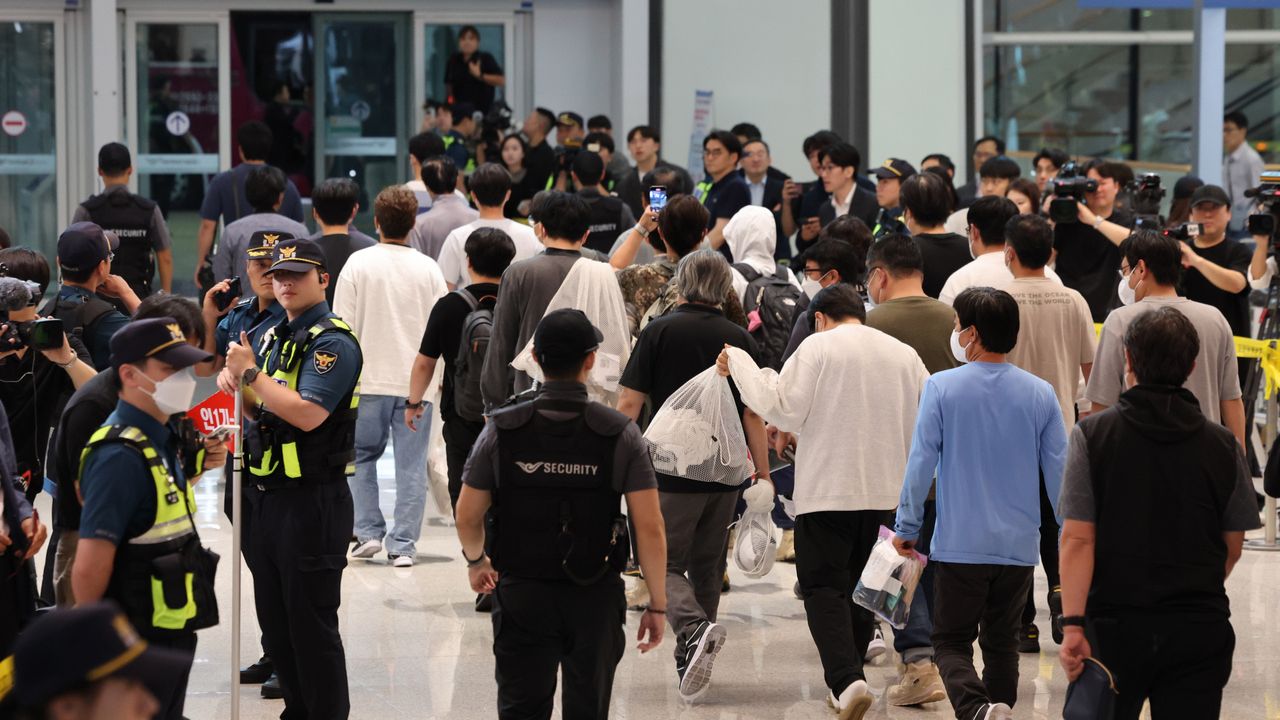
On Friday, more than 300 South Korean workers returned home safely after being detained in the United States for several days. The workers were released on a Korean Air charter flight and landed at Incheon International Airport near Seoul, where they were warmly welcomed by family, friends, and government officials. This comes after a highly publicized immigration raid at a battery factory in Georgia, which is part of Hyundai’s large auto plant near Savannah.
The incident began on September 4, 2025, when U.S. immigration authorities conducted a raid at the factory under construction. During the raid, around 475 workers and other individuals were detained. Video footage released by the U.S. authorities showing some Korean workers shackled at the hands, ankles, and waist caused public outrage in South Korea. Many citizens felt shocked and betrayed, given that South Korea has been a close ally of the United States.
When the workers arrived back in South Korea, the atmosphere at the airport was emotional. Senior officials, including presidential chief of staff Kang Hoon-sik, were present to welcome them. Kang said, “We feel sorry that we failed to bring them back home earlier, but we did our best.” Families and ordinary citizens shouted “Welcome back!” and expressed relief at seeing the workers safely return. One protester had displayed a banner with a photo of former U.S. President Donald Trump, criticizing U.S. immigration practices, though airport security intervened to remove it.
The South Korean government acted quickly to secure the release of its citizens. The workers were detained as part of the raid targeting a few specific individuals, but the authorities confirmed that the detained Korean workers had not committed any crimes. South Korea’s Foreign Ministry requested media and reporters to blur the faces of the workers in photos and videos at the airport to protect their privacy and safety.
This incident has raised important questions about the safety and rights of foreign workers in the United States. Many Korean workers use short-term business visas, known as B-1 visas, to work at U.S. factories and construction sites. The unclear rules regarding what these visa holders can do in the United States contributed to confusion during the raid. South Korea’s government has said it will work with the U.S. to create clearer guidelines and potentially a new visa system to prevent similar events in the future.
For the families of the workers, the emotional reunion was a moment of relief and gratitude. After days of uncertainty, they were finally able to see their loved ones. Hundreds of journalists covered the event, highlighting the attention and concern this situation has drawn both nationally and internationally.
This event also underlines the importance of protecting migrant workers and ensuring that all immigration laws are applied fairly. The South Korean government’s quick action to negotiate the release shows how diplomacy and strong government support can make a difference in such emergencies. It also emphasizes the need for clearer visa rules for foreign workers in the U.S., so they can work without fear of detention or misunderstanding.
In conclusion, while the raid caused fear and anger, the safe return of more than 300 South Korean workers marks a successful resolution for the families and the government. Moving forward, better communication, stronger policies, and international cooperation will be essential to protect migrant workers and prevent similar incidents. The event has drawn worldwide attention to the challenges faced by foreign workers and highlights the importance of respecting human rights and legal protections.