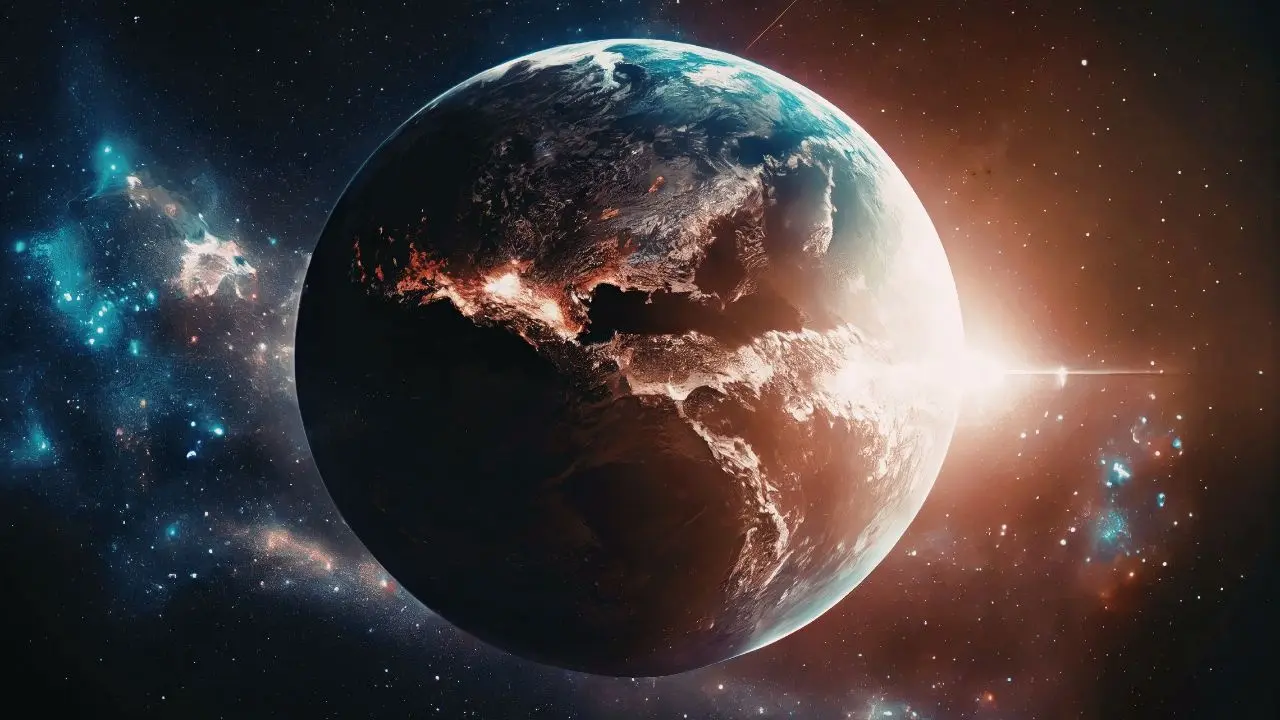
A recent alert has been issued by scientists regarding potential magnetic disturbances affecting Earth. Researchers from the Solar Astronomy Laboratory at the Russian Academy of Sciences have detected a newly formed coronal hole on the Sun that might impact Earth’s magnetic field in the near future.
Experts indicate that these solar developments could lead to geomagnetic storms on April 18 and 19. Such storms arise when streams of charged particles from the Sun collide with Earth’s magnetosphere, leading to fluctuations that might disrupt both natural systems and modern technology.
The scientists clarified that these events are directly tied to intensified solar activity. As solar winds strengthen, they can instigate geomagnetic storms, which differ in severity based on how much they disturb Earth’s magnetic field. These are classified from G1, representing mild disturbances, to G5 for extremely intense and potentially hazardous conditions.
Real-world consequences of magnetic storms can be significant, especially for essential infrastructure. Fluctuations in power grids and temporary interruptions in communication systems, like satellite navigation and radio transmissions, are possible. In extreme instances, aviation routes and space technology may also experience disruptions.
Beyond technological ramifications, these storms can also affect natural occurrences. Researchers warn that geomagnetic disturbances might disrupt the navigation systems of migratory birds and animals that depend on Earth’s magnetic field. This could lead to noticeable changes in their migration patterns.
Visually, heightened solar activity often gives rise to spectacular auroras, famously known as the Northern and Southern Lights. These stunning displays might be visible in regions nearer to the poles and, in cases of stronger storms, may reach lower latitudes than is typical.
Experts are keeping a close watch on the evolving situation, suggesting that while most magnetic storms can be managed, industries should consider implementing precautionary measures to mitigate impact. This event highlights the intricate relationship between solar dynamics and life on our planet.