A Crucial Moment for AI Leadership
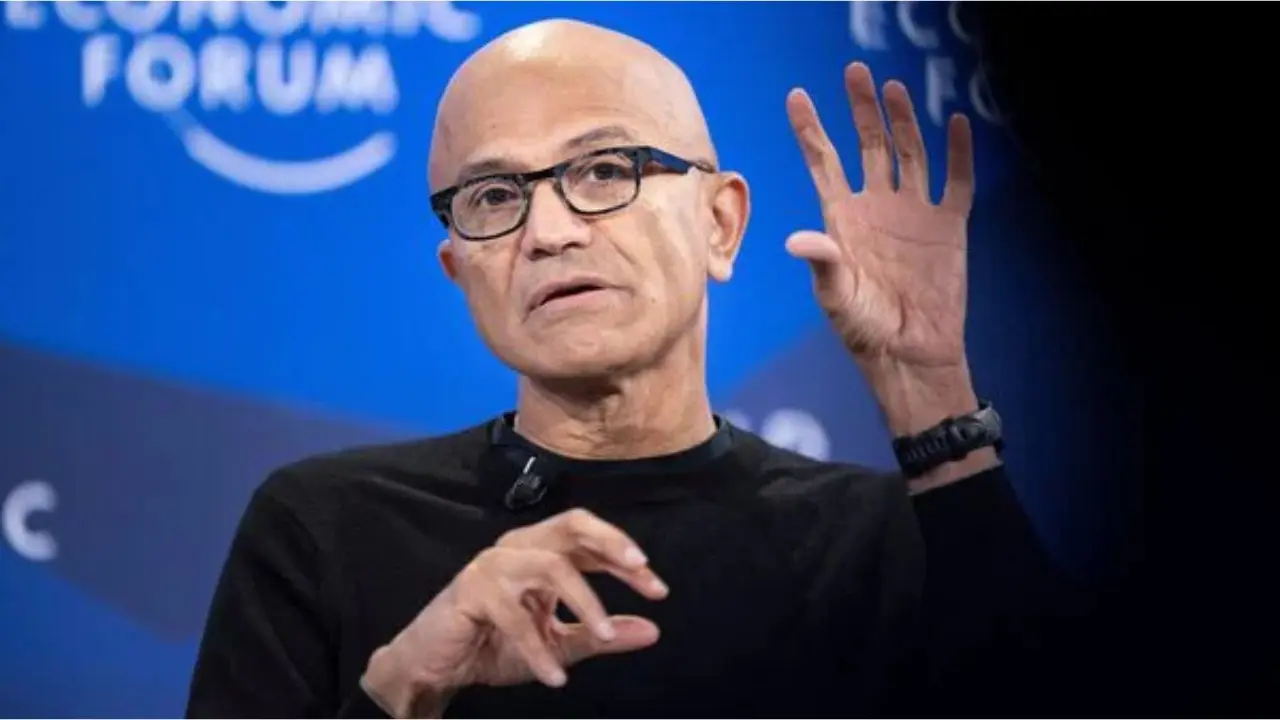
In 2026, AI stands as one of the most game-changing technologies of our time, poised to revolutionize various sectors. However, with such immense potential also comes great responsibility. During his address at the World Economic Forum Annual Meeting in Davos, Switzerland, Microsoft CEO Satya Nadella addressed AI firms and global leaders, urging them to prioritize tangible societal benefits. His comments have ignited significant dialogue in the tech world regarding the ethical landscape and future trajectory of AI development.
Leading one of the top technology firms globally, Nadella's insights are pivotal. His call is not only about upgrading technology but ensuring that AI retains its social licence by gaining the trust of the public and regulatory bodies.
The Central Message: Ensuring AI is “Tolerable”
Nadella's core message is clear: if AI fails to provide widespread, measurable advancements improving daily lives, it risks losing what he terms “social permission.” This concept refers to society's acceptance of AI technologies in everyday interactions.
AI Should Deliver True Value
He noted that AI must go beyond novelty or limited commercial applications—it should enhance essential domains like healthcare, education, productivity, and public services. For instance:
-
In healthcare, AI can refine diagnostic processes and accelerate drug discovery.
-
In education, AI tools personalize learning and assist educators in addressing diverse student needs.
-
In government, AI can bolster operational efficiency, enhance transparency, and improve citizen services.
If AI technologies do not provide significant benefits in these areas, user trust and governmental support could quickly dissipate.
Social Permission: The Key to Public Trust
Meaning and Impact
“Social permission” transcends mere regulatory approval—it embodies the implicit acceptance by society that a technology is beneficial and safe. Nadella cautioned that AI's increasing energy requirements must be offset by sufficient benefits to humanity and economic progress.
This viewpoint signifies a crucial shift in how tech leaders should articulate the value of AI. Mere innovation is no longer enough; it must resonate with societal priorities. Without this connection, public skepticism could lead to tighter regulations and diminished adoption.
Barriers to AI Adoption and Public Trust
Environmental Concerns
A significant issue Nadella highlighted is the enviromental impact of AI. Operating large AI models necessitates considerable energy, raising questions on sustainability and equitable resource distribution.
If AI technologies continue to consume substantial electricity without providing proportional societal rewards, they may lose legitimacy in public perception. This concern complements broader discussions regarding ethical computing and the environmental footprint of technology.
Inequality in Access to AI
Nadella also pointed to the issue of disparities in AI access. Advanced AI tools are mostly found in affluent nations and large corporations, risking a technological divide where less privileged regions fall behind in critical areas like education and healthcare.
Such disparities could challenge AI's social permission, fostering a sentiment that technology primarily serves powerful interests rather than the common good. For AI to be genuinely transformative, its advantages must reach various industries and communities.
Preventing an AI Bubble: Inclusive Adoption
The Peril of Speculation
In addition to energy consumption and social acceptance, Nadella expressed concerns about the potential for AI to evolve into a speculative bubble. Such a bubble occurs when expectations surpass tangible benefits. In AI, excessive hype may overshadow real improvements in productivity and societal welfare.
To counter this, he advocates for more extensive AI adoption—not limited to large tech firms but across governments, SMEs, and various sectors—to affirm that AI yields both depth and reach in value.
Widening Benefits Across All Fields
This broad approach includes:
-
Governments investing in digital infrastructure and workforce development.
-
Companies using AI to enhance their operations.
-
Education systems equipping students for an AI-powered future.
Such dissemination embeds AI into daily experiences, making its benefits evident and relevant.
Striking a Balance Between Innovation and Accountability
Ethical Considerations
Nadella's address also raised ethical implications. With the increasing capability of AI, concerns regarding privacy, bias, transparency, and responsibility emerge as critical issues. Establishing responsible governance for AI—aligned with human values—remains essential to preserving trust and circumventing misuse.
AI developers must collaborate with all stakeholders—policymakers, civil society, and communities—to establish frameworks that uphold citizen rights while fostering innovation.
Global Cooperation and Regulation
Effective governance necessitates strong partnerships among governments, international bodies, and private entities. Conversations at forums like Davos serve to foster these collaborations, aligning standards and promoting fair economic participation.
This teamwork ensures that AI benefits reach beyond tech elites, addressing global challenges in health, education, climate adaptation, and economic equity.
Microsoft's Role and Broader Industry Impact
Leadership in the AI Space
As Microsoft's CEO, Satya Nadella plays a pivotal role in shaping global AI narratives. Under his guidance, Microsoft emphasizes cloud computing, AI integration, and ethics, positioning the firm as a key player in technology discussions.
His remarks at Davos reflect both corporate values and a commitment to shared responsibility within the AI ecosystem.
Encouragement for AI Developers
Nadella's address serves as a call to action for all AI companies—from large corporations to fledgling startups. His directive to make AI acceptable for society prioritizes societal value over mere innovation.
This approach inspires AI developers to create solutions that not only achieve commercial success but also fulfill societal needs and enhance overall quality of life.
Conclusion: Envisioning Responsible AI
Satya Nadella’s address at the World Economic Forum marks a critical juncture in the evolution of AI technology. His message is unequivocal: AI must be practical, fair, and socially embraced to succeed. As technology advances, it should be viewed not merely as a technical endeavor, but as a tool that enhances health, education, productivity, and socio-economic well-being.
By advocating for tangible outcomes, fair benefit distribution, and ethical resource use, Nadella envisions a technology landscape that serves humanity's greater good—not just industry. The sustainability of AI hinges on trust, utility, and mutual prosperity.
Disclaimer: This article summarizes current reports and public statements for informational purposes. Perspectives and interpretations may evolve with ongoing discussions in technology and policy.