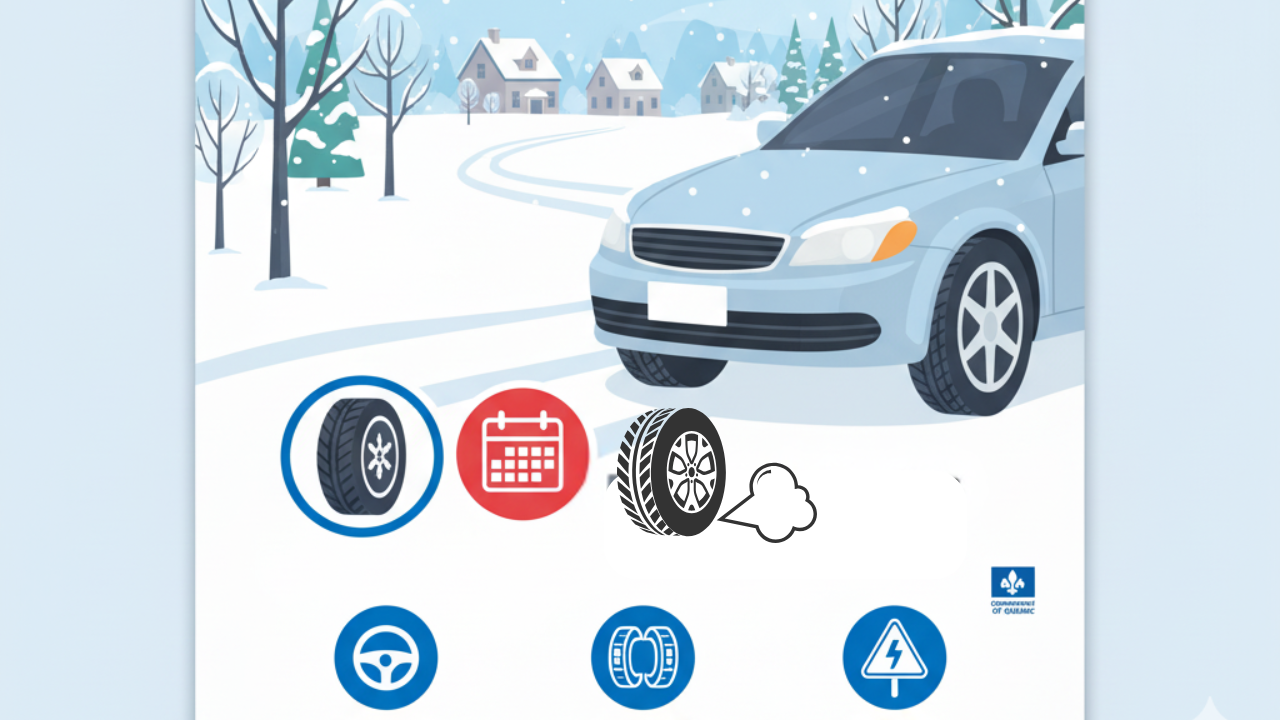
Quebec Winter Tire Rules: Dates, Fines & Safety Tips
Quebec winters are notoriously harsh, making winter tires a crucial requirement for safe driving. To ensure public safety, the province has strict laws regarding winter tires. Understanding these rules, including important dates, fines, and best practices, is essential for all drivers in Quebec. This guide explains everything newcomers and residents need to know about Quebec’s winter tire laws.
Why Winter Tires Are Mandatory in Quebec
Winter tires are specifically designed to provide better traction on snow and ice. The law mandates their use to:
-
Reduce the risk of accidents during icy and snowy conditions
-
Improve vehicle handling and braking performance
-
Enhance overall road safety for all drivers
Unlike summer or all-season tires, winter tires maintain flexibility in low temperatures, providing the grip necessary for Quebec’s challenging winter roads.
Winter Tire Dates in Quebec
The government sets specific dates for mandatory winter tire use:
-
Start Date: December 1
-
End Date: March 15
During this period, all passenger vehicles registered in Quebec must be equipped with winter tires. Trucks, buses, and other commercial vehicles have similar rules but may have slightly different requirements depending on weight and usage.
Winter Tire Fines in Quebec
Failing to comply with winter tire laws can result in significant fines and penalties. Key points include:
-
Ticket Fine: Fines for not using winter tires range from $200 to $300.
-
Demerit Points: Drivers may receive demerit points on their license.
-
Insurance Risks: Non-compliance may affect insurance claims in case of an accident.
Ensuring your vehicle is compliant can save money and prevent legal complications.
Rules for Winter Tires
Quebec law specifies several rules to ensure that winter tires provide maximum safety:
-
Type of Tires: Must be winter tires approved for snow and ice conditions, often marked with the “Three-Peak Mountain Snowflake” symbol.
-
Tread Depth: Minimum tread depth of 3.5 mm is required. Worn tires can lead to fines even if they are winter tires.
-
Spare Tires: Spare winter tires are not required, but having one is recommended for emergencies.
-
Studded Tires: Allowed from October 15 to May 1, giving extra traction on icy roads.
Following these rules ensures compliance and maximum safety for you and other road users.
Choosing the Right Winter Tires
Selecting suitable winter tires is essential for both safety and legality:
-
Quality Matters: Invest in reliable brands tested for Quebec winter conditions.
-
Matching Tires: All four tires should be winter tires; mixing summer and winter tires is unsafe and illegal.
-
Tire Size: Check the manufacturer’s recommendations for tire size and type.
-
Regular Checks: Inspect tires regularly for wear and damage throughout the winter season.
Tips for Safe Winter Driving
Winter tires alone aren’t enough. Follow these tips for safer driving during Quebec winters:
-
Drive Slowly: Reduce speed on icy or snowy roads to maintain control.
-
Increase Following Distance: Keep a safe distance from vehicles ahead to allow for longer braking distances.
-
Brake Gently: Sudden braking can cause skidding. Use gentle, controlled pressure.
-
Keep Essentials: Carry an emergency kit including blankets, a shovel, and ice scraper.
-
Check Weather Updates: Plan trips according to weather conditions and road reports.
Consequences of Ignoring Winter Tire Laws
Ignoring winter tire regulations can have serious consequences:
-
Legal Penalties: Fines and demerit points, as mentioned earlier.
-
Higher Accident Risk: Increases likelihood of skidding, collisions, and injury.
-
Insurance Issues: Non-compliance may reduce claim eligibility if involved in an accident during winter months.
Additional Resources
-
SAAQ (Société de l’assurance automobile du Québec): Official updates and resources on tire laws.
-
Insurance Providers: Offer tips and guidelines on winter driving and compliance.
-
Automotive Shops: Provide inspection services to ensure tires meet legal and safety requirements.
Final Thoughts
Quebec’s winter tire laws are designed to protect drivers, passengers, and pedestrians during the challenging winter months. By understanding the dates, fines, and rules, and by choosing the right tires and practicing safe driving, you can ensure compliance and safety. Staying informed and prepared is the key to navigating Quebec winters confidently and legally.