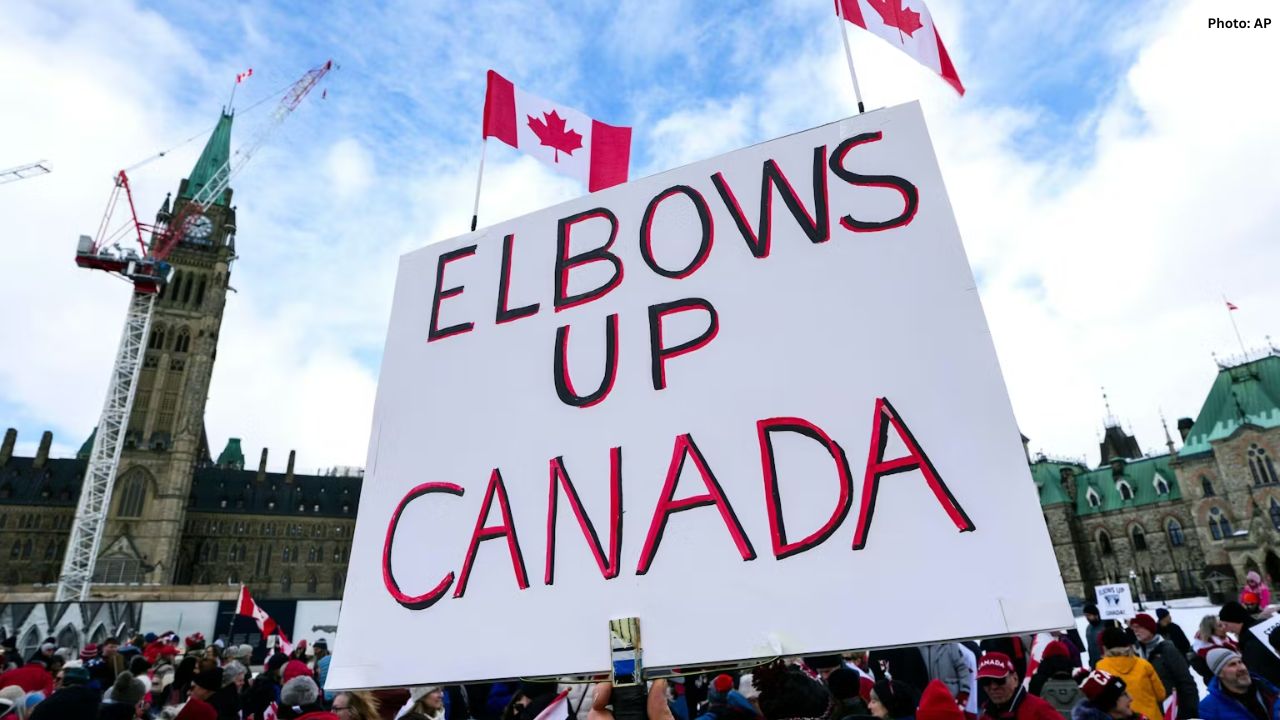
A new poll reveals Canadians are deeply divided over the possibility of the United States using military force against Canada or annexing it as the 51st state, highlighting rising unease in the country about its southern neighbour’s intentions. The survey, conducted by Ipsos for Global News, found that roughly equal numbers of Canadians believe U.S. military action against Canada is either realistic or unlikely — a significant shift in public sentiment compared to previous years.
According to the poll results released on January 28, many respondents said they believe an attack or invasion by the United States could happen, while a comparable share said they doubt such an outcome. Demographic patterns emerged, with women and younger Canadians — especially those in Generation Z — more likely to think U.S. military action is plausible, while men and older generations tended to reject that idea.
The survey also explored Canadians’ confidence in their country’s ability to defend itself. Fewer than half of respondents said Canada could successfully defend against a hypothetical invasion without help, yet most still expressed faith that NATO allies would support Canada in such a scenario. These findings come amid broader geopolitical anxieties and follow a series of provocative statements from U.S. political figures that have drawn attention and concern north of the border.
Rhetoric about Canada potentially becoming the 51st U.S. state — once made by U.S. President Donald Trump and widely criticized by Canadian leaders and analysts — has added fuel to discussions about sovereignty, national identity and Canada’s relationship with the United States. While the idea of annexation remains largely rejected in formal polls, references to it have sparked debate and, according to some political commentators, contributed to unease among Canadians about future cross-border relations.
The heightened public sentiment arrives against a backdrop of other security discussions, including reports that Canadian defence planners have, for the first time in decades, modelled responses to a hypothetical U.S. invasion as a contingency exercise — a scenario military experts stress remains highly unlikely. Nevertheless, the exercise reflects at least some institutional attention to Canada’s defence posture and broader public safety narratives.
Beyond military considerations, Canadians have shown shifts in other relationships with the United States. Recent surveys indicate a noticeable drop in travel to the United States, as well as declining trust in the U.S. among Canadian travellers and consumers, signaling that political tensions may be affecting broader public attitudes toward the neighbour to the south.
Experts say that while talk of invasion or annexation is largely hypothetical, it underscores deeper concerns about the evolving bilateral relationship, national autonomy and Canada’s role on the global stage — themes likely to continue shaping public opinion and political discourse in the months ahead.