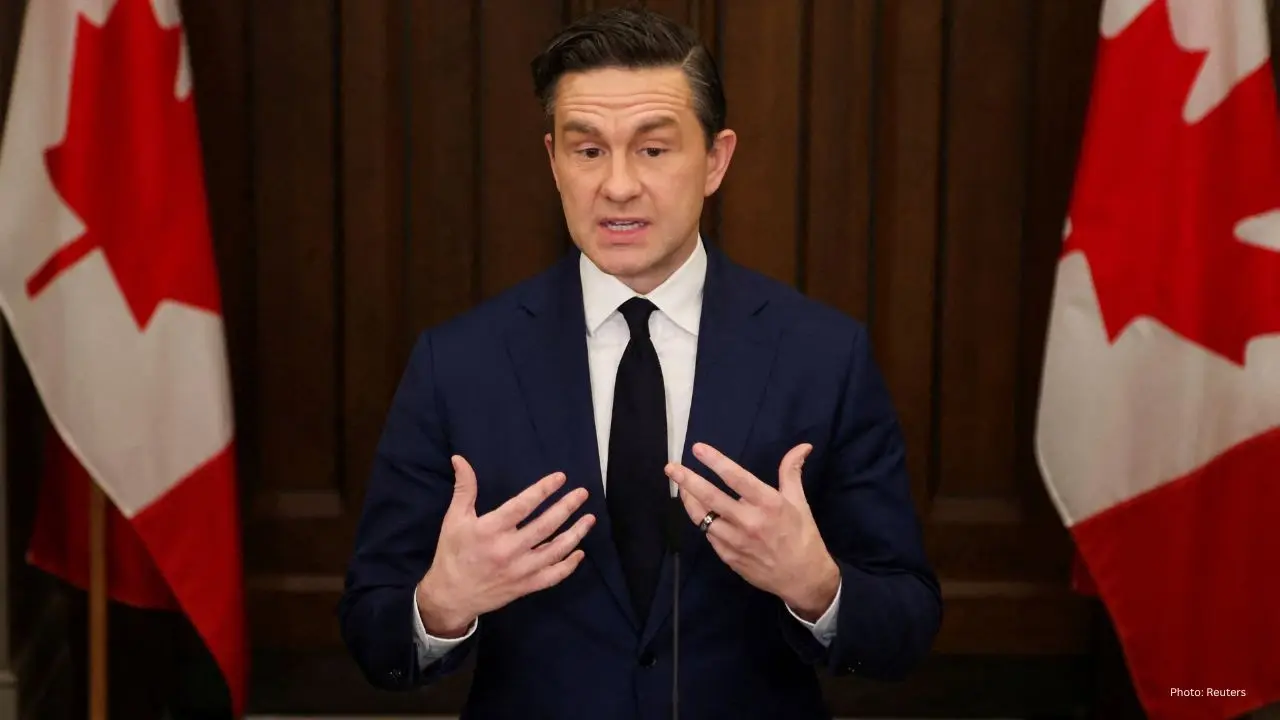
Pierre Poilievre has said he will not step down as leader of the Conservative Party, despite suffering significant losses in recent federal byelections that strengthened Prime Minister Mark Carney and the Liberal Party.
Speaking in Parliament, Poilievre acknowledged that some Canadians may feel discouraged by the current political situation but stressed that he will continue to lead his party. He said he remains committed to representing Canadians and plans to stay on as leader heading into the next election.
The byelection results showed a sharp decline in Conservative support across key ridings. In some areas, the party’s vote share dropped by more than 10 per cent compared to the 2025 federal election. In one closely watched Quebec riding, Conservative support fell dramatically, allowing both the Liberals and the Bloc Québécois to gain ground.
Political analysts say the results highlight deeper challenges within the Conservative Party. Experts noted that the party is struggling not only to attract new voters but also to maintain support among its existing base. Some believe the results serve as a warning that the party may need to rethink its strategy and messaging.
Former political advisers and analysts described the situation as a “weakened position” for the Conservatives, suggesting that continued losses could affect the party’s chances in a future general election. There are also growing discussions within political circles about whether leadership changes might eventually be considered if the trend continues.
However, several Conservative Members of Parliament have publicly supported Poilievre, praising his leadership and expressing confidence in his ability to lead the party forward. They emphasized unity within the party and rejected calls for immediate change.
Meanwhile, the byelection results have also created opportunities for other parties. The Liberal Party has strengthened its position with a majority, while the New Democratic Party (NDP) has seen modest gains in some regions. Analysts say shifting voter preferences could reshape Canada’s political landscape in the coming years.
Prime Minister Carney responded cautiously when asked about Poilievre’s future, stating that he respects all parliamentary leaders and is focused on working with them in the interest of Canadians.
As the political situation evolves, the Conservative Party faces increasing pressure to rebuild support and refine its approach, while Poilievre remains firm in his decision to continue leading the party despite recent setbacks.