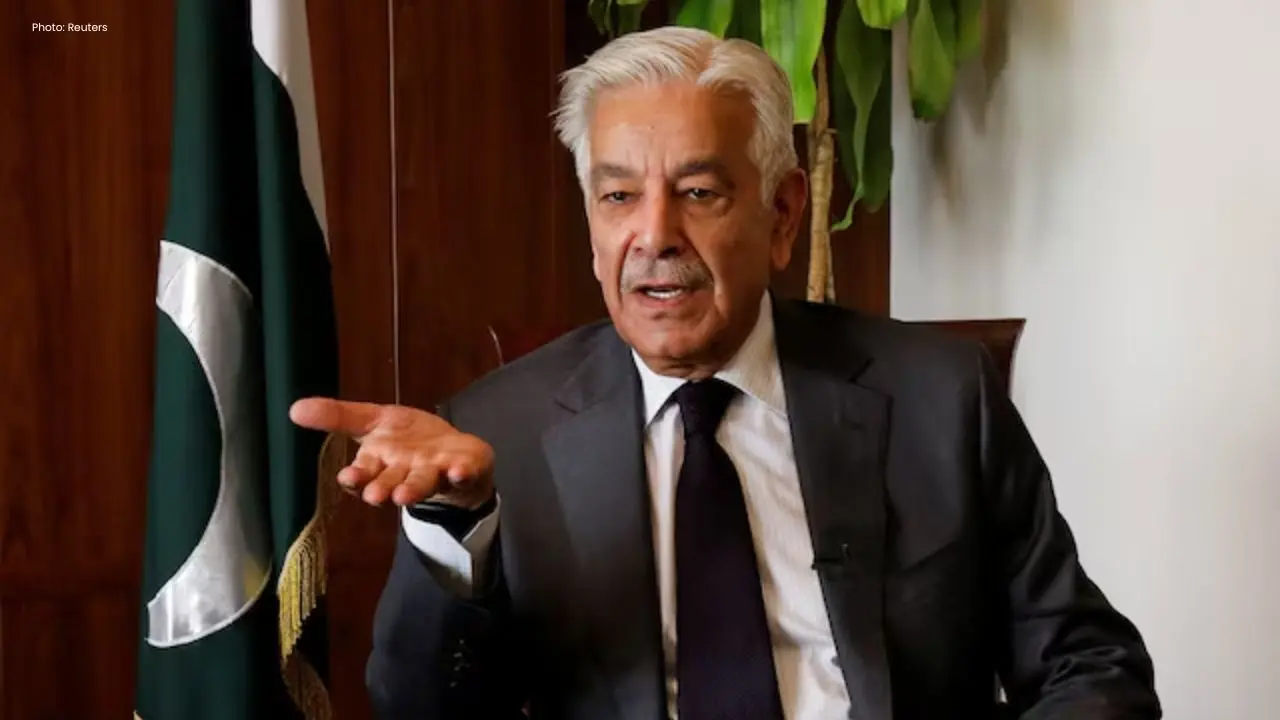
In a clear stance, Defence Minister Khawaja Asif of Pakistan has voiced his opposition to the Abraham Accords, reaffirming Islamabad’s unwillingness to establish diplomatic relations with Israel. This declaration arises amidst heightened global dialogues on Middle Eastern diplomacy, particularly concerning ongoing discussions involving Iran and the United States.
At a recent press briefing in Islamabad, Asif expressed that endorsing any agreement that infringes upon the country’s core ideologies is unacceptable. His comments resonated throughout political and diplomatic arenas given the intensified international calls for regional peace initiatives and strategic collaborations across the Middle East.
This declaration follows Donald Trump’s recent assertion advocating that nations involved in dialogues regarding Iran should evaluate the possibility of joining the Abraham Accords. The accords, introduced during Trump’s presidency, aim to establish normalized diplomatic, economic, and security connections between Israel and several Arab nations.
Historically, Pakistan has insisted that any recognition of Israel hinges on achieving a fair resolution to the Palestinian issue and the creation of an independent Palestinian state. Analysts suggest that Asif’s statements reflect Pakistan’s enduring diplomatic stance, alongside the domestic political complexities surrounding relations with Israel.
Since their inception in 2020, the Abraham Accords have drawn in several nations, including the United Arab Emirates, Bahrain, Morocco, and Sudan, to establish relations with Israel through agreements facilitated by the U.S. Washington remains committed to persuading more Muslim-majority nations to participate in this initiative.
Asif’s recent comments emerge amid Pakistan’s delicate navigation of diplomatic interactions within the Middle East, maintaining robust political and economic associations with Gulf nations while consistently advocating for Palestinian rights in global forums.
Experts highlight the intricacies of Pakistan’s domestic political climate, stressing that any shift towards formal recognition of Israel is particularly sensitive. Public sentiment has largely backed the Palestinian cause, with political factions across the board generally opposing the acknowledgment of Israel without a comprehensive regional peace agreement.
Asif’s remarks are poised to impact ongoing diplomatic efforts in the region involving Iran, Gulf nations, and the United States. While the U.S. continues to drive for greater regional collaboration through the Abraham Accords, Pakistan’s latest declaration suggests that its traditional foreign policy approach is unlikely to shift in the foreseeable future.