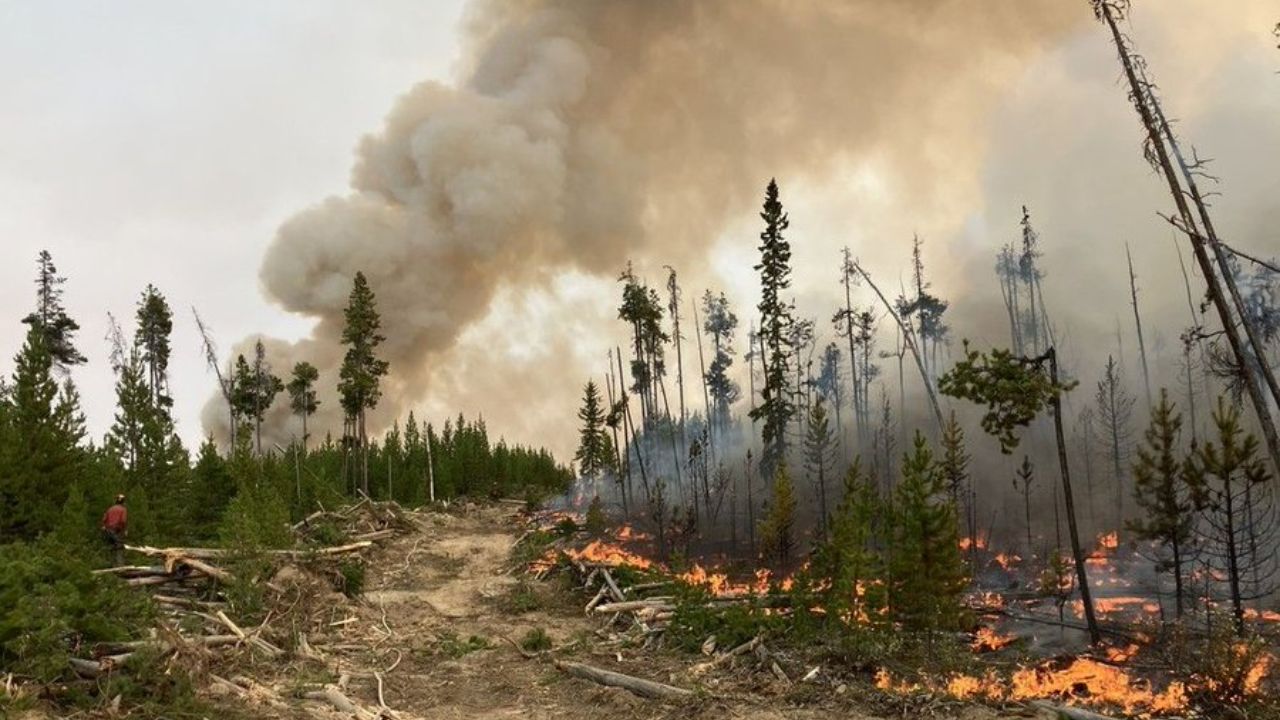
Photo: X / The Vancouver Sun
Wildfires in B.C.’s Chilcotin Region Force Over 1,000 Properties to Evacuate
Evacuation Orders Issued
More than 1,000 properties in British Columbia’s Chilcotin region are under evacuation orders as wildfires continue to grow and threaten homes, health centres, and transportation routes.
On Sunday, officials issued a new evacuation order covering 85 parcels of land and 42 structures along Highway 20, which stretches through the region east of Bella Coola. Residents were told to leave immediately and travel east to Williams Lake, where evacuation services are set up.
Authorities warned that emergency responders might not be able to assist anyone who stays behind in the danger zone.
Size and Spread of the Smokey Lake Wildfire
The Smokey Lake wildfire is the largest and most threatening blaze in the area. By Monday morning, the fire had grown to 67 square kilometres, up from 58 square kilometres just the night before.
This fire is part of a group of wildfires along Highway 20, including the Beef Trail Creek fire and the Dusty Lake fire, which together have forced several evacuation orders and alerts in recent days.
Highway Closures and Travel Disruptions
The Beef Trail Creek wildfire has forced the closure of a 68-kilometre stretch of Highway 20 in both directions. Another section of the highway near the Smokey Lake fire remains open but is restricted to single-lane alternating traffic. Officials have warned drivers to expect long delays.
The highway closures are cutting off vital routes for residents, emergency crews, and goods transportation, making the situation even more challenging for the communities.
Evacuation Alerts Expand
An evacuation alert was also issued Friday for areas south of Highway 20. This alert, covering 332 parcels of land and 165 structures, was put in place by the Tŝilhqot’in Nation and the Cariboo Regional District.
An alert means residents do not yet need to leave but should prepare to do so at a moment’s notice if the fire spreads closer.
Impact Across the Province
According to B.C.’s Emergency Management Minister Kelly Greene, around 1,100 properties are now under evacuation order and another 600 properties are under evacuation alert across the province.
While officials acknowledge that the wildfire season is usually winding down by this time of year, they stress that the risk remains very real.
“We need to stay prepared for all possibilities,” Greene said. “Your actions help protect communities and the people working tirelessly on the front lines.”
Residents at Risk
The evacuation orders directly affect about 550 people, while approximately 650 more are under alert and may need to leave if conditions worsen.
Forests Minister Ravi Parmar noted that cooler weather may help firefighters, but there is still a high chance that more transportation routes could be cut off.
Parmar also raised concerns about interference with firefighting efforts. He revealed that a civilian drone recently struck a wildfire service plane, damaging the aircraft and putting crews at risk.
“Who thought that was a good idea? Give your head a shake,” he said, warning drone operators that fines for such actions can reach up to $100,000.
Environmental Concerns and Drought Conditions
Adding to the crisis, B.C. is also facing worsening drought conditions. The province’s Water, Land and Resource Stewardship Minister, Randene Neill, said that unusually dry weather is harming rivers and threatening salmon populations.
To protect spawning Chinook salmon, officials issued fish protection orders in parts of the Thompson Okanagan region. These orders temporarily restrict water use for nearly 500 surface and groundwater licence holders, particularly for crops that require heavy irrigation.
Additionally, 19 licensees in the Salmon River watershed have been ordered to stop using water for lawns, gardens, and fairways. Neill explained that these restrictions are temporary and will be lifted if river flow levels recover.
A Province on Edge
The wildfires in B.C.’s Chilcotin region highlight how quickly conditions can change in a dry summer. Residents are urged to stay alert, follow evacuation orders immediately, and avoid activities that put firefighters at risk.
While cooler weather may bring some relief, the combination of large wildfires, closed highways, ongoing drought, and threats to salmon populations shows how interconnected the crisis has become.
Until conditions improve, thousands of British Columbians remain displaced or on high alert, waiting to see if the flames will reach their communities.