The Canadian federal government and Alberta are reportedly close to reaching a major agreement on industrial carbon pricing that could reshape the country’s energy and climate policies for years to come. According to multiple reports, the proposed deal would gradually raise Alberta’s industrial carbon price to $130 per tonne by the year 2040, creating a slower timeline than Canada’s earlier national climate targets.
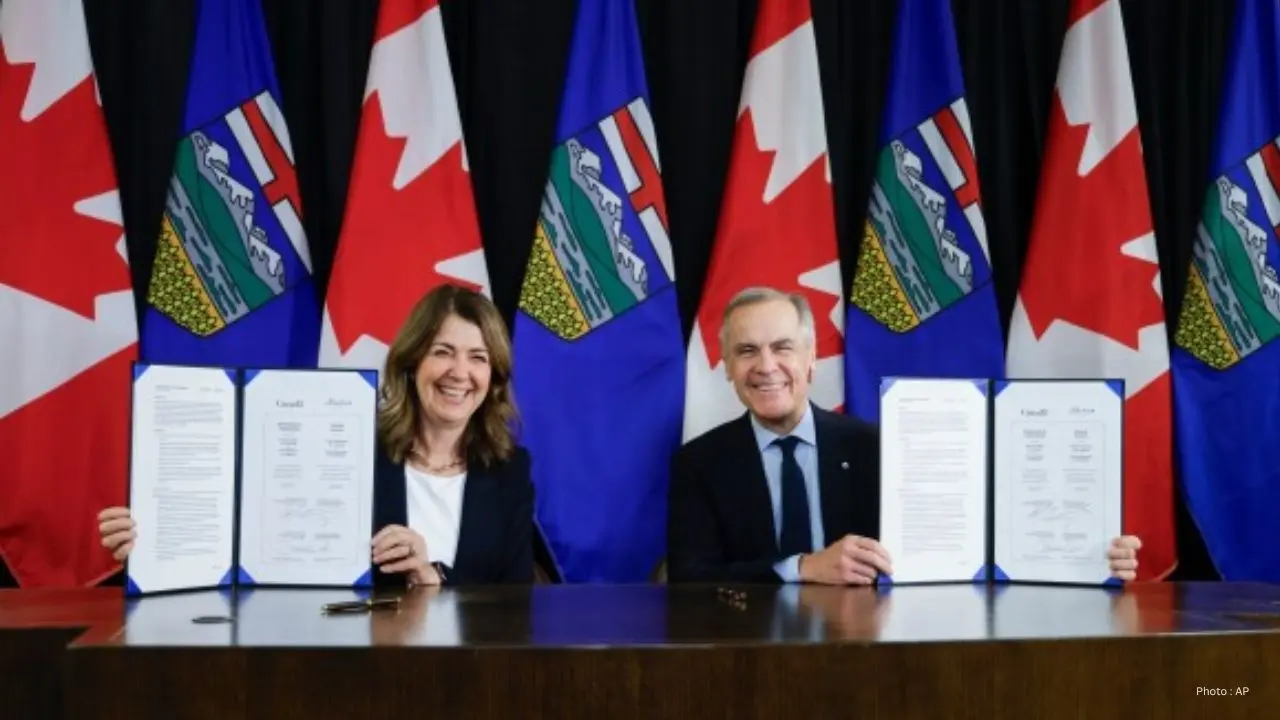
Sources familiar with the negotiations said Prime Minister Mark Carney is expected to visit Calgary to officially announce details of the agreement alongside Alberta Premier Danielle Smith. The discussions are being viewed as an important political compromise between Ottawa’s environmental goals and Alberta’s oil and gas industry concerns.
Under the proposed framework, Alberta’s industrial carbon pricing system would increase from the current rate of about C$95 per tonne to C$100 per tonne next year. The price would then slowly continue rising until it reaches C$130 per tonne around 2040. After that, the price would reportedly continue increasing by approximately 1.5 percent annually. Industry leaders and provincial officials argued that a slower increase would help Canadian energy companies remain competitive internationally while still encouraging long-term emissions reductions.
The agreement comes after Alberta froze its industrial carbon pricing system in 2025. Since then, experts have warned that the market price for industrial carbon credits had fallen too low to properly encourage companies to invest in cleaner technologies. Current carbon credits in Alberta reportedly trade between C$20 and C$40 per tonne, far below the level many climate experts believe is necessary to drive major emissions reductions.
Federal officials believe the new agreement could also help move forward major energy infrastructure projects, including Alberta’s proposed crude oil pipeline to British Columbia’s northwest coast. Ottawa has previously indicated that approval for large pipeline expansions would likely depend on energy companies making stronger commitments to carbon reduction projects such as carbon capture and storage technology.
Environmental groups, however, criticized the slower timeline almost immediately after details of the deal emerged. Climate advocates had pushed for the C$130-per-tonne target to be reached by 2030 rather than 2040. Critics argue that delaying stronger carbon pricing weakens Canada’s climate goals and reduces pressure on major polluters to quickly lower emissions.
The proposed agreement has also sparked debate online. On Reddit and social media platforms, many Canadians questioned whether the new plan gives too many concessions to Alberta’s oil industry. Some users argued the slower increase could delay meaningful climate action, while others defended the compromise as necessary to protect jobs, investment, and Canada’s energy exports during uncertain global economic conditions.
Political analysts say the negotiations reflect the difficult balance Ottawa faces between environmental policy and economic growth. Alberta remains Canada’s largest oil-producing province, and tensions over carbon pricing have repeatedly caused conflict between federal and provincial governments in recent years. Prime Minister Carney’s government appears to be seeking a middle-ground approach that supports industrial growth while maintaining some form of long-term emissions reduction strategy.
If finalized, the agreement could become one of the most important climate-policy compromises in Canada since the federal carbon pricing system was first introduced. However, environmental groups, industry leaders, and provincial governments are expected to continue debating whether the plan goes too far — or not far enough — in addressing both economic and climate concerns.A