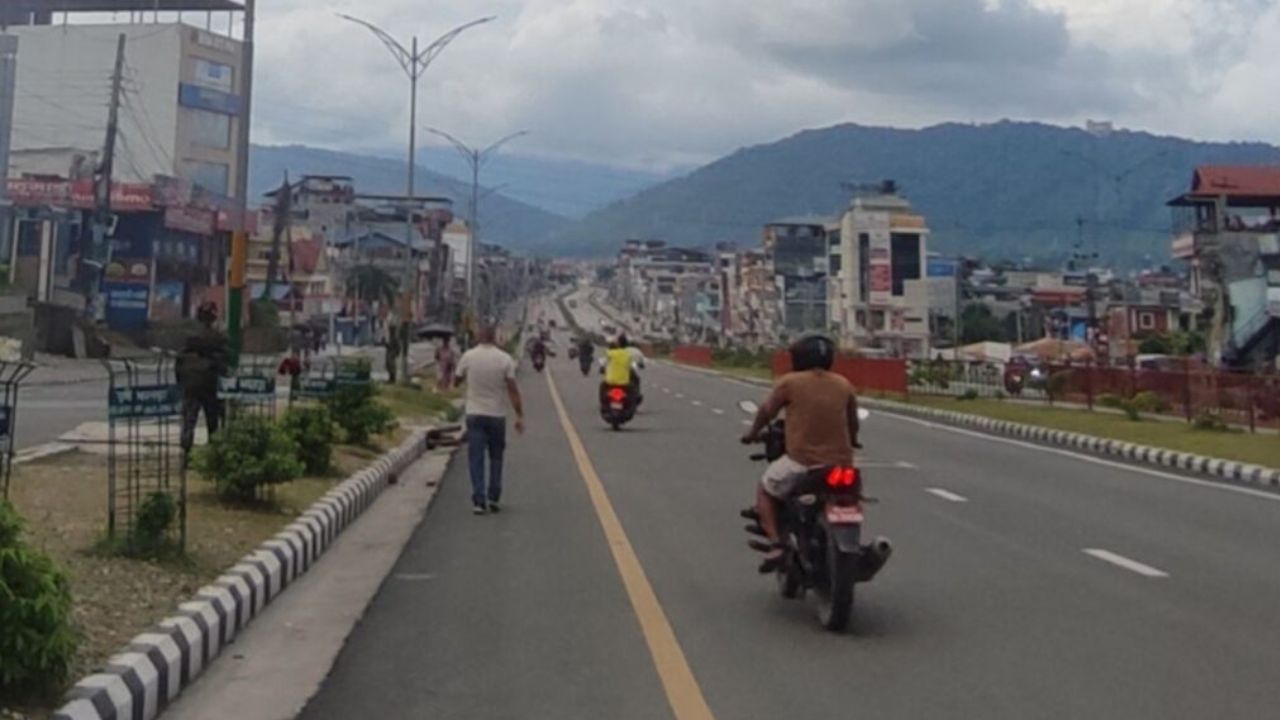
Nepal is slowly returning to normal after days of violence, protests, and curfews. On Saturday, the authorities removed the strict curfew in Kathmandu Valley and other regions. Shops reopened, traffic returned to the streets, and people finally stepped outside to continue their daily lives.
The decision to lift the curfew came just one day after a historic moment for the country. Sushila Karki, the former Chief Justice, was appointed as Nepal’s first woman Prime Minister to lead an interim government. Her appointment followed the resignation of K.P. Sharma Oli, who stepped down after massive protests against corruption and a social media ban.
The Days of Unrest
The unrest in Nepal began when the government introduced a sudden ban on social media platforms. Many young people, especially students, were angered by the decision. They felt it was an attack on their freedom. Within hours, protests broke out across Kathmandu and spread to other cities.
On Monday, the demonstrations turned violent. Security forces clashed with protesters, and at least 19 people were killed in police action that day alone. Later reports showed that 51 people died in total, including one Indian citizen. Hundreds were injured.
The violence also led to the destruction of government buildings. Some were set on fire, while others were vandalized by angry crowds.
Oli’s Resignation and Army Control
Prime Minister Oli faced intense pressure as the protests grew stronger. On Tuesday, protesters stormed his office, demanding his resignation. By evening, he stepped down, ending his government’s rule.
The Nepalese Army quickly stepped in to take control of the law and order situation. They imposed curfew orders across Kathmandu Valley and other key regions. Movement was restricted, but people were allowed out at fixed times to buy essentials.
The social media ban was also removed on Monday night, easing one of the main triggers of the unrest.
Life Returns to Normal
Saturday brought relief to millions of Nepali citizens. With the curfew lifted, daily activities resumed.
Shops, grocery stores, and markets reopened after being closed for five days.
Shopping malls welcomed customers again.
Traffic returned to the roads, giving a sign of normal city life.
Cleaning drives were started to clear the damage caused by violent protests, especially around key government offices.
For ordinary people, this meant a chance to restock food, reopen businesses, and return to their routines after a tense and uncertain week.
A Historic Appointment
While the lifting of the curfew is important, the appointment of Sushila Karki as interim Prime Minister may be the bigger turning point. She is the first woman in Nepal’s history to lead the government, even if only for an interim period.
Her task will not be easy. She must:
Calm tensions across the country.
Investigate the violence and deaths that shocked the nation.
Prepare Nepal for fresh elections scheduled for March 5, 2026.
Karki is known for her honesty and her fight against corruption during her career as Chief Justice. Many citizens are hopeful that she can restore trust between the government and the people.
Editorial View
The end of the curfew is a welcome relief for the people of Nepal. Daily life has returned, but the wounds of the past week remain fresh. Over 50 lives have been lost, and many families are in mourning. The destruction of public property shows the depth of anger among the people.
At the same time, the appointment of Sushila Karki offers hope. Her clean image and reputation for fairness give her a chance to bring stability during this critical time. But the challenges ahead are heavy. She will need to balance the expectations of young protesters, the power of political parties, and the role of the army.
Nepal’s crisis is a reminder that freedom, justice, and good governance are not small issues. When people feel their rights are denied, unrest is almost certain. Leaders must listen to citizens before making decisions that affect millions.
The lifting of the curfew is not just about reopening shops and traffic. It is a symbol that the worst days of fear may be over, and a step toward rebuilding trust. With careful leadership and open dialogue, Nepal can move from chaos to stability.