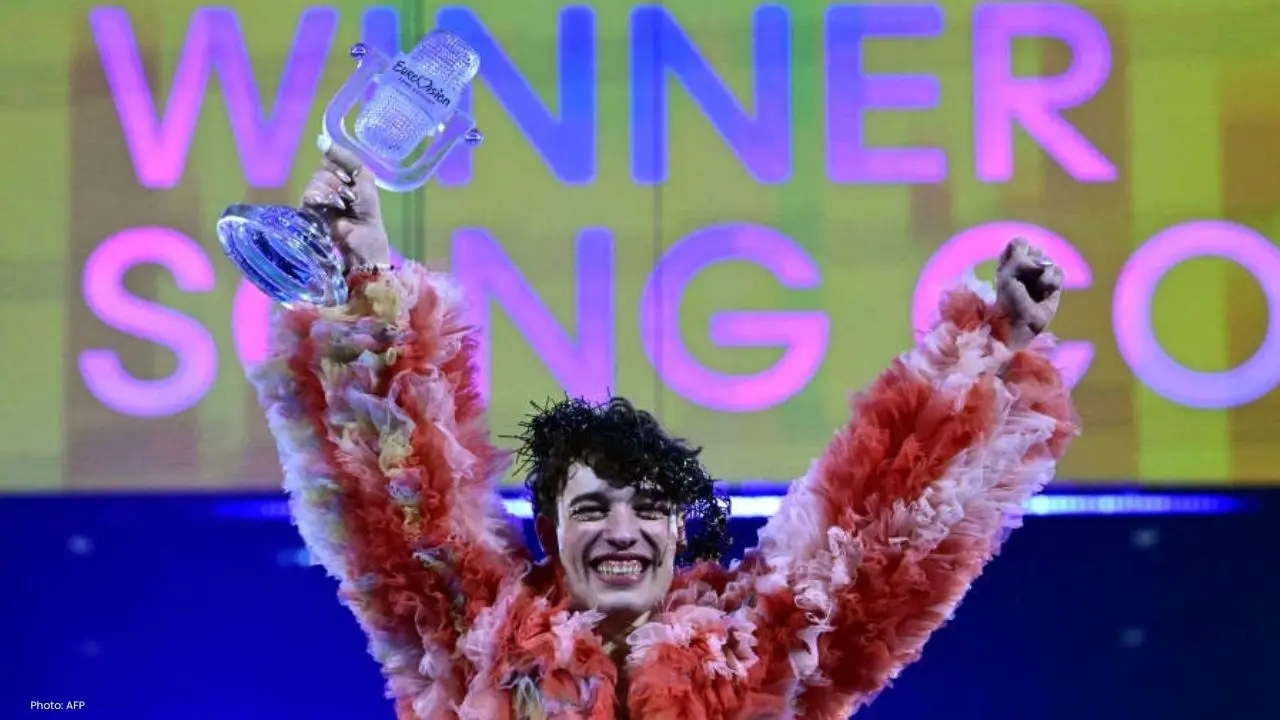
Nemo, the Swiss singer who won the 2024 Eurovision Song Contest with the hit The Code, has announced they are returning their winner’s trophy in protest against Israel’s inclusion in the 2026 Eurovision Song Contest. The decision reflects rising tensions over the European Broadcasting Union’s (EBU) handling of the issue and questions about the contest’s stated values of unity, inclusion, and dignity.
In a statement shared on social media, Nemo said they no longer feel the trophy “belongs on my shelf” because allowing Israel to compete contradicts what Eurovision claims to represent. They criticised the EBU for maintaining Israel’s participation despite the ongoing war in Gaza and serious human rights concerns raised by United Nations experts. Israel rejects accusations of genocide and says it is acting in self‑defence following the Hamas-led attack on October 7, 2023.
Nemo, who identifies as non‑binary, stressed that the protest is not directed at other artists competing, but at the broader use of the contest to “soften the image of a state accused of severe wrongdoing.” They emphasised that the values celebrated on stage must also be upheld off it, or even the most meaningful music loses its impact.
The controversy has intensified as multiple countries have officially withdrawn from the 2026 competition in protest. Iceland’s public broadcaster confirmed it will boycott next year’s event, following earlier decisions by Spain, the Netherlands, Ireland, and Slovenia not to participate because of Israel’s inclusion. These withdrawals represent one of the most significant coordinated exits in Eurovision history.
The EBU’s decision to allow Israel to compete followed internal discussions and reforms intended to reassure members about contest neutrality. However, critics across Europe have said the move undermines core values and compromises the contest’s cultural mission. Some broadcasters also cited broader concerns about human rights and public service values in their decisions to pull out.
Eurovision 2026 is scheduled to take place in Vienna, Austria, in May. With several countries now boycotting and international debate intensifying, the competition faces a challenging path forward as it approaches its 70th edition.