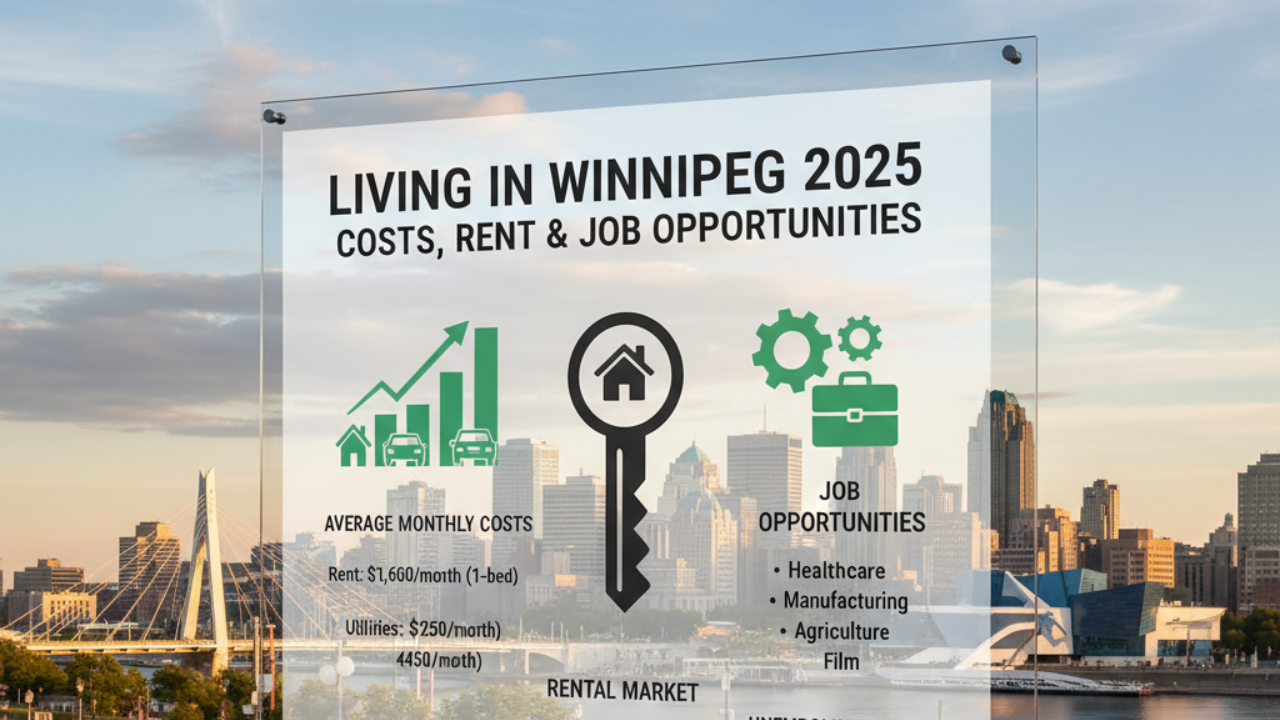
Living in Winnipeg 2025: Expenses, Housing, and Employment Guide
Winnipeg, the capital city of Manitoba, is known for its vibrant culture, growing job market, and relatively affordable cost of living compared to other major Canadian cities. Whether you’re planning to move, study, or start a career, understanding the cost of living, housing, and employment opportunities in Winnipeg is essential.
Cost of Living in Winnipeg
The overall cost of living in Winnipeg is moderate compared to cities like Toronto or Vancouver. Key expenses include:
-
Groceries: Average monthly grocery expenses for a single person range from CAD 300-450. Fresh produce, dairy, and grains are affordable and widely available.
-
Utilities: Electricity, heating, water, and internet typically cost around CAD 150-250 per month, depending on the season and household size.
-
Transportation: Public transit is well-developed, with monthly passes priced around CAD 120. Owning a car adds fuel, insurance, and maintenance costs.
Housing and Rent
Winnipeg offers affordable rental options, making it an attractive city for newcomers and students:
-
One-bedroom apartment: CAD 900-1,200 per month in the city center, slightly lower in suburbs.
-
Two-bedroom apartment: CAD 1,200-1,600 per month in central areas.
-
Buying property: Average home prices are around CAD 350,000-450,000, which is considerably lower than larger Canadian cities.
Neighborhoods like St. Boniface, Osborne Village, and Wolseley are popular for their amenities, safety, and access to public transport.
Job Market and Employment Opportunities
Winnipeg’s job market is diverse and growing, with opportunities in sectors such as:
-
Healthcare and social services
-
Information technology and software development
-
Education and research institutions
-
Manufacturing and logistics
-
Retail and hospitality
The city also offers numerous opportunities for newcomers, with programs to help integrate immigrants into the workforce. Salaries vary by industry, but the average annual income in Winnipeg is approximately CAD 55,000-65,000, which supports a comfortable lifestyle given the city’s moderate living costs.
Tips for Managing Expenses
-
Budget wisely: Track monthly expenses to avoid overspending.
-
Use public transit: It is cost-effective and reliable.
-
Compare grocery stores: Some chains offer better deals and discounts.
-
Consider shared housing: Reduces rent and utility costs significantly.
-
Explore employment resources: Local job boards, networking events, and career centers can boost your chances of finding suitable employment.
Conclusion
Living in Winnipeg offers a balanced lifestyle with affordable housing, moderate living costs, and promising job opportunities. By planning ahead and managing expenses, newcomers and residents alike can enjoy the city’s culture, parks, and vibrant community. Winnipeg remains an ideal choice for those seeking quality urban living without the high costs of larger Canadian cities.
Disclaimer: This article is for informational purposes only and does not constitute financial or legal advice. Readers should verify details through official sources when planning to move, rent, or seek employment in Winnipeg.