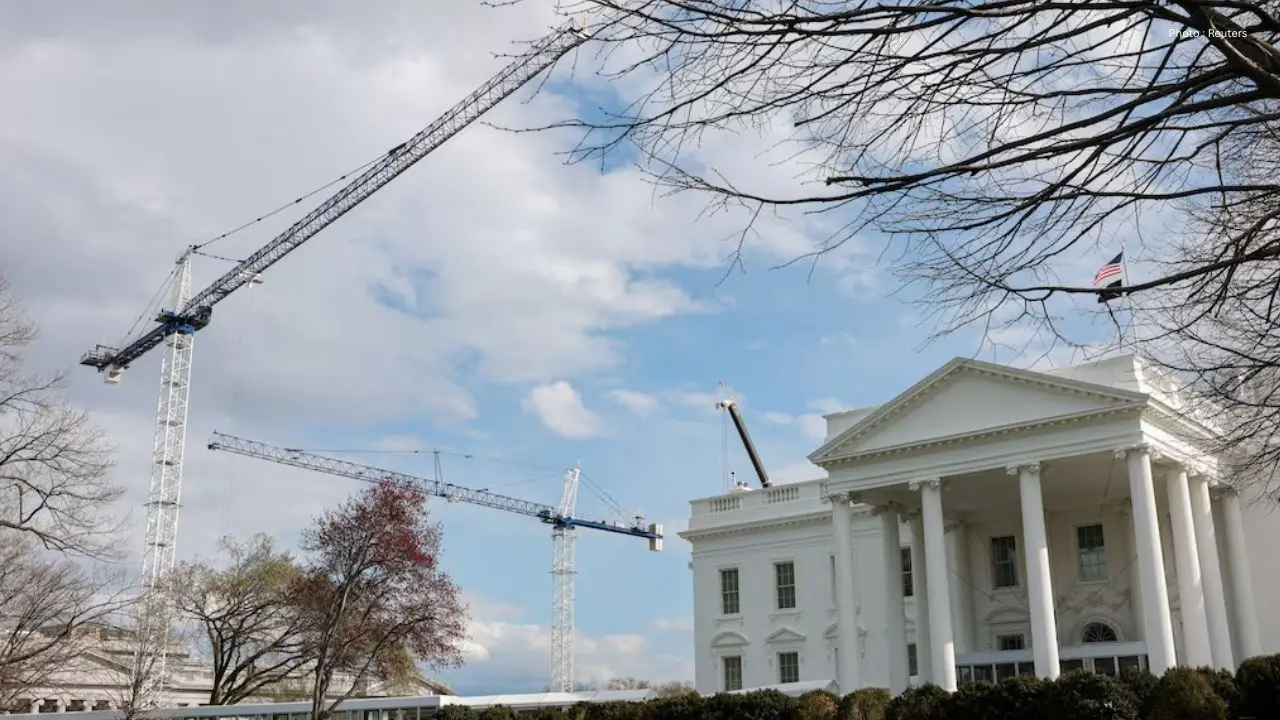
A U.S. federal judge has ordered a halt to the above-ground construction of President Donald Trump’s proposed White House ballroom, marking a significant legal setback for the high-profile project. The ruling allows work on an underground section to continue but blocks further visible construction until proper approvals are obtained.
Judge Richard Leon stated that the administration must first secure authorization from Congress before proceeding. In his decision, he rejected the argument that the project could move forward under national security grounds, emphasizing that such claims cannot override existing legal requirements. He also suggested that the administration may have attempted to bypass earlier court restrictions by reclassifying the project.
The ballroom project, planned within the White House complex, has faced legal challenges for weeks. A previous temporary halt was issued in March after concerns were raised about whether proper procedures had been followed before construction began.
The lawsuit was filed by the National Trust for Historic Preservation, which argued that the administration failed to submit plans to the National Capital Planning Commission, did not conduct an environmental review, and bypassed congressional approval. The group also claimed the project could violate constitutional provisions regarding federal property oversight.
The proposed ballroom has expanded significantly in scope. Initially designed to host around 500 guests, updated plans suggest a much larger venue capable of accommodating up to 1,350 people. The project is estimated to cost approximately $400 million and, according to the administration, is being funded through private donations.
President Trump has defended the project, calling it essential for hosting large-scale events and meetings with world leaders. He also argued that the facility would include security features such as bomb shelters and medical infrastructure, framing it as important for national security and military operations.
However, critics remain concerned about the legal process and the broader implications of altering historic government property without proper oversight. The Justice Department has already filed an appeal against the ruling, signaling that the legal battle over the project is likely to continue.
The decision represents the latest development in ongoing disputes over proposed changes to Washington’s historic landscape, as debates continue over the balance between modernization, security needs, and legal accountability.