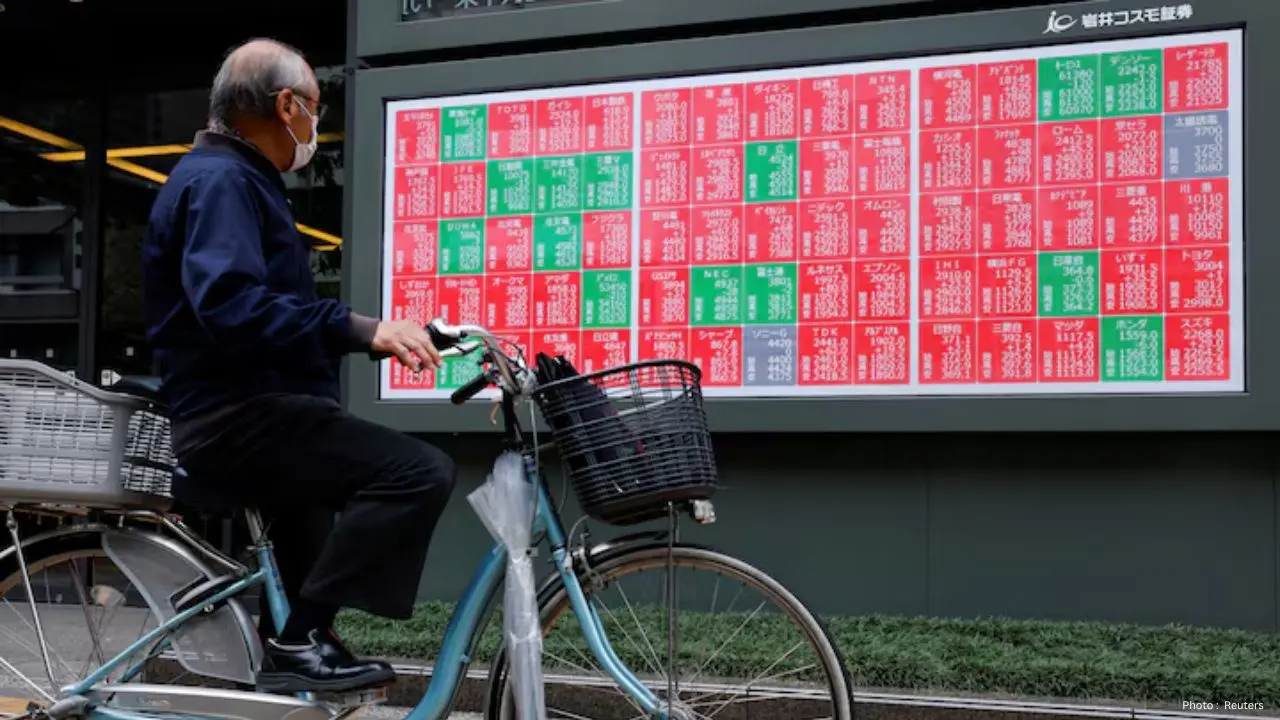
Despite ongoing tensions in the Middle East impacting oil supply, global financial markets maintain an unexpected level of stability. Recent developments, including an extension of the ceasefire involving Iran, have created a mixed scenario where risks continue to linger, yet investor confidence persists.
The stock markets of major economies have shown slight upward movements, with investors responding positively to the prospect of reduced conflict. Nevertheless, uncertainty looms as consensus on the ceasefire is not fully established, indicating that while there is relief, the threat of escalated tensions remains.
A major concern for global financial stability revolves around oil pricing. The conflict's disruption, particularly in pivotal areas like the Strait of Hormuz, has kept oil prices hovering near $100 per barrel—a significant increase compared to normal conditions—causing inflation worries worldwide.
Rising oil prices affect every sector. Transport costs rise, industries confront greater expenses, and the prices of everyday products soar, exerting pressure on both households and businesses. Consequently, governments and central banks must navigate the complicated balance between curbing inflation and fostering economic growth.
In spite of these challenges, global markets exhibit resilience, with investors seemingly believing that the worst has been accounted for in current pricing. They are redirecting their focus toward corporate earnings, economic indicators, and long-term growth prospects.
Technology companies, particularly those involved in artificial intelligence, have become pivotal in bolstering market confidence. In Asia, a strong performance from tech entities has propelled markets higher, illustrating that innovation can sustain investor enthusiasm even amid geopolitical strains.
Fluctuations in currency markets also emerge. The US dollar, typically strengthening in crisis, has begun to show signs of weakness, indicating that investors are feeling less anxious about immediate threats and are looking toward more consistent economic conditions.
Additionally, there's a noted trend of capital flowing into safer investment avenues such as gold. Amidst ongoing uncertainty, many investors are opting to safeguard their assets in stable investments, resulting in increased gold prices and reflecting a cautious market sentiment.
This scenario underscores the multifaceted nature of contemporary global markets. Historically, conflicts of this magnitude would have triggered sharp declines in stock indices; however, today's markets display resilience partly due to improved access to information and risk management tools available to investors.
However, this steadiness should not be misconstrued as a sign of safety. Real risks persist—including the potential disruption of vital trade routes, high energy prices, and ongoing political uncertainty—that could lead to unpredictable market responses.
Another significant concern is the impact on developing nations. Climbing oil prices along with global inflation may disproportionately affect these economies, which typically have fewer resources to weather economic disturbances, widening the economic divide.
The role of central banks remains crucial in this context. They must judiciously observe inflation trends and choose between raising interest rates or keeping them stable; a misstep could either stifle growth or exacerbate inflation.
Future developments will heavily rely on the situation in the Middle East. Should the ceasefire persist and tensions subside, markets may stabilize or improve further. Conversely, a return to conflict could produce more severe repercussions.
In summary, global markets are showcasing strength and adaptability amid uncertainty, with investors meticulously weighing risks against opportunities, targeting long-term growth while being vigilant about immediate threats. This measured approach reflects a new reality where economic and political dynamics are deeply intertwined.
The weeks ahead will play a vital role in shaping the trajectory of global markets. Stability remains conceivable, contingent upon peace, cooperation, and prudent economic decisions on a global scale.