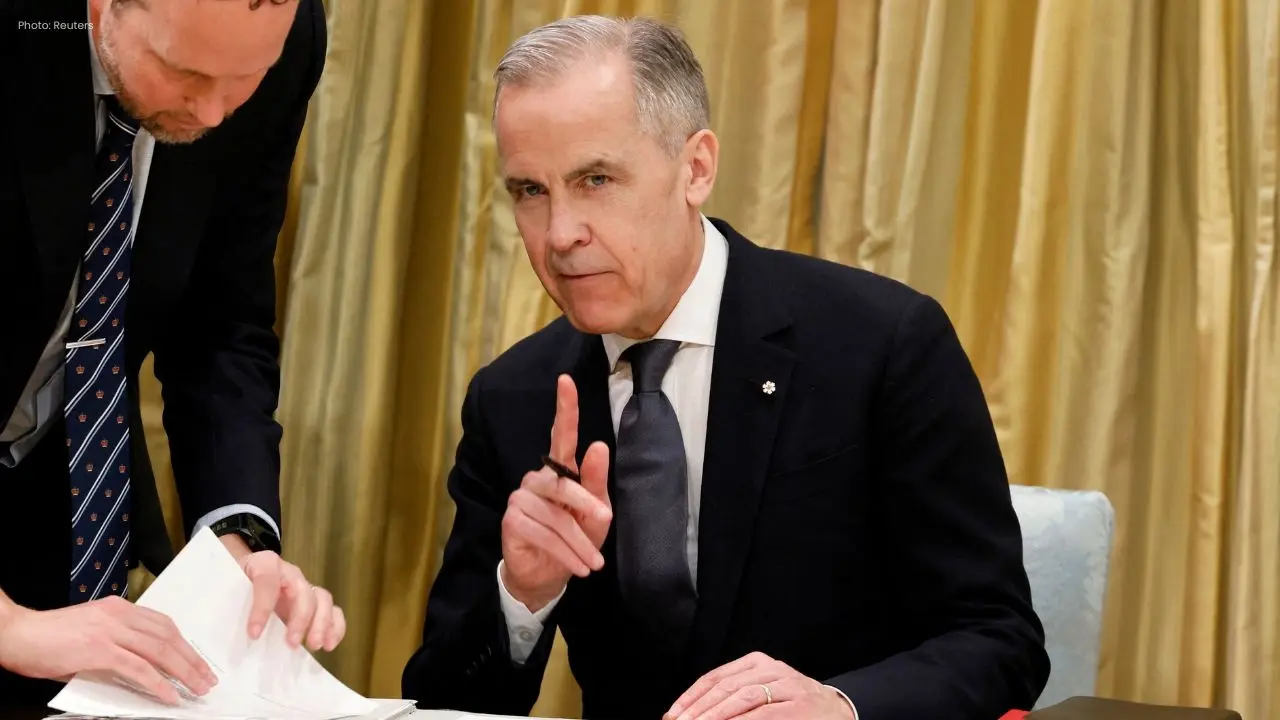
Prime Minister Mark Carney delivered a sweeping cabinet refresh on Monday, filling a major gap left by last week’s high-profile resignation and tightening his political team ahead of a demanding legislative season. The shake-up brings Marc Miller back to cabinet, strengthens the government’s presence in Quebec, and shifts key environmental responsibilities after weeks of internal pressure.
Marc Miller, a Montreal MP known for handling complex files under the previous government, is now the minister of Canadian identity and culture and the minister responsible for official languages. His return marks a sharp political comeback after being left out when Carney first formed his cabinet. Speaking after being sworn in, Miller said he felt energized to rejoin the front bench, calling himself someone who “likes to be busy” and is ready to take on the new challenge.
Joël Lightbound’s influence also grew significantly. Already serving as minister of public works and procurement, he now becomes Carney’s Quebec lieutenant — one of the most strategic roles in federal politics. Lightbound, who was first elected in 2015, said he was honoured to accept the responsibility and intends to draw on the experience of Steven Guilbeault, who previously held the same role.
Environment and Climate Change Minister Julie Dabrusin also saw her portfolio expanded. She will now oversee Canada’s parks and nature policy, a critical part of the federal government’s conservation and biodiversity commitments. Dabrusin’s rise continues her steady climb from parliamentary secretary roles to broader national responsibilities under Carney’s leadership.
These changes became necessary after Guilbeault resigned from cabinet last week following a major policy dispute. Ottawa’s memorandum of understanding with Alberta — clearing a path for a new bitumen pipeline to the British Columbia coast — included commitments to suspend the planned federal emissions cap and remove Alberta’s requirements under the Clean Electricity Regulations. Both measures were cornerstones of Guilbeault’s climate policy framework.
Guilbeault later said these reversals were the final breaking point after months of seeing parts of his work rolled back, including the suspension of the consumer carbon tax shortly after Carney took office. Despite leaving cabinet, he remains a Liberal MP and is expected to continue shaping internal discussions from outside the front bench.
Miller and Lightbound both praised Guilbeault’s contributions and said they look forward to relying on his advice as they take over pieces of his former workload.
Asked about tensions within the Liberal caucus following the resignation, Miller dismissed concerns. He said Carney deserves credit for winning an election many predicted the Liberals would lose, adding that caucus members recognize the value of his leadership.
This is Carney’s second major cabinet adjustment since the April election. In September, Chrystia Freeland stepped down as minister of transport and internal trade, signalling her intention to eventually leave federal politics. Her responsibilities were redistributed across two senior ministers. Freeland’s earlier resignation as finance minister under the previous government had contributed to significant political shifts, including the leadership race she ultimately lost to Carney.
With Monday’s changes, Carney is positioning his cabinet for stability after internal turbulence and ongoing debates over energy, climate policy and regional expectations. The refreshed team is expected to play a key role as Canada enters an intense period of legislative, economic and environmental decision-making.