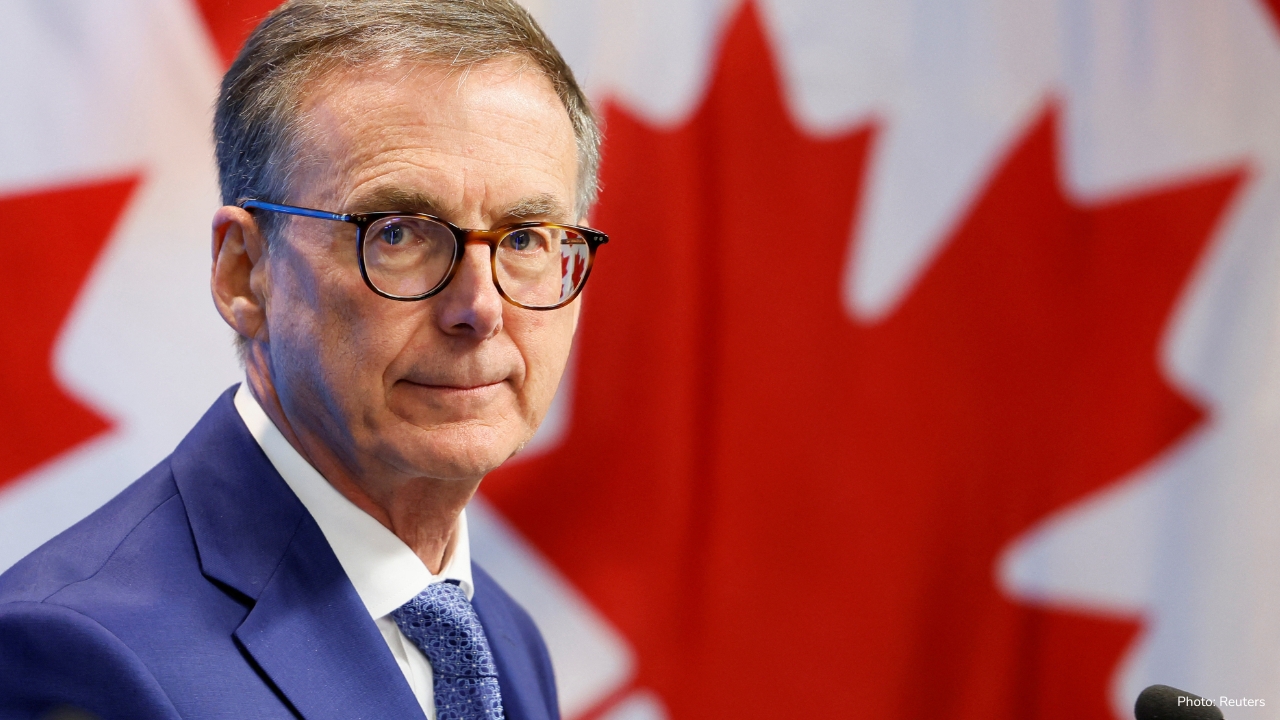
On Monday, September 22, 2025, the Canadian dollar, often called the loonie, dropped to its lowest level in a week against the U.S. dollar. The currency was trading at 1.3820 per U.S. dollar, which means that one Canadian dollar was worth about 72.36 U.S. cents.
This decline came just before an important speech by Tiff Macklem, the Governor of the Bank of Canada, who was expected to discuss issues related to global trade, the Canadian economy, and potential monetary policies.
The fall in the Canadian dollar was influenced by several economic factors, including interest rate differences, changes in oil prices, fluctuations in bond yields, and rising producer prices in Canada. Each of these elements contributed to uncertainty in the currency markets, making investors cautious.
Interest Rate Differences
One of the main reasons for the Canadian dollar’s weakness is the difference in interest rates between Canada and the United States. The Bank of Canada recently cut its key interest rate by 0.25% to 2.50%, marking the first reduction since March 2025.
This rate cut was aimed at supporting Canada’s economy, which is facing challenges such as a weak job market and low inflation levels. When a country lowers its interest rates, its currency often becomes less attractive to foreign investors because the return on investments in that country decreases.
At the same time, the U.S. Federal Reserve also eased interest rates slightly but indicated that it might not reduce them further in the near term. This difference in approach made the U.S. dollar stronger relative to the Canadian dollar.
Investors prefer currencies from countries with higher or stable interest rates because they can earn more from bonds, savings, and investments in those countries. Therefore, the Canadian dollar weakened as a result.
Oil Prices and the Canadian Economy
Another key factor affecting the Canadian dollar is oil prices. Canada is one of the world’s largest oil producers, and oil exports make up a significant part of its economy. On Monday, oil prices fell slightly, with U.S. crude trading at $62.64 per barrel.
Even a small drop in oil prices can impact Canada’s trade balance because lower oil prices reduce revenue from exports. This can have a direct effect on the value of the loonie, as fewer foreign buyers need Canadian dollars to purchase oil.
When oil prices fall, the Canadian economy can face slower growth, and the Canadian dollar may weaken further. Conversely, when oil prices rise, the currency often strengthens because Canada earns more from its exports, which increases demand for its currency in global markets.
Bond Yields and Currency Movements
Canadian government bond yields also played a role in the decline of the Canadian dollar. On Monday, the yield for 10-year Canadian government bonds dropped to 3.190%. This decrease widened the yield gap between Canadian and U.S. bonds to its largest level since July 9, 2025.
Bond yields are important because they indicate how much return investors can earn from government debt. Higher yields attract foreign investors, who must buy the country’s currency to invest. When Canadian bond yields fall relative to U.S. yields, it makes the Canadian dollar less attractive, putting downward pressure on its value.
Rising Producer Prices
Another factor influencing the currency is the rise in producer prices in Canada. In August 2025, producer prices increased by 0.5%, raising the annual rate to 4%, compared with 2.6% in July.
Producer prices measure the cost of goods sold by manufacturers and producers before they reach consumers. A rising producer price index can indicate future inflation, which may affect economic growth and monetary policy decisions.
Although the increase in producer prices is not extremely high, it does signal that costs for Canadian businesses are rising. This can influence the Bank of Canada’s decisions on interest rates and monetary policy in the near future, which in turn affects the value of the loonie.
Anticipation of Governor Macklem’s Speech
The market’s focus was on Tiff Macklem’s upcoming speech, as investors hoped it would provide clarity on the Bank of Canada’s views on the economy, trade, and monetary policy. The speech was expected to discuss global trade issues, the impact of recent interest rate cuts, and potential strategies to support economic growth.
Governor Macklem has previously highlighted the risks posed by global trade tensions, especially between major economies like the United States and China. In past statements, he warned that large increases in tariffs could negatively affect Canada’s economy, creating one-off shocks that could not always be offset by monetary policy alone. Investors and analysts closely monitor his words because they can influence market confidence and currency movements.
Market Reactions
Investors reacted cautiously on Monday, taking into account the combination of interest rate cuts, falling oil prices, and rising producer costs. Currency traders often respond quickly to such signals, as even small economic shifts can affect the relative value of currencies.
The Canadian dollar’s decline to a one-week low reflects these combined pressures. Traders are now closely watching Governor Macklem’s speech, anticipating any guidance on future monetary policy. A more optimistic or dovish tone from the Bank of Canada could stabilize the loonie, while cautious or negative comments might push the currency lower.
Comparison with Other Currencies
Last week, the Canadian dollar was performing well among the G10 currencies, a group of the world’s major and most widely traded currencies. It had strengthened partly due to a relatively stronger U.S. dollar and stable commodity prices. However, early in the new week, both the Canadian and U.S. dollars weakened slightly, reflecting uncertainty ahead of major central bank announcements and speeches.
Investors in the currency markets consider not just domestic economic conditions, but also global developments, trade policies, and geopolitical risks. Changes in any of these factors can quickly shift currency values.
Broader Economic Context
- The Canadian economy has faced several challenges in 2025, including:
- A weak job market, with slower growth in employment opportunities.
- Moderate inflation, requiring careful attention from the Bank of Canada.
- Global trade tensions, affecting exports and imports.
- Fluctuating commodity prices, particularly oil and metals, which are major Canadian exports.
These factors collectively influence the Bank of Canada’s decisions on interest rates and monetary policy. Investors and analysts closely track economic indicators, such as employment numbers, GDP growth, inflation rates, and commodity prices, to predict currency movements.
- Interest Rates: Bank of Canada cut rates to 2.50%, while U.S. rates are more stable.
- Oil Prices: Slight drop to $62.64 per barrel, affecting export revenues.
- Bond Yields: Decline in Canadian 10-year bond yields made Canadian investments less attractive.
- Producer Prices: Rising costs indicate potential future inflation pressures.
- Global Trade: Tensions between major economies add uncertainty.
- Governor Macklem’s Speech: Markets awaiting insights on policy direction.
Market Outlook
- Going forward, the Canadian dollar’s value will largely depend on:
- The tone of Macklem’s speech – whether it signals further rate cuts or caution.
- Global oil prices – which directly affect Canada’s economy.
- U.S. Federal Reserve actions – as changes in U.S. rates influence the loonie.
- Economic data releases – including employment numbers, inflation, and trade statistics.
Analysts suggest that if oil prices rebound and Macklem signals confidence in the Canadian economy, the loonie could regain strength. However, continued uncertainty in global trade or further economic weakness could keep the Canadian dollar under pressure.
On September 22, 2025, the Canadian dollar fell to a one-week low, trading at 1.3820 USD. This decline was influenced by multiple factors, including recent interest rate cuts, declining oil prices, falling bond yields, and rising producer prices.
Investors are closely watching Bank of Canada Governor Tiff Macklem’s speech, which could provide important signals on the future of Canadian monetary policy and trade strategies. The speech’s impact is likely to be felt across currency markets, affecting not only the loonie but also related economic sectors, such as exports, investments, and commodity trade.
In the near term, the loonie may remain volatile as investors process the combination of domestic economic indicators and global market developments. The interaction of interest rates, oil prices, and trade policy will continue to shape the Canadian dollar’s trajectory in the coming weeks.
- Canadian dollar fell to 1.3820 per U.S. dollar, its lowest in a week.
- Decline came ahead of Bank of Canada Governor Tiff Macklem’s speech.
- Bank of Canada cut interest rates to 2.50%, the first cut since March.
- U.S. Federal Reserve rates are more stable, making the U.S. dollar stronger.
- Oil prices fell slightly to $62.64 per barrel, impacting Canada’s trade revenue.
- Canadian 10-year bond yields declined, widening the gap with U.S. bonds.
- Producer prices rose 0.5% in August, signaling moderate inflation.
- Investors are waiting for guidance from Macklem on trade and monetary policy.
- Global trade tensions and commodity price fluctuations add uncertainty.
- The loonie’s future depends on oil, U.S. rates, Macklem’s speech, and economic data.