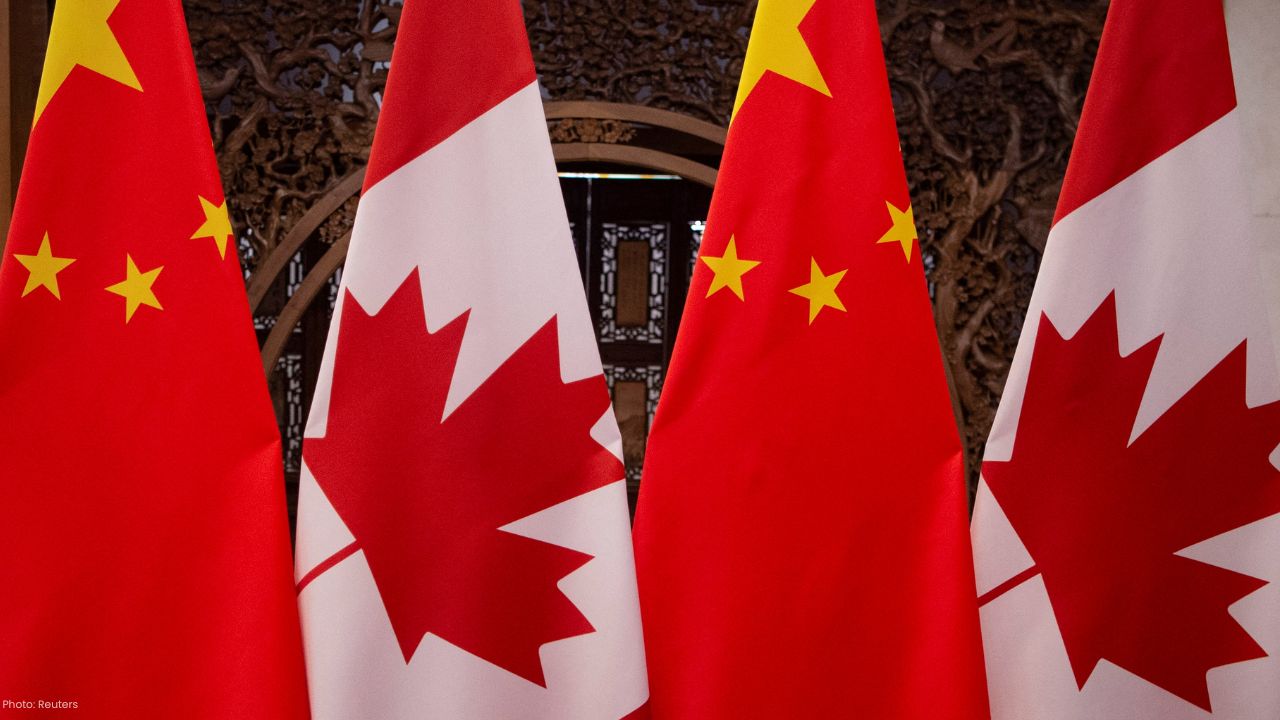
Just three years after branding China a “disruptive global power,” Canada is now seeking a strategic partnership with Beijing, Foreign Affairs Minister Anita Anand said Monday. Anand described the approach as a pragmatic effort to balance economic interests with security and human rights priorities.
Speaking after meetings with senior officials in China, India, and Singapore, and ahead of Prime Minister Mark Carney’s first Asian visit since taking office, Anand emphasized that diplomacy requires nuance. “There are always challenges in any relationship. The key is to have dialogue necessary to address Canadian concerns,” she said.
Anand’s remarks signal a shift from the federal government’s 2022 Indo-Pacific strategy, which portrayed China as increasingly divergent from Canadian values. During her visit, Canada and China agreed to revisit and refocus the strategic partnership first signed in 2005, with Anand noting that the goal is to “recalibrate the relationship so that it is constructive and pragmatic.”
While Canada has previously mirrored U.S. tariffs on Chinese electric vehicles—sparking retaliatory tariffs on canola and seafood—Anand stressed that foreign policy must also support the domestic economy. China remains Canada’s second-largest trading partner, with bilateral trade reaching $118.7 billion last year, compared to $924.4 billion with the United States.
Anand said Carney’s economic agenda, which aims to strengthen Canada as the strongest G7 economy, is linked to a long-term effort to diversify trade. Canada’s foreign policy now rests on three pillars: strengthening defence, building economic resilience, and advancing core values such as human rights.
Experts note the complexity of “selective engagement” with China. Vina Nadjibulla of the Asia Pacific Foundation cautioned that Beijing rarely separates issues, making the concept of a strategic partnership delicate. She added that Canada must clarify how this engagement balances U.S. concerns about China.
During her visit, Anand held a two-hour discussion with Chinese Foreign Minister Wang Yi, covering cybersecurity, air travel, health, energy, and the environment. Anand invited Wang to visit Canada, while reaffirming the country’s One China policy and commitment to human rights.
“Diplomacy is best done minister to minister. We will always put the needs of Canadians first and continue engagement with Taiwan,” Anand said.