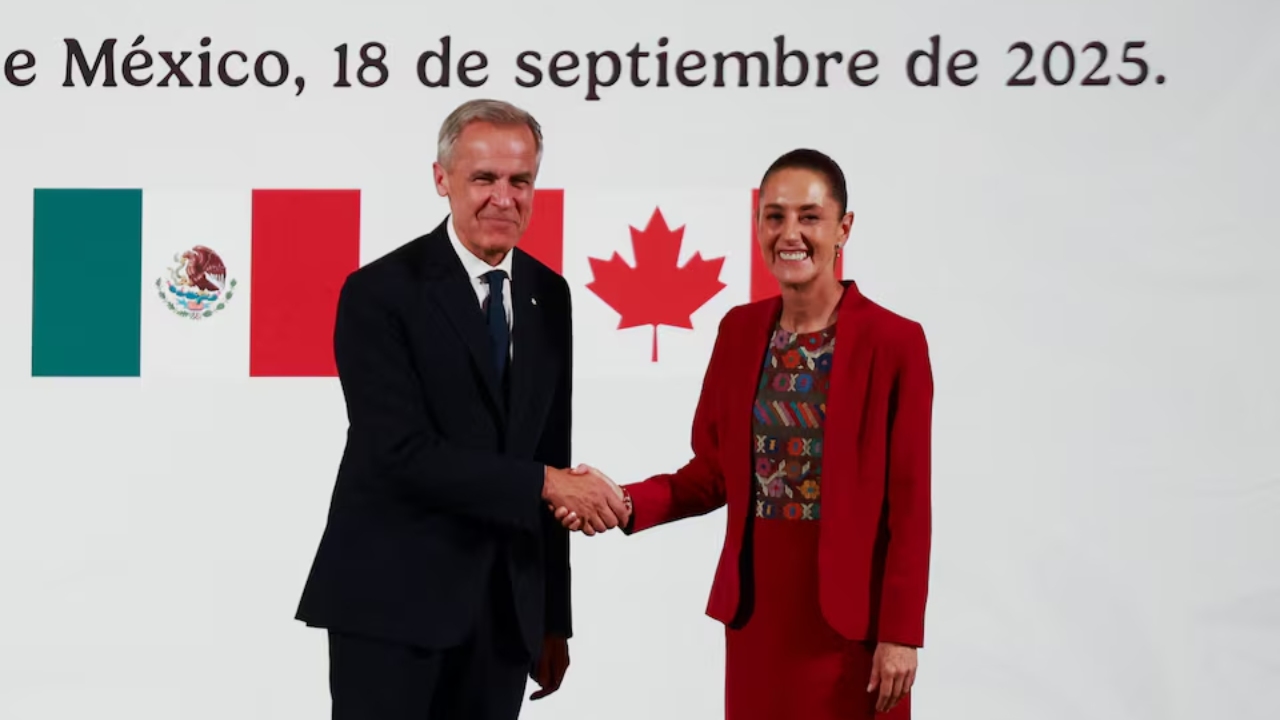
Photo: Reuters
Canada and Mexico are taking steps to strengthen their relationship as they face challenges linked to trade and tariffs from the United States. Canadian Prime Minister Mark Carney visited Mexico City, marking his first official visit in eight years.
His visit focused on improving bilateral cooperation in business, security, and trade. It comes at a time when the U.S. is threatening tariffs on Canadian and Mexican imports, creating uncertainty for both countries’ economies.
The visit highlights the importance of strategic partnerships, especially as the U.S.-Mexico-Canada Agreement (USMCA) is due for review in 2026. Leaders in both countries are working to ensure their voices are heard in negotiations and that their economic interests are protected.
Purpose of the Visit
Prime Minister Carney met with Mexican President Claudia Sheinbaum during his visit. They discussed the need to enhance cooperation in various sectors, including trade, energy, security, and public health. Their meetings aimed to build trust and collaboration between the two nations, particularly as they prepare for the USMCA review.
Canada and Mexico both see opportunities to diversify trade and reduce reliance on the U.S. market. Currently, trade between Canada and Mexico is relatively modest, totaling about C$55.4 billion in goods in 2024, compared to C$924.4 billion in trade between Canada and the United States. By improving ties, both countries aim to expand economic opportunities for businesses, create jobs, and foster a more balanced trade relationship.
U.S. Tariff Threats and Their Impact
The relationship between Canada, Mexico, and the United States has faced tension due to the possibility of new U.S. tariffs. Former U.S. President Donald Trump suggested imposing tariffs of up to 25% on imports from Canada and Mexico. He cited concerns over border security, drug trafficking, and unfair trade practices as reasons for these potential tariffs.
Such tariffs could have serious economic consequences. Canadian officials warned that a 25% tariff on key imports would increase costs for Canadian businesses and consumers. It could also disrupt supply chains and affect industries such as automotive manufacturing, agriculture, and energy. Similarly, Mexican officials expressed concern about the potential impact on Mexican exporters and overall economic stability.
In response to these threats, Canada has introduced countermeasures to protect domestic industries. One example is imposing a 25% tariff on U.S. vehicle imports that do not comply with USMCA rules. These measures aim to maintain fairness in trade while ensuring Canadian businesses are not disadvantaged.
Strengthening Canada-Mexico Cooperation
Prime Minister Carney emphasized that the partnership between Canada and Mexico is essential, especially in the face of U.S. tariff threats. By working together, the two countries hope to create a stronger negotiating position in upcoming trade discussions with the U.S.
The leaders also agreed to sign a comprehensive strategic partnership to deepen collaboration across multiple sectors. This agreement will help Canada and Mexico coordinate policies on energy, transportation, trade regulations, and security. It is expected to boost economic growth and improve relations between the two nations.
Furthermore, officials from both countries are exploring opportunities to promote technological innovation, environmental sustainability, and investment in infrastructure. These initiatives are part of a broader plan to create more resilient and diversified economies less dependent on a single trading partner.
Economic Diversification and Trade Opportunities
One of the key reasons for strengthening ties is to diversify trade. While Canada and Mexico both rely heavily on trade with the United States, they recognize the need to expand trade between themselves. Improved cooperation can help reduce dependency on the U.S. and provide new business opportunities in sectors such as agriculture, manufacturing, and technology.
Both countries are also looking to attract foreign investment. By presenting a united front, Canada and Mexico hope to encourage businesses to invest in projects that benefit both economies. Joint initiatives in energy, transportation, and infrastructure could create jobs and improve economic stability in both nations.
Preparing for the USMCA Review
The USMCA, which replaced the North American Free Trade Agreement (NAFTA), governs trade between the United States, Canada, and Mexico. The agreement is set for review in 2026, which makes it crucial for both Canada and Mexico to strengthen their relationship now.
By working together, Canada and Mexico aim to ensure that their interests are protected in future negotiations. They want to avoid policies that could harm their economies or reduce market access. Presenting a united front will help both countries influence decisions and ensure that trade remains fair and beneficial for their citizens.
Prime Minister Carney’s visit to Mexico also allowed leaders to discuss ways to streamline trade procedures, reduce barriers, and make cross-border trade more efficient. These efforts are intended to strengthen economic ties and protect businesses from potential disruptions caused by U.S. tariffs or other policy changes.
Political Significance
Carney’s visit has political as well as economic significance. It sends a message that Canada and Mexico are committed to working together, even under pressure from the U.S. The visit shows that both countries are serious about defending their economic interests and building stronger regional cooperation.
Additionally, the visit provides an opportunity to address security and migration issues. Canada and Mexico are exploring ways to improve border security, share intelligence, and address illegal trafficking. Cooperation in these areas helps both countries manage challenges more effectively while maintaining good relations with the United States.
Challenges Ahead
Despite the positive steps, challenges remain. The U.S. continues to be Canada and Mexico’s largest trading partner, making it difficult to completely avoid its influence. Tariff threats and trade policies in Washington can have significant effects on both economies.
Moreover, coordination between Canada and Mexico is not always simple. Differences in economic structure, domestic priorities, and political systems can create obstacles. However, both countries are committed to dialogue and partnership as a way to overcome these challenges.
Human rights, environmental issues, and labor standards are additional areas where careful negotiation will be necessary. Canada and Mexico want to ensure that trade agreements do not compromise these important concerns while still promoting economic growth.
Future Plans
Looking ahead, Canada and Mexico plan to continue high-level meetings and diplomatic engagement. They aim to establish regular consultations on trade, security, and economic policy. These consultations will help both countries respond quickly to changes in U.S. policy or global economic conditions.
Officials also plan to involve the private sector more actively. Businesses from both countries can benefit from new trade opportunities, joint ventures, and investment projects. Increased private sector engagement is expected to strengthen ties and create tangible benefits for citizens in both countries.
Prime Minister Mark Carney’s visit to Mexico marks an important step in improving Canada-Mexico relations. With U.S. tariff threats looming, both countries recognize the need for strong cooperation and a united approach. By deepening trade ties, enhancing economic collaboration, and preparing for the USMCA review, Canada and Mexico are working to protect their interests and create a more resilient regional economy.
The visit also highlights the broader importance of diplomacy and partnership in addressing global economic challenges. As Canada and Mexico continue to strengthen their relationship, both nations hope to ensure stability, growth, and prosperity for their citizens, even in the face of external pressures from their largest trading partner, the United States.