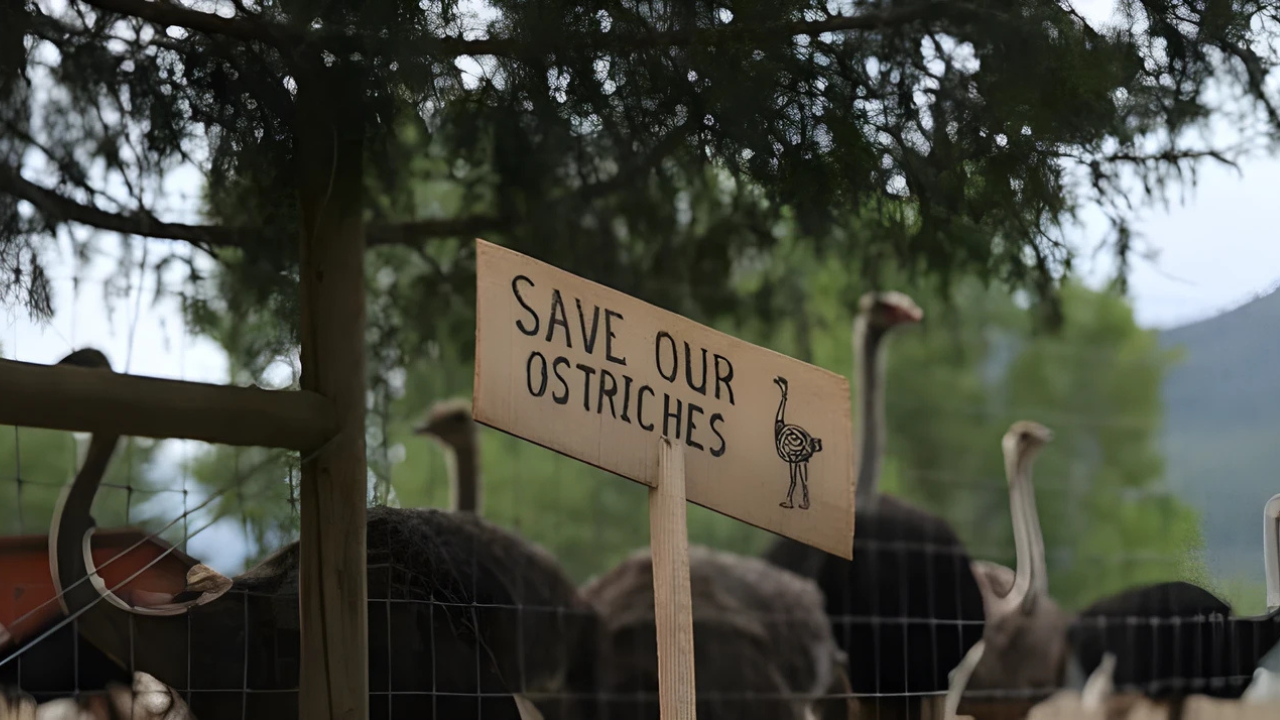
Photo: X / CTVVancouver
BC Ostrich Farm Battles Cull Order Amid Deadly Bird Flu Fears
A Farm in Trouble
In the quiet town of Edgewood, British Columbia, a farm with about 400 ostriches is at the centre of a national health debate. Universal Ostrich Farms has been told by federal authorities that its birds must be killed to stop the spread of avian influenza, also called bird flu.
The owners of the farm, however, say their birds are healthy and that the government is wrong to order such a mass killing. They argue that the ostriches are valuable, healthy, and may even have developed a natural protection against the disease.
But the Canadian Food Inspection Agency (CFIA) disagrees. According to the CFIA’s deputy chief veterinarian, new scientific tests show that the type of virus found in these birds is not only deadly, but may also be more dangerous than strains seen before.
A Stronger Virus
Dr. Cathy Furness, a leading veterinarian with the CFIA, wrote in a sworn statement that tests on samples from the farm revealed a “novel reassortment” of the virus. That means the virus has changed by mixing with other forms of flu, creating a new version.
This new version is “highly pathogenic,” or in simple terms, extremely deadly. Tests in a national laboratory showed that even tiny amounts of this virus killed mice within days. Scientists say it is one of the most dangerous strains they have seen so far.
The problem is that the CFIA does not know for sure whether the ostriches are still carrying the virus or if they will get sick again. This uncertainty, combined with the risk of the disease spreading, is why they insist on a cull.
The Farm’s Argument
Universal Ostrich Farms says the cull order is unfair. The owners believe their flock has developed “herd immunity,” meaning that enough birds have been exposed to the virus that the whole group is now protected.
The farm lost 69 birds to the flu when the outbreak started late last year. Since then, the owners say the surviving ostriches have remained healthy. They want the birds tested again to prove that they are no longer carrying the virus.
Katie Pasitney, daughter of one of the farm’s owners, has been speaking out on behalf of her family. She says they are fighting the order because the birds are not just animals, but also valuable for research and farming. She also says killing them all would be a huge loss for science and agriculture.
Legal Battle in Court
The case has gone to Canada’s Federal Court and the Federal Court of Appeal. Twice, the farm has lost its appeals to stop the cull. But recently, the Appeal Court granted a temporary pause, or “stay,” while the farm seeks permission to take its fight all the way to the Supreme Court of Canada.
This pause does not mean the farm has won. It only delays the cull until a final decision is made. The CFIA is still allowed to prepare for the killing, which means the future of the birds remains uncertain.
Why the CFIA Insists on the Cull
Dr. Furness says there are serious risks if the birds are allowed to remain alive. One concern is something called “silent shedding.” This means that ostriches could still release the virus through their waste or breathing, even if they look perfectly healthy.
This shedding can continue for a long time without being noticed, and it can spread the virus to other animals or even humans.
Another concern is the environment around the farm. Avian flu viruses can survive for months in water, feathers, or manure, especially in cold temperatures. Even if the ostriches are healthy now, the virus might still be present in their surroundings and could infect them or other birds again in the future.
The CFIA says their policy does not allow for repeated testing once a cull order has been issued. In their view, killing the birds is the only safe option to protect both animal and human health.
Voices From Outside
The case has drawn attention from people outside Canada. High-profile figures in the United States, such as Robert F. Kennedy Jr. and Dr. Mehmet Oz, have spoken up in support of the farm. They argue that the birds should be spared and even suggested moving them to the U.S. for safety and study.
Still, Canadian authorities remain firm. They believe the risks of letting the ostriches live are too great, especially with a new and more dangerous form of bird flu involved.
Experts Raise Concerns
Experts in veterinary science and public health warn that avian flu is not something to take lightly. In past outbreaks around the world, millions of birds have been killed to stop the spread of the disease. In some rare cases, humans have also become infected, and the results were deadly.
Bird flu spreads quickly among flocks, and when a new strain appears, the danger becomes even greater because there is less information about how it behaves. Scientists fear that if such a strain were to spread beyond the ostrich farm, it could cause major problems for both farmers and the general public.
A Family Holding On
For the family running Universal Ostrich Farms, the battle is deeply personal. They have raised these birds, cared for them, and built a business around them. Losing 400 ostriches would be devastating, both emotionally and financially.
They continue to push for more testing and argue that science should guide the decision. They want proof that the birds are still infected before such a drastic step is taken.
But with the courts already ruling against them twice, their chances of success may be slim. Unless the Supreme Court agrees to hear their case and rules in their favor, the cull could still go ahead.
What Happens Next
The Supreme Court of Canada will decide whether to hear the farm’s case. Until then, the cull is on hold. If the Court does not take the case, or if the farm loses again, the CFIA will proceed with killing the birds.
The situation highlights the difficult balance between protecting public health and respecting the rights of farmers. It also shows how new forms of old diseases can create fresh challenges for science and law.
Final Thoughts
At the heart of this story is a clash between science, law, and human emotion. On one side, there is a family that wants to save its birds, believing they are healthy and safe. On the other side, there are government scientists who fear that letting the birds live could put the entire country at risk.
As the legal fight continues, one thing is clear: the debate over the ostriches is about much more than just one farm. It is about how we deal with new diseases, how we balance risk with compassion, and how much we are willing to sacrifice to keep both people and animals safe.