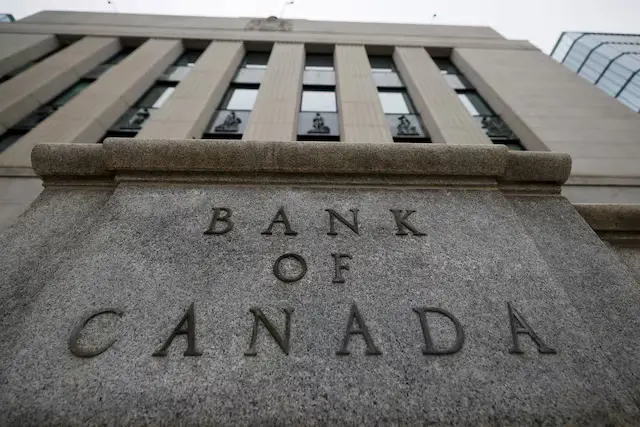
The Bank of Canada is widely expected to implement its first Bank interest rate cut in nine months, reducing its benchmark rate by 0.25 percentage points on September 17, 2025. This anticipated Bank monetary policy move is driven by mounting evidence—both in economic data and recent research—that Canada’s economy is weakening.
For the Bank of Canada economy, this isn’t just about shifting numbers on a chart—it’s about responding to concrete signs that household finances, business investment, and labour markets are under pressure.
Bank Cites New Data: Inflation Eases, Jobs Decline, Unemployment Climbs
Recent statistics reveal several warning signals tied to Bank of Canada inflation targets.
-
Inflation rose by 1.9% year-over-year in August, slightly below expectations. Core inflation (excluding volatile items like gasoline) climbed to about 2.4%.
-
Labour market weakness was underlined by a loss of 66,000 jobs in August, following a decline in July. The unemployment rate jumped to 7.1%, the highest outside pandemic years, highlighting growing Bank unemployment Canada concerns.
-
Researchers examining labour force participation and employment among core-aged adults (25-54) show ongoing declines. Since early 2023, Canada has lost two full percentage points in its national employment rate—a decline worse than many recent recessions.
Together, this data underscores that the Bank faces a trade-off: easing monetary policy to support growth without reigniting inflation.
Bank’s Decision: What Research Suggests
Recent research and polling reinforce why many expect the Bank rate decision September 2025 to result in a cut:
-
A Reuters poll found economists overwhelmingly anticipate a 25 basis point reduction, with at least one more expected before year’s end.
-
Analysis shows that while headline inflation edges up, underlying price pressures are easing, providing the Bank of Canada room to maneuver.
-
RBC’s macro-outlook describes GDP decline and deteriorating labour market conditions as making this decision “a toss-up,” but leans toward action.
Bank’s Role: Impacts and What to Expect
When the Bank of Canada cuts rates, ripple effects reach households and businesses across the country:
-
Borrowers — Variable-rate mortgages, lines of credit, and business loans may become cheaper, providing relief on Bank mortgage rates Canada.
-
Savers — Banks are likely to lower deposit returns in line with reduced policy rates.
-
Housing market — Lower borrowing costs may revive demand, potentially lifting prices again in an already stretched market.
-
Jobs & business investment — Lower rates could encourage expansion and hiring, though improvements take time.
Risks Ahead for the Bank
While a cut appears justified, challenges remain for the Bank global economy outlook:
-
Core inflation remains near the upper target bound of 3%. If expectations shift upward, future cuts could backfire.
-
External risks—tariffs, global supply disruptions, and weaker trade partners—could limit the impact of domestic rate cuts.
-
Confidence gap—both consumers and businesses may hesitate to spend, reducing the effectiveness of Bank of Canada monetary policy.
Looking Forward
Economists expect this Bank of Canada rate decision September 2025 to be just the first step, with further cuts likely before year’s end. Monitoring CPI, GDP, and labour market data will shape the central bank’s path.
The Bank of Canada economy faces a delicate balance: supporting growth while keeping inflation under control. For Canadians, today’s decision could offer modest relief—on mortgages, loans, and employment prospects—while signaling a major pivot in policy.