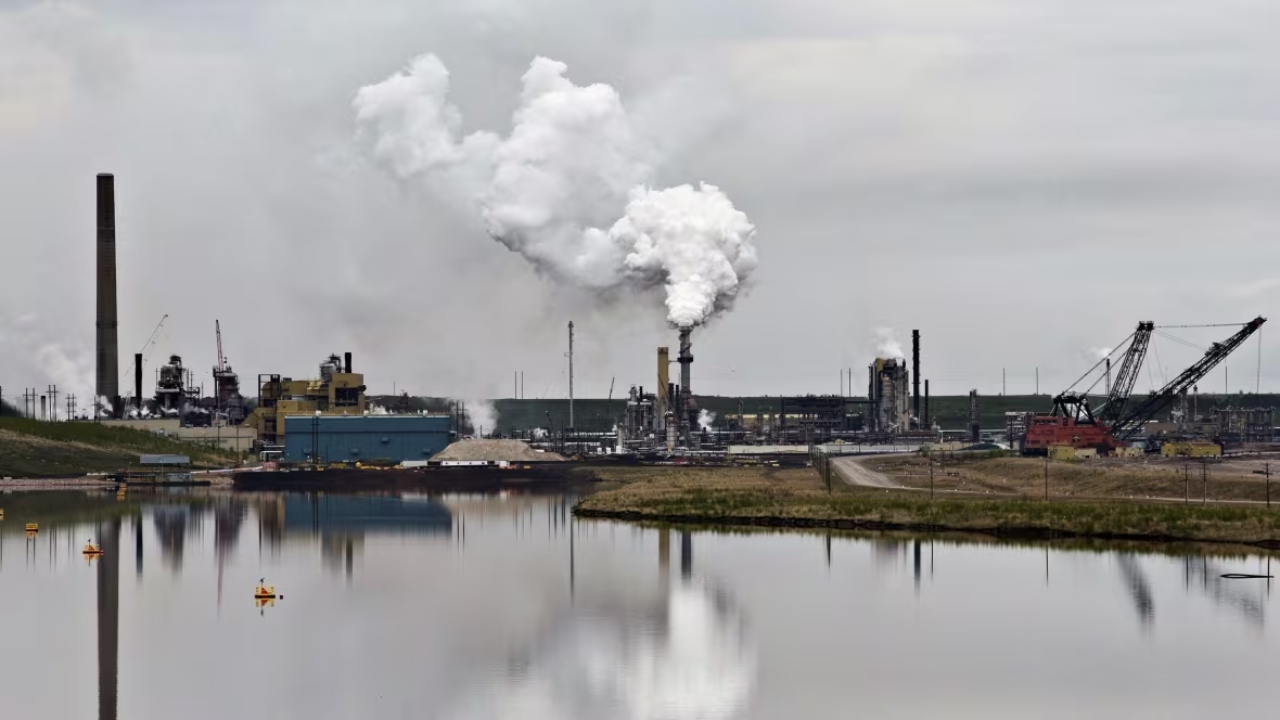
Photo:AFP
The Alberta government is making important changes to its industrial carbon tax program. These changes will let companies avoid paying provincial carbon fees if they invest in projects that reduce their own emissions.
This approach aims to support Alberta’s economy while encouraging companies to work on reducing pollution. Premier Danielle Smith announced the changes on Tuesday, saying they are expected to take effect this fall.
Premier Smith explained that the new plan is similar to a recycling program. Just as people recycle to reduce waste, companies can invest money into reducing their emissions instead of paying fees to the government. The idea is to make businesses responsible for cutting pollution while also keeping money and jobs in Alberta.
“This program will encourage companies to spend money here in Alberta on emissions reduction projects that fit their specific operations, without heavy regulation or the government choosing winners and losers,” Smith said.
Support for Smaller Companies
The changes are not only for large companies. Smaller businesses that do not reach the minimum emissions threshold will also benefit. The province will allow these smaller companies to opt out of the carbon pricing system for 2025. This means they will not have to pay the carbon tax if they do not produce enough emissions to meet the threshold.
Premier Smith said this decision will help small industries save money and use it to invest in their own emissions reduction projects or improve other parts of their operations. These improvements could make businesses more efficient, reduce costs, and still contribute to lower pollution.
Background of Alberta’s Carbon Tax Program
Alberta has had an industrial carbon pricing system since 2007. The current program is called Technology Innovation and Emissions Reduction (TIER), which has been in place since 2020. TIER is designed to make companies responsible for the emissions they produce and to encourage investments in cleaner technology.
Premier Smith explained that the new changes came after consultations with hundreds of officials from the oilsands and natural gas industries last spring. These discussions helped the government understand the needs of companies and how they could be encouraged to reduce emissions in ways that also support economic growth.
Industry Reaction
Environment Minister Rebecca Schulz, who spoke alongside Premier Smith, described the changes as a “significant win for industry.”
She explained that companies previously had only two ways to comply with the carbon tax: paying a levy (a fee) or using credits to offset their emissions. With the new rules, companies can invest in reducing emissions at their own facilities. This gives them more control over how they cut emissions and helps them save money at the same time.
“Enabling companies to reinvest in their own facilities and choose the technologies that work best for them helps both the economy and emissions reduction,” Schulz said.
Industry leaders have praised the changes, saying they give businesses more flexibility and encourage local investment. The plan is designed to make it easier for companies to balance economic growth with environmental responsibility.
Concerns from Environmental Groups
Not everyone agrees with the changes. Environmental organizations have raised concerns that the new rules could weaken the effectiveness of Alberta’s carbon pricing system. Groups like the Pembina Institute worry that companies could “double-count” their emissions reductions. This means a company could avoid paying a fee by investing in a project and then also generate a carbon credit when those emissions are actually reduced.
Chris Severson-Baker, executive director of the Pembina Institute, said: “Companies will be able to avoid paying a compliance cost at the point of investment in technologies but then also generate a carbon credit when their emissions start to be reduced. This could undermine the value of carbon credits.”
Dale Beugin, executive vice-president at the Canadian Climate Institute, also warned that allowing double-counting could flood the market with carbon credits, lowering their price. This could reduce incentives for businesses to invest in real, long-term emissions reductions.
“Without improvements, excess credit supply—and the low credit prices that result—will weaken motivation for companies to invest in reducing emissions,” Beugin said. “These changes add up to less long-term certainty for businesses and more harmful emissions going into the atmosphere. That contributes to global warming and increases risks of wildfires, droughts, and extreme weather in Alberta.”
Political Reactions
The province’s opposition party, the New Democratic Party (NDP), also criticized the changes. Nagwan Al-Guneid, the NDP energy critic, said the government did not do enough consultation before announcing the new rules. She pointed out that the announcement lacked clear details about which types of projects would qualify for companies to invest in under the new system.
Opposition members are concerned that without clear rules, some companies could exploit the system without actually reducing emissions. They argue that proper oversight is needed to ensure that the changes benefit the environment, not just the companies’ profits.
Balancing Economy and Environment
Premier Smith’s government says the changes are designed to balance economic growth with environmental responsibility. By allowing companies to invest directly in emissions reduction projects, the government hopes to keep money and jobs in Alberta while still reducing pollution.
The idea is that companies will be more motivated to invest in technologies and projects that actually cut emissions, rather than simply paying fees. This approach is intended to make Alberta’s industrial sector more competitive while still addressing climate concerns.
For example, companies could invest in equipment that uses energy more efficiently, capture emissions before they are released, or switch to cleaner sources of energy. These investments not only reduce pollution but can also save companies money in the long run.
Potential Risks
While the government emphasizes the benefits, experts warn of potential risks. Environmental groups worry that without proper oversight, some companies may not achieve real emissions reductions. They caution that the program could create a situation where businesses get credit for projects that do not provide meaningful environmental benefits.
There are also concerns that this approach could reduce the overall impact of Alberta’s carbon pricing system, making it less effective in addressing climate change. Critics argue that strong rules and transparency are needed to ensure the program achieves its goals.
Alberta’s changes to its industrial carbon tax program are a major shift in how the province handles emissions from industry. By allowing companies to invest in their own emissions reduction projects, the government hopes to support economic growth while encouraging environmental responsibility.
Premier Danielle Smith and Environment Minister Rebecca Schulz say the new rules will give companies more flexibility and control, making it easier to invest in projects that cut emissions. Smaller companies will also benefit, as they can opt out of the system in 2025 if they do not meet the minimum emissions threshold.
However, environmental groups and opposition politicians have raised concerns about potential double-counting, weak oversight, and unclear rules. They warn that the changes could reduce the overall effectiveness of Alberta’s carbon pricing system and result in more emissions entering the atmosphere.
As the program is set to take effect this fall, the province will need to carefully monitor its impact on both the economy and the environment. The success of the changes will depend on whether companies invest in real emissions reductions and whether the system can prevent abuses that undermine its goals.
Alberta’s approach shows the challenge of balancing economic growth with climate responsibility. While the government focuses on encouraging business investment and keeping jobs in the province, critics emphasize that strong environmental protections and clear rules are essential to ensure that the program truly reduces pollution and helps combat climate change.