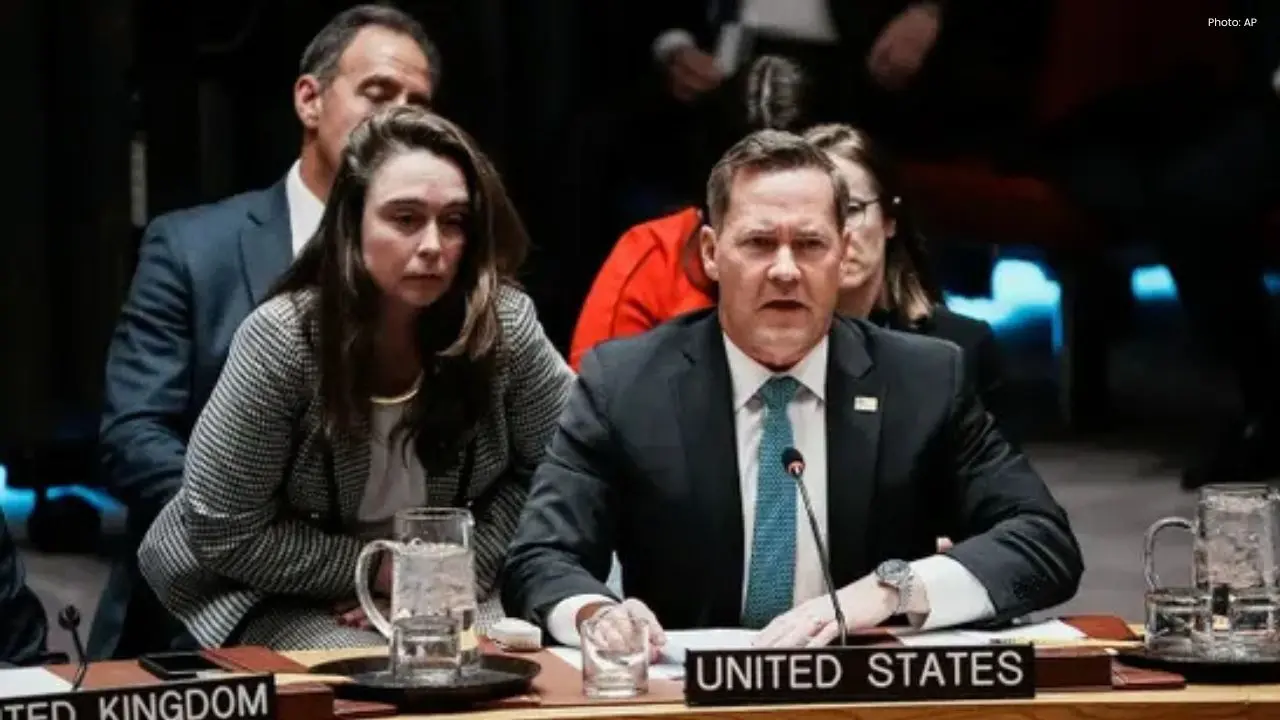
On Thursday, the United States delivered a firm warning to Iran, stating that “all options remain viable” as international attention heightens due to the violent suppression of ongoing protests. This warning came during a United Nations Security Council emergency meeting convened at the U.S.'s request to tackle the increasing turmoil within Iran.
Protests have erupted across Iran in recent weeks, fueled by economic distress and widespread dissatisfaction with government actions. Reports from human rights groups indicate that security forces have killed at least 2,677 individuals, with that number expected to rise, marking this period as one of the deadliest since the 1979 Islamic Revolution.
During the Security Council session, U.S. Ambassador Mike Waltz directly addressed Iranian authorities, stating that President Donald Trump is ready to take decisive measures should the violence continue. “He has made it clear that all possibilities are on the table to halt the bloodshed,” remarked Waltz, urging Iran to cease hostilities and uphold human rights.
Amid the discussions, Iranian dissidents Masih Alinejad and Ahmad Batebi provided testimony about their traumatic experiences with threats, assaults, and imprisonment. Alinejad recounted a life-threatening incident in Brooklyn, NY, which she attributes to Iranian operatives. Meanwhile, Batebi revealed the severe torture he faced while detained in Iran, highlighting the severe human toll of the government’s repressive measures.
The Iranian side, represented by Deputy Ambassador Hossein Darzi, dismissed U.S. allegations, asserting that they reflect an interference in Iran’s sovereign matters aimed at destabilization. Darzi described U.S. claims regarding human rights as a “shallow cover” for potential militaristic intervention.
Despite the U.S.'s strong statements, President Trump hinted at a potential de-escalation, noting a slowdown in the recent wave of killings. However, Iran's governmental communication and internet restrictions remain in place, making comprehensive reporting challenging.
The situation is garnering notable international observation, with countries like Egypt, Oman, Saudi Arabia, and Qatar urging prudence, cautioning that U.S. military actions could lead to regional instability and economic turmoil. Simultaneously, the European Union and G7 nations are backing new sanctions against senior Iranian figures linked to the violence.
On Thursday, the U.S. introduced sanctions focused on Iranian officials involved in the actions against protesters, notably affecting Iran’s Supreme Council's Secretary. The EU is also contemplating enhanced economic measures to compel the regime toward reforms.
This crisis underscores a precarious blend of internal strife and international pressure. As Iran attempts to manage protests internally, the U.S. and its partners are poised to respond with political, economic, and potentially military strategies, should conditions deteriorate.
The global community remains vigilant, balancing the need for Iran to handle its domestic issues sensibly while considering its response to avoid exacerbating the situation. The fates of countless Iranians, Middle Eastern stability, and the future relations between the U.S. and Iran all teeter on this delicate edge.