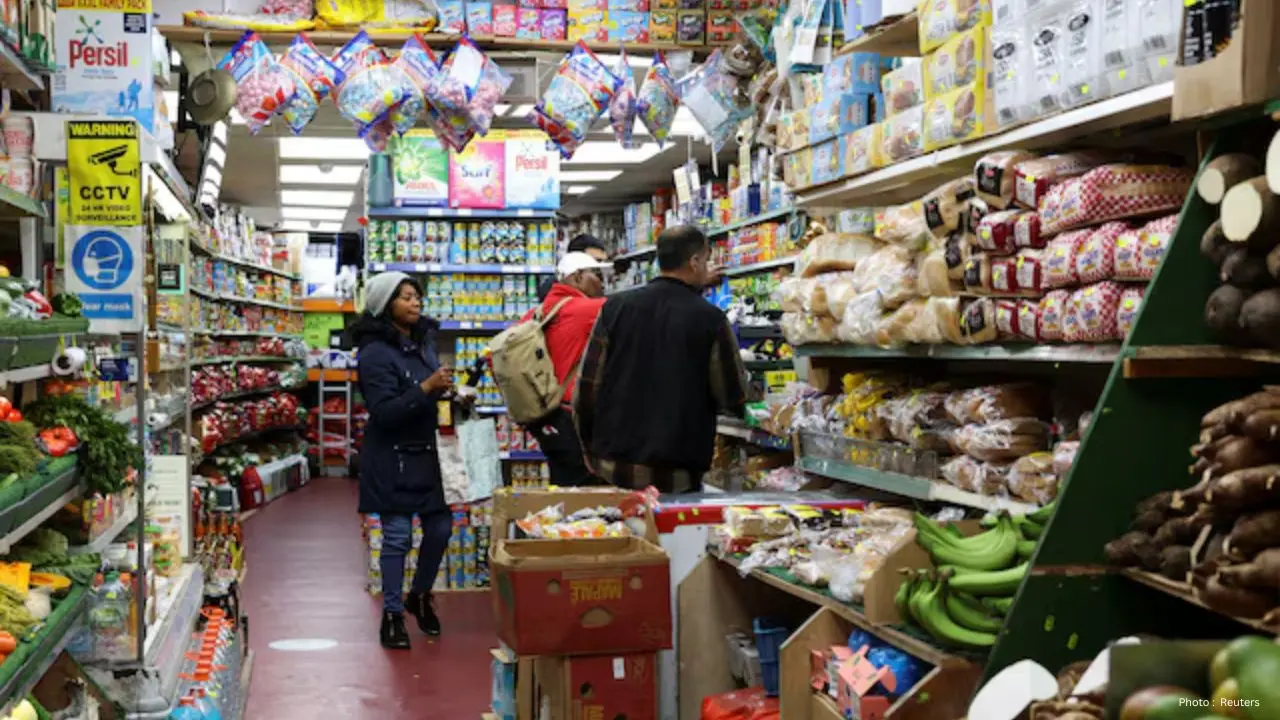
In the United Kingdom, grocery price inflation is finally showing signs of moderation, bringing a measure of relief to families grappling with rising living costs. Yet, economic analysts caution that global conflicts and supply concerns could still cast a shadow over future food prices.
Recent market analyses indicate that the surge in supermarket prices has slowed down in comparison to earlier phases where inflation exerted considerable strain on consumers. This dip in grocery prices is a ray of hope for families battling soaring energy bills, housing costs, and everyday expenses.
Experts in retail attribute the slowdown in food prices to improved supply conditions and heightened competition among supermarkets. Factors like promotional discounts, consistent agricultural output, and supply chain adaptations have notably aided this gradual improvement across various categories.
Despite these encouraging signs, market analysts assert that uncertainty looms large. International events can swiftly alter the dynamics of global markets. Continuing geopolitical tensions and disruptions in shipping routes or energy supplies may still exert future pressure on transportation and production costs.
Since the pandemic, the UK has encountered substantial inflation issues, with food and household expenses rising prominently, creating concern for millions of residents. This inflationary spike has influenced consumer spending, leading families to cut back on non-essential expenditures and seek more affordable options.
Financial observers recognize that grocery inflation is pivotal for public confidence, as food is a daily essential. Minor increases in supermarket prices can significantly impact household finances, particularly for lower-income groups.
Retail chains throughout Britain are engaging in intense competition to lure customers amid the cost-of-living crisis. These supermarkets have rolled out price reductions, loyalty rewards, and marketing initiatives to sustain consumer engagement while navigating pressures from suppliers and logistics expenses.
Industry analysts maintain that reduced inflation does not necessarily equate to prices reverting to historical levels. In many scenarios, products are still costly compared to prior years, but the rate of price hikes appears to be abating.
Furthermore, global energy markets continue to sway food prices, considering that fuel costs impact transportation, production, and agricultural practices. Any disruptions in the oil or shipping sectors can swiftly impact supply chains and elevate operational costs for enterprises.
The ongoing economic uncertainty tied to international conflicts remains a critical variable. Financial markets are attuned to geopolitical developments, as instability can hinder trade routes, affect commodity prices, and diminish overall economic confidence.
British consumers are readjusting their shopping habits, with inflation remaining above levels most households find acceptable. Shoppers are now increasingly price-conscious, shifting towards store-brand products and curtailing non-essential purchases to adjust their monthly budgets.
Moreover, food producers and retailers are encountering challenges associated with rising labor costs, climate variables, and evolving supply requirements. Agricultural sectors within Europe have felt the impacts of weather-related challenges and increased operational costs in recent times.
Economists suggest that the slowdown in grocery inflation could potentially bolster the broader economy by enhancing consumer confidence and alleviating pressure on household finances. Nonetheless, they warn that sustained stability relies on international market conditions and domestic economic frameworks.
Officials from the Bank of England and government bodies continue to keep a vigilant eye on inflation trends since price stability remains a fundamental economic objective. Policymakers are anticipated to adopt a cautious stance while assessing interest rates and general economic conditions.
Market experts believe supermarkets will persist in prioritizing affordability, as competition in the retail sector stays robust. Consumers are expected to keep a close watch on prices until living expenditures show more consistent improvement across varied economic sectors.
Current inflation statistics underscore the intricate relationship between local food prices and global economic events. Incidents occurring far from the UK can still significantly influence supply chains, transportation, and retail pricing in the nation.
Households across the UK will likely continue to monitor changes in grocery prices in the upcoming months. An increase in energy prices or international trade disruptions could once more place strains on supermarket pricing and household budgets.
Thus, while the recent easing in grocery inflation offers cautious optimism, it should not be mistaken for complete economic relief. While conditions appear improved compared to earlier episodes of extreme price growth, the uncertainty within global markets keeps consumers and businesses on high alert for potential cost fluctuations.