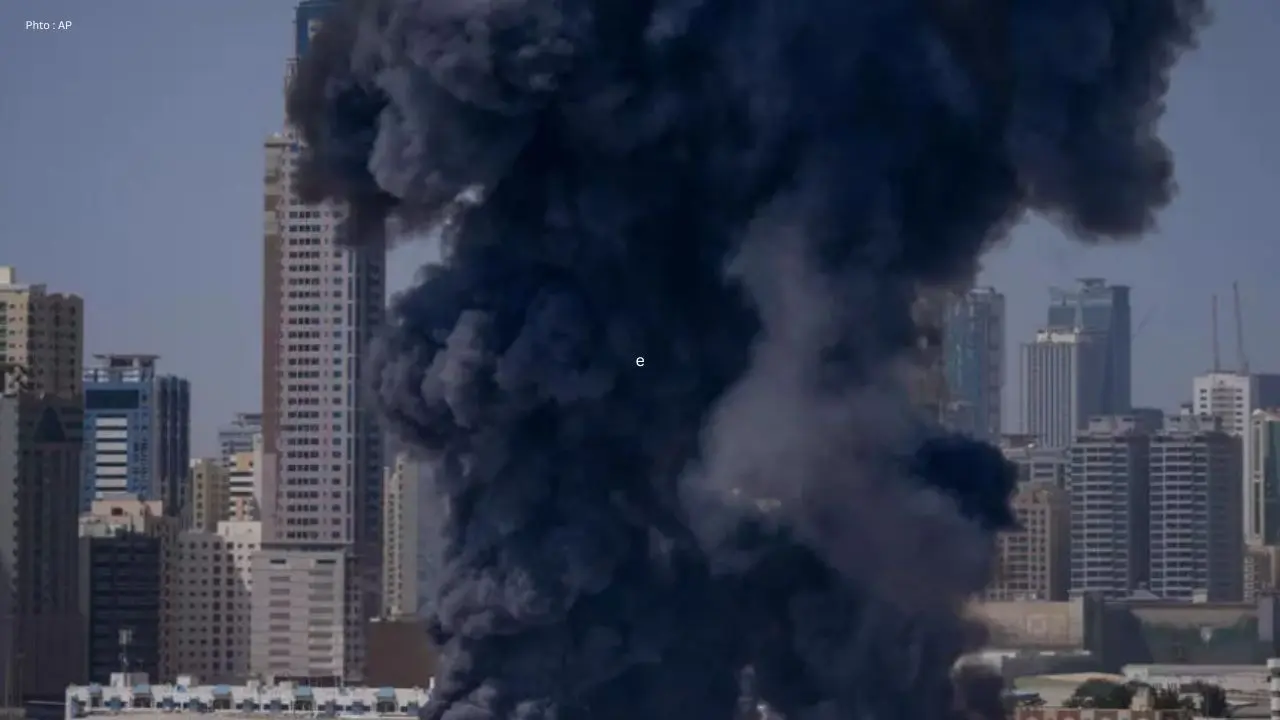
Tensions in the Middle East have increased once again after the United Arab Emirates confirmed that its air defence systems responded to fresh Iranian missile and drone attacks, raising fears that the fragile ceasefire between Iran and the United States could collapse. The latest escalation comes only weeks after both sides agreed to pause direct military confrontation following a period of intense conflict across the Gulf region.
According to regional reports, UAE defence systems intercepted several projectiles believed to have been launched toward strategic locations inside the country. Officials said emergency response systems were activated immediately and security forces remained on high alert throughout the night. No major casualties were officially reported in the latest attacks, although authorities continued monitoring the situation closely.
The latest violence followed a major confrontation in the Strait of Hormuz, where Iranian forces and the United States military reportedly exchanged fire after Iranian drones, missiles, and fast attack boats targeted American naval destroyers operating in the area. US officials said the attacks were intercepted successfully before American forces carried out retaliatory strikes against Iranian military positions connected to the assault.
Iran accused the United States of violating the ceasefire agreement through attacks on Iranian-linked vessels and strategic locations near the Gulf. Iranian officials claimed their military actions were defensive responses against what they described as unlawful aggression. Despite the growing violence, former US President Donald Trump insisted that the ceasefire technically remained “in effect” and stated that negotiations were still continuing behind the scenes.
The Strait of Hormuz has once again become the center of global concern because it is one of the world’s most important oil shipping routes. Thousands of cargo vessels and oil tankers pass through the region every year, and any military escalation there can immediately affect global energy markets. Reports said shipping movement remained heavily disrupted, while oil prices surged as investors feared a wider regional war.
The UAE has strongly condemned the attacks and described them as a dangerous escalation threatening civilian safety and regional stability. Gulf countries including Saudi Arabia, Bahrain, Kuwait, and Qatar have also increased security measures after previous missile and drone incidents linked to the conflict. Analysts say Gulf states are becoming increasingly concerned that the ceasefire may no longer hold if attacks continue.
International diplomatic efforts are continuing as several countries push for renewed negotiations to prevent a larger war in the region. Pakistan, European governments, and United Nations representatives are reportedly involved in mediation efforts aimed at reducing tensions and reopening normal maritime trade routes. However, political experts warn that trust between Iran and the United States remains extremely weak after repeated accusations of ceasefire violations from both sides.
The conflict has already caused significant economic and security concerns across the Middle East. Airports, ports, oil facilities, and military bases across Gulf countries have faced repeated threats during the ongoing crisis. Security experts fear that continued attacks on regional infrastructure could damage global trade and increase instability throughout the region.
While diplomatic channels remain open, the latest exchange of attacks has created serious doubts about whether the current ceasefire can survive. Military analysts believe the coming days will be critical in determining whether the situation moves back toward negotiations or slips into a broader regional conflict involving multiple countries across the Middle East.