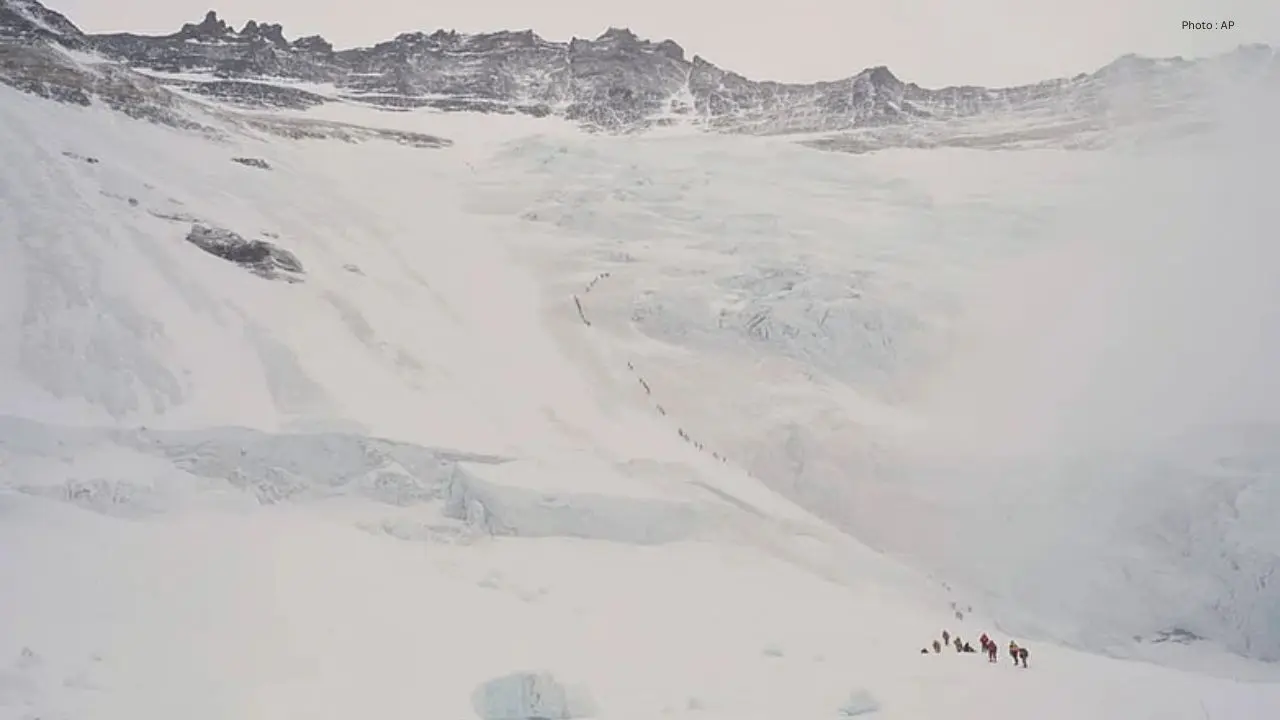
Two Indian climbers died while descending from the summit of Mount Everest during the ongoing spring climbing season, according to officials from Nepal’s tourism department. The deaths were confirmed after rescue teams and expedition organizers reported separate incidents that took place during the dangerous descent from the world’s highest mountain.
Officials said the climbers successfully reached the summit of Mount Everest before facing serious difficulties while returning to lower camps. The descent from Everest is considered one of the most dangerous parts of the expedition because climbers often suffer from exhaustion, low oxygen levels, extreme weather, and harsh temperatures after spending long hours near the peak.
According to Nepal tourism authorities, one climber reportedly became weak and collapsed during the descent near the high-altitude sections above Camp IV, while another faced severe health complications linked to altitude and exhaustion. Rescue efforts were launched immediately, but difficult weather conditions and the extreme altitude made operations very challenging for support teams and Sherpa guides.
The identities of the climbers were not immediately released publicly as officials worked to inform their families. Expedition organizers said both climbers were part of separate climbing groups attempting to reach the summit during the busy spring mountaineering season in Nepal. Authorities also stated that investigations and official documentation related to the incidents are ongoing.
Mount Everest attracts hundreds of climbers from around the world every year, especially during the spring season when weather conditions are considered more favorable for summit attempts. However, experts continue warning that Everest remains highly dangerous despite improved climbing equipment and guided expedition support. Low oxygen levels, sudden weather changes, avalanches, overcrowding, and physical exhaustion continue to pose serious risks to climbers.
Officials said rescue teams and helicopter support remain on standby during the climbing season to respond to emergencies on the mountain. However, operations at extreme altitude are often difficult because helicopters cannot always reach the highest camps due to weather and thin air conditions. In many cases, Sherpa rescue teams play a major role in carrying injured climbers to safer locations.
The deaths have once again raised concerns about safety standards and overcrowding on Mount Everest. Adventure experts say the growing number of climbers attempting the summit each year has increased pressure on routes, rescue systems, and high-altitude support operations. Some mountaineering experts have also called for stricter fitness checks and better preparation before climbers are allowed to attempt Everest expeditions.
India has seen a growing number of adventure tourists and mountaineers participating in Himalayan expeditions in recent years. Many Indian climbers train for years before attempting Everest, which stands at 8,849 meters above sea level. Despite the risks, reaching the summit of Everest continues to be considered one of the greatest achievements in mountaineering.
Nepalese authorities expressed condolences to the families of the deceased climbers and said efforts are being made to recover bodies and complete all required rescue and legal procedures connected to the incidents.