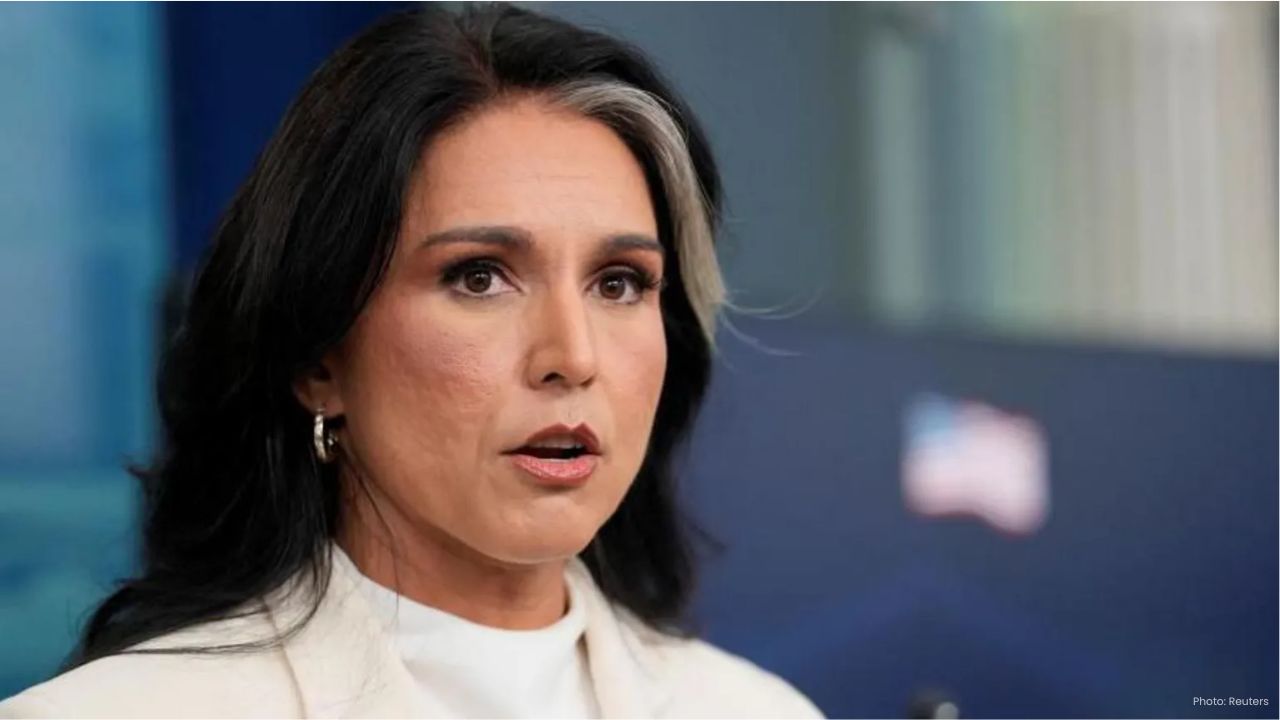
In a move that has shaken Washington, Director of National Intelligence Tulsi Gabbard has unveiled a sweeping plan to reorganize the US intelligence office. Her announcement includes cutting almost half of the agency’s staff, closing down several units, and reducing the annual budget by $700 million. Alongside these reforms, she also revealed that security clearances of 37 current and former US officials would be revoked on the orders of President Donald Trump.
According to Gabbard, these steps are not about weakening intelligence but about making the system stronger, leaner, and more reliable. She believes the agency has become too large and inefficient over the last twenty years and now needs serious changes to fulfill its true mission: to provide objective, unbiased, and timely intelligence to safeguard the nation.
Downsizing the Agency
When Tulsi Gabbard took charge, the Office of the Director of National Intelligence (ODNI) had about 1,800 employees. Since then, she has already reduced staff numbers by nearly 25 percent. But the latest plan is far more dramatic—it will bring the workforce down by nearly half.
Explaining her decision, Gabbard stated that the office had grown into a bloated bureaucracy with overlapping roles and unnecessary divisions. She emphasized that the cuts were not aimed at weakening national security but at ensuring that every employee and every dollar spent served a clear purpose.
“We want to focus on the real mission of serving the American people, not building a bloated bureaucracy,” she said firmly.
The downsizing will not only mean job losses but also a reorganization of how different intelligence functions are carried out. For those who remain, responsibilities may expand as different roles are combined into fewer teams.
Shutting Down Entire Units
One of the most striking parts of Gabbard’s restructuring plan is the closure of several specialized units within ODNI.
The first to go is the Foreign Malign Influence Center, which was tasked with tracking foreign attempts to influence American public opinion. Gabbard argued that this function already exists within other parts of the intelligence community, and therefore, a separate unit was unnecessary.
She is also closing the units that monitored weapons of mass destruction and cyber threats. Again, her reasoning is the same: other agencies already perform this work, and duplication wastes resources.
Another group being eliminated is the one responsible for producing long-term global trend forecasts. This group often worked on predicting how world events, politics, or economies might shift decades into the future. Gabbard believes that while forecasting is important, it can be handled elsewhere without dedicating a separate unit within ODNI.
A fact sheet released by her office stated clearly that the goal of these closures is to remove duplication of work, cut costs, and make the agency’s structure more efficient.
Revoking Security Clearances
While the restructuring alone is a huge change, Tulsi Gabbard also announced another controversial step: the revocation of security clearances for 37 current and former officials. She explained that this was done on the direct orders of President Donald Trump.
Security clearances are highly valuable. They grant individuals access to classified government information that is critical to national security. Even after leaving office, some officials keep their clearances so they can advise those who succeed them. In addition, many private sector jobs in defense and aerospace require active or recent clearances as a condition of employment.
However, Gabbard accused some of these officials of misusing this privilege. In a memo posted on social media, she claimed that certain individuals had politicized intelligence, leaked classified information without authorization, and broken professional standards.
“Being entrusted with a security clearance is a privilege, not a right,” she wrote. “Those in the Intelligence Community who betray their oath to the Constitution and put their interests ahead of the interests of the American people have broken the sacred trust they promised to uphold.”
Who Is Affected?
Although the names of all 37 officials were not released publicly, reports suggest that the list includes national security aides who served under former Democratic presidents Joe Biden and Barack Obama.
The memo did not provide detailed evidence against individuals, and it also did not list specific charges. This lack of detail has fueled criticism from the opposition, who view the move as politically motivated.
It is also unclear whether all 37 people still held active clearances at the time of the revocation. Some may have already left government service and no longer have access.
A History of Revocations
This is not the first time the Trump administration has used its power to revoke security clearances. Previously, the administration stripped clearances from Joe Biden, Vice President Kamala Harris, and former lawmakers involved in investigating the US Capitol riot that took place four years ago.
The current wave of revocations appears to continue the administration’s efforts to reduce the influence of former officials who openly disagreed with Trump or challenged his policies.
Political Dispute Erupts
As expected, the announcement has sparked fierce political debate. Supporters of Gabbard and Trump argue that the intelligence community has been deeply politicized for years. They believe some officials used their positions to serve partisan agendas rather than the American people, and removing their clearances is a way of restoring integrity to national security.
Critics, however, see things very differently. Democrats have dismissed the accusations as baseless, calling them a distraction from more pressing issues. A spokesperson for former President Barack Obama described the claims as “ridiculous” and a weak attempt to divert public attention away from Trump’s unpopular policies and controversies.
The Russian Election Claims
The controversy also ties into a larger debate that has been ongoing since 2016. Intelligence officials from the Obama era concluded that Russia interfered in the 2016 presidential election. Trump and Gabbard have both strongly rejected this assessment, calling it a “treasonous conspiracy” designed to question Trump’s victory.
By targeting officials who were part of those investigations, critics argue that Gabbard and Trump are punishing those who disagreed with them. Supporters counter that they are finally holding intelligence officials accountable for spreading what they see as false narratives.
Budget Cuts and What Comes Next
The $700 million budget cut is one of the largest in the history of the intelligence office. Gabbard insists that the cuts will come from eliminating waste and duplication, not from weakening the country’s defenses.
The restructuring will happen in phases over the coming months. Employees whose roles are eliminated may face layoffs, while others may see their duties expanded as teams are merged.
Supporters of Gabbard say the changes are overdue and will make intelligence more efficient, while critics warn that such deep cuts could harm the nation’s ability to respond to threats.
Tulsi Gabbard’s announcement represents one of the most dramatic reorganizations of the US intelligence community in decades. By reducing staff nearly in half, shutting down major units, cutting the budget, and revoking security clearances for dozens of officials, she has set in motion changes that will have far-reaching consequences.
Whether these reforms will make the intelligence office stronger and more efficient, as she claims, or whether they will weaken America’s defenses, as her critics fear, remains to be seen. What is certain is that the debate over her decisions will continue to dominate national security discussions in the weeks and months ahead.a