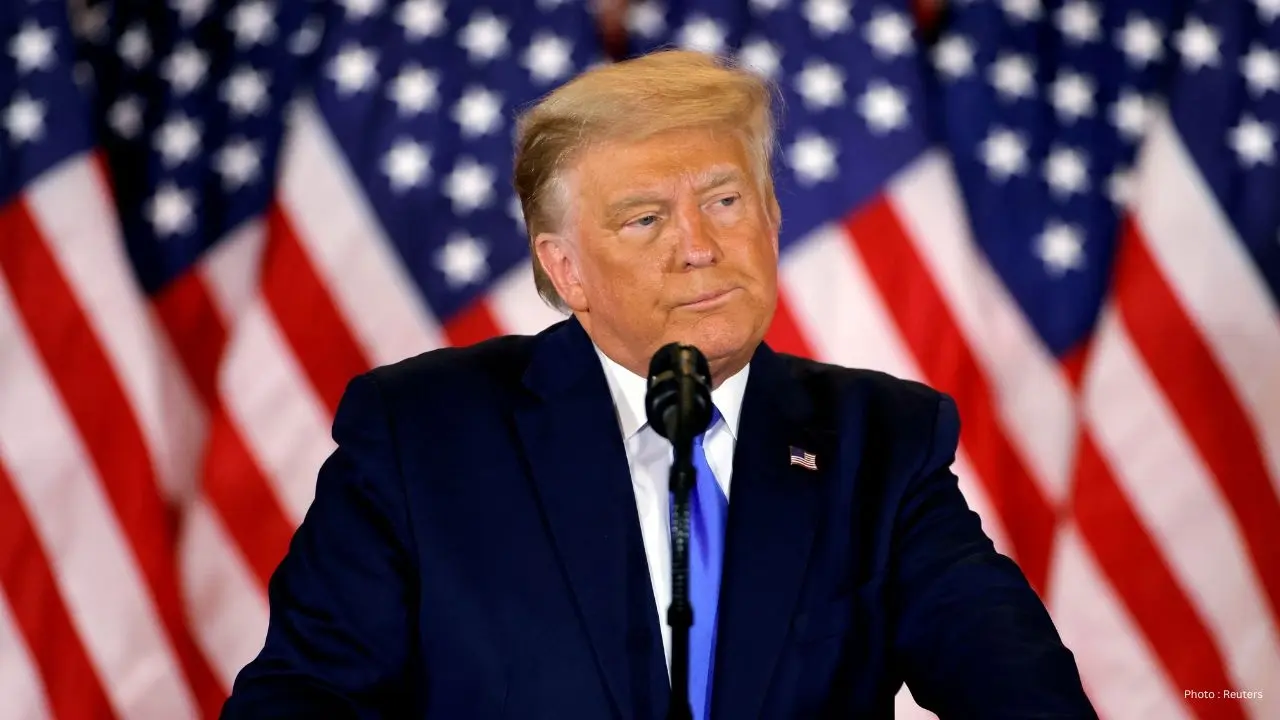
U.S. President Donald Trump has issued a strong warning to Iran, threatening serious action if the country does not reopen the Strait of Hormuz, a key global shipping route. His statement came as new details emerged about a dangerous rescue mission involving a downed American military aviator.
In a series of social media posts, Trump warned that the United States could target Iran’s critical infrastructure, including power plants and bridges, if the strait is not reopened by the given deadline. The Strait of Hormuz is one of the world’s most important routes for oil and gas transport, and any disruption can affect global markets and energy prices.
The warning followed a military operation in which U.S. forces rescued a wounded aviator whose aircraft had crashed inside Iranian territory. According to U.S. officials, the rescue mission was complex and involved multiple aircraft operating in a high-risk environment. One crew member was recovered quickly, while another was rescued later after an intensive search effort.
Reports suggest that the mission included several aircraft and required careful planning to avoid further losses. Some U.S. officials indicated that technical issues led to the destruction of certain aircraft during the operation, while Iran claimed its forces had shot them down. The exact details remain unclear, as both sides have presented different versions of events.
Tensions between the two countries have been rising since the start of the ongoing conflict in the region. Iranian officials strongly criticized Trump’s statements, calling them aggressive and warning that any attack on infrastructure could lead to further escalation. Iran has also threatened to disrupt other key waterways, including the Bab el-Mandeb Strait, which is another important route for international trade.
Meanwhile, diplomatic efforts are continuing behind the scenes. Countries such as Oman, Egypt, and Russia have been involved in discussions aimed at reducing tensions and ensuring safe passage through key shipping routes. Talks are focused on finding a solution that can prevent further conflict while maintaining stability in global trade.
The situation on the ground remains tense, with reports of airstrikes and attacks across several regions. In Iran, explosions were reported in parts of Tehran and other cities, although details about the targets are still limited. In nearby countries, damage has also been reported to infrastructure, including power plants and oil facilities.
The ongoing conflict has already resulted in significant loss of life and displacement across the region. Thousands of people have been affected, and concerns are growing about the impact on civilians and global stability.
As the situation develops, the international community is closely monitoring events, with calls for restraint and diplomatic solutions increasing. The coming days are expected to be critical in determining whether tensions ease or escalate further.