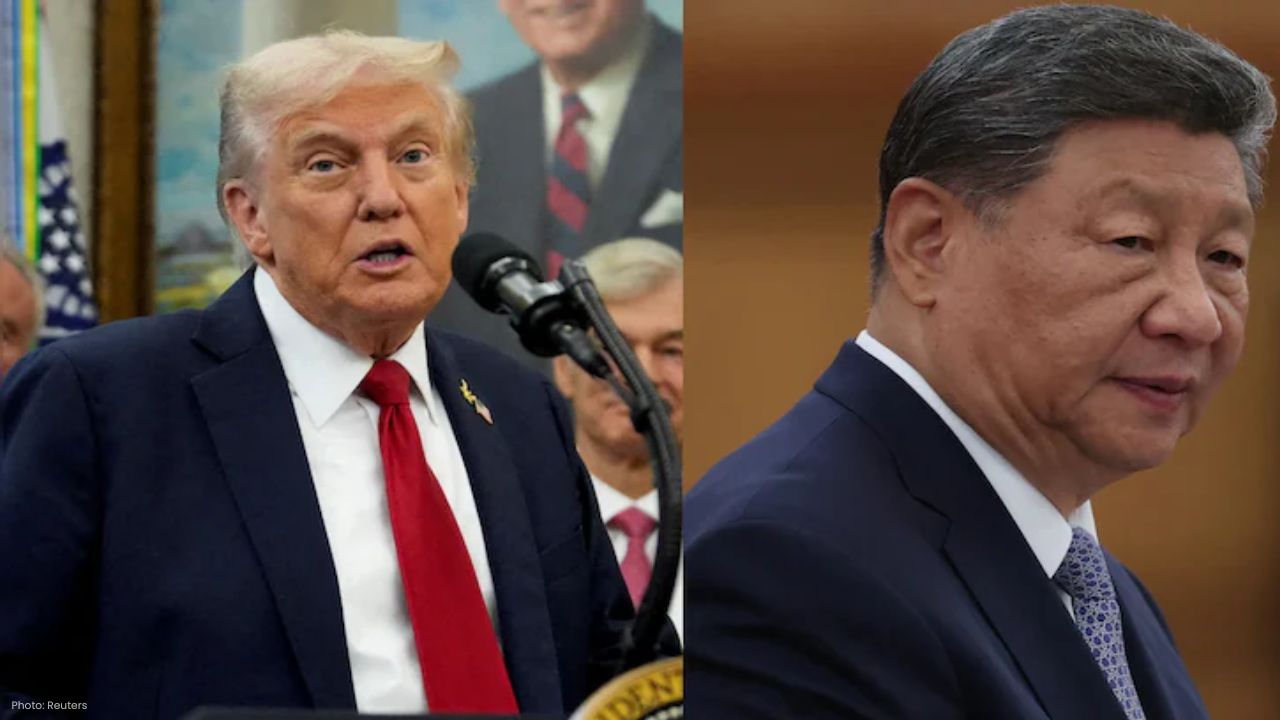
President Donald Trump has announced a 100% tariff on all Chinese imports, marking the sharpest escalation yet in the ongoing US-China trade war. The move, set to take effect on November 1, follows Beijing’s recent decision to impose export controls on rare-earth minerals—materials vital for the production of semiconductors, fighter jets, and other advanced technologies.
Beijing’s Export Controls Spark Retaliation
China’s new restrictions on rare-earth exports have alarmed Washington, as the US remains heavily reliant on Chinese supply chains despite efforts to diversify. The United States has invested around $400 million in MP Materials, the only domestic rare-earth producer, but it still lacks the scale to compete with China’s dominance in the sector.
US officials say Beijing’s move was a strategic attempt to gain leverage ahead of the Asia-Pacific Economic Cooperation (APEC) summit in South Korea, where Trump and Chinese President Xi Jinping had been scheduled to meet. That meeting now appears uncertain.
Trump Calls China’s Actions “a Moral Disgrace”
In a post on his social media platform Truth Social, Trump accused China of taking an “extraordinarily aggressive” stance, calling its actions “a moral disgrace in international trade.” He warned that the new tariffs could take effect even earlier if Beijing introduces further restrictions.
Trump also suggested he sees “no reason” to meet Xi at the APEC summit, though he has not officially canceled the meeting.
Politics, Optics, and Leverage
Analysts say the tariff surge reflects a mix of retaliation, politics, and strategy.
-
Retaliation: The new duties directly respond to China’s rare-earth restrictions, which threaten key US industries.
-
Politics: The move underscores Trump’s image as a hardliner on trade—a key theme of his political brand.
-
Tactical leverage: Trump has frequently used tariffs as negotiation tools rather than long-term policy instruments, deploying them to pressure foreign governments into new trade deals on US terms.
The timing also appeared deliberate. On the same day, Trump touted a breakthrough in Middle East peace talks, allowing him to project an image of strength on multiple fronts—diplomacy and economic power.
Market Reaction: Stocks Slide on Trade Shock
Financial markets responded swiftly and sharply. The Dow Jones Industrial Average plunged nearly 900 points, the S&P 500 fell 2.7 percent, and the Nasdaq slid 3.5 percent, with major technology and retail stocks leading the decline.
Economists warn that a renewed US-China trade war could once again disrupt global supply chains, driving up costs for electronics, consumer goods, and industrial components—especially with the holiday shopping season approaching.
Another High-Stakes Showdown Looms
As tensions rise, Washington and Beijing seem headed toward another high-stakes economic standoff—one that intertwines politics, power, and economic pressure. With tariffs, trade controls, and summit diplomacy all in play, the next few weeks could reshape global trade relations in unpredictable ways.