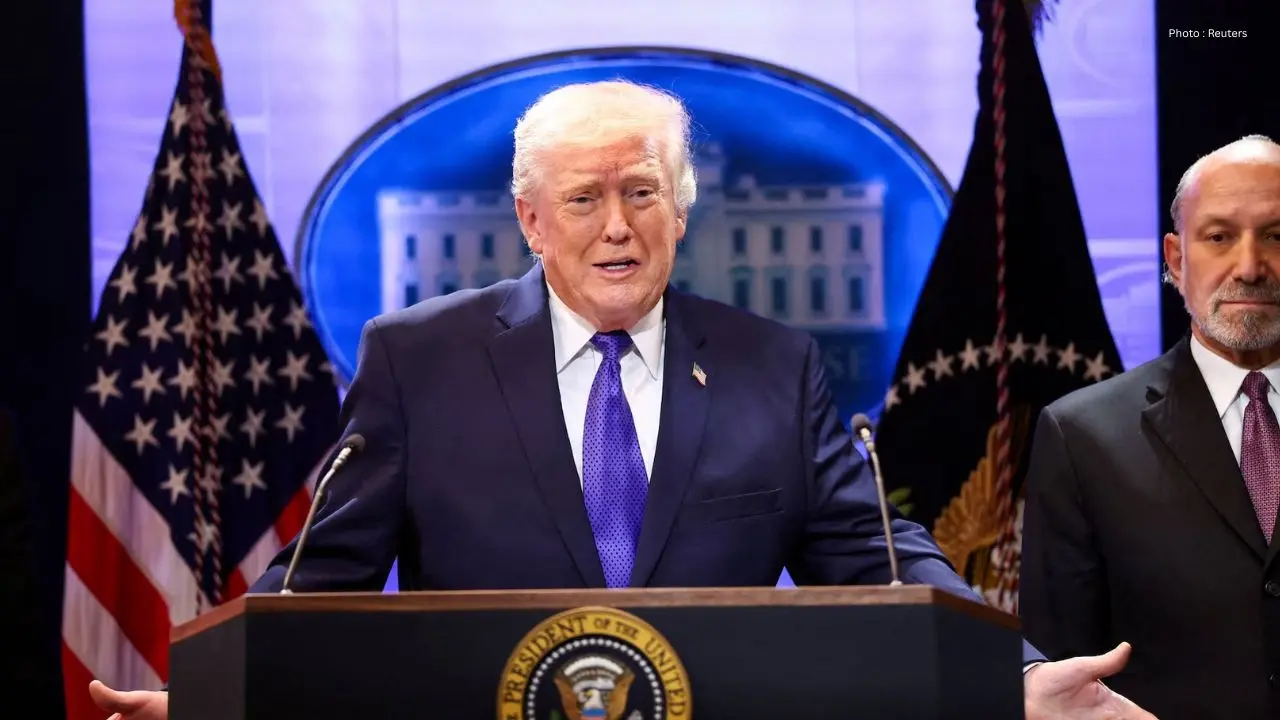
U.S. President Donald Trump has called on several Muslim-majority countries to join the Abraham Accords as part of a broader peace agreement connected to ongoing negotiations with Iran. The proposal is seen as a major diplomatic push aimed at expanding relations between Israel and countries across the Middle East and beyond.
According to international media reports, Trump discussed the issue during a high-level phone call with leaders from Saudi Arabia, Qatar, Pakistan, Turkey, Egypt, Jordan, Bahrain, and the United Arab Emirates. During the conversation, he reportedly said that countries wanting to be part of a future regional peace settlement should normalize relations with Israel through the Abraham Accords.
The Abraham Accords were first introduced during Trump’s earlier presidency in 2020. The agreements helped establish diplomatic relations between Israel and countries including the United Arab Emirates, Bahrain, Morocco, and Sudan. Trump now wants the accords expanded further as part of a larger strategy to reshape Middle East diplomacy.
Reports say Trump believes a wider regional alliance with Israel could strengthen any future agreement involving Iran. He reportedly argued that participation in the accords would show “good intention” toward peace and regional cooperation. According to sources familiar with the talks, Trump also suggested that even Iran could one day become part of the diplomatic framework if tensions improve in the future.
However, the proposal has received mixed reactions across the region. Some countries, especially Saudi Arabia and Pakistan, have traditionally linked any formal recognition of Israel to progress toward the creation of an independent Palestinian state. Analysts say the ongoing war in Gaza and tensions involving Israel have made normalization politically sensitive in many Muslim-majority nations.
Pakistani officials reportedly rejected suggestions that joining the Abraham Accords should be tied to negotiations with Iran. Sources said Islamabad considers the Iran peace discussions and Israel normalization efforts to be separate diplomatic matters. Saudi Arabia has also remained cautious, publicly maintaining that Palestinian statehood remains an important condition for any future agreement with Israel.
At the same time, Trump claimed that negotiations with Iran are progressing positively. While he did not provide full details of the proposed agreement, reports suggest the discussions include regional security, sanctions, shipping routes in the Strait of Hormuz, and Iran’s nuclear activities. The United States has been trying to secure a wider peace arrangement that could reduce military tensions in the Middle East.
Political experts believe Trump is attempting to combine multiple diplomatic goals into one historic regional agreement. Supporters say expanding the Abraham Accords could improve trade, security cooperation, and political stability. Critics, however, argue that linking Iran negotiations with Israel normalization may complicate already difficult talks.
Despite the uncertainty, Trump has continued publicly promoting the Abraham Accords as a key part of his Middle East strategy. Officials involved in the discussions say negotiations are still ongoing, and no final agreement has been officially confirmed.