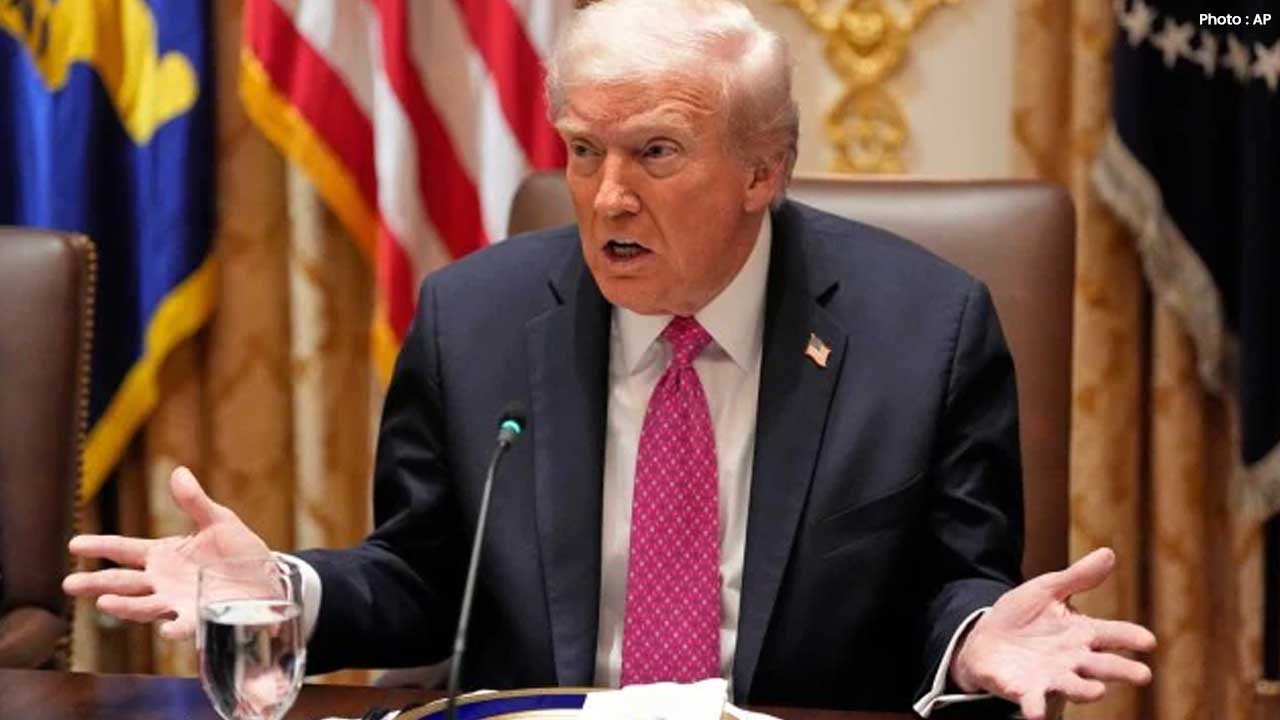
In a striking verbal reprimand, US President Donald Trump targeted Venezuelan President Nicolas Maduro on Friday, declaring that Maduro “doesn’t want confrontation with the United States.” This comes as the US intensifies accusations against Maduro for drug cartel connections while deploying additional military resources to the region. Trump's assertions draw global attention to the alleged concessions from Caracas as a response to rising US pressure.
Addressing reporters at the White House, Trump claimed that Maduro had made substantial concessions to de-escalate tensions, indicating Venezuela's desire to steer clear of further clashes with the US. “He has offered everything, and you know why? Because he doesn’t want to mess around with the United States,” Trump stated, underscoring his belief that Maduro is trying to appease the US amidst mounting military pressure. This comment emerges as speculation grows regarding Venezuela's efforts to establish plans for de-escalation with the US.
US Military Presence Escalates Regional Tensions
The Trump administration has significantly reinforced military capabilities in the Caribbean as part of counter-narcotics operations, exacerbating the situation. Seven US Navy vessels, along with stealth aircraft and B-52 bombers, have been strategically positioned close to Venezuela’s shores. Data from Flightradar24 illustrated that bombers circled the area for extended periods, highlighting the scale of the US military deployment. Trump emphasized that these maneuvers reflect Washington’s commitment to deterrence and global readiness.
Experts caution that this military escalation risks destabilizing the region further, triggering fears in Caracas that Washington’s ultimate objective may be regime change. The US claims that Venezuelan operations involve drug trafficking, targeting alleged smuggling vessels. Trump defended the airstrikes, recalling a recent submarine assault aimed at drug transportation. However, independent verification of these strikes remains sparse, with international observers expressing concerns regarding legality and civilian consequences.
Trump and Rubio Support Tough Venezuela Stance
Alongside Trump, US Secretary of State Marco Rubio refrained from confirming reports of survivors from the US strikes, assuring that more information would follow. Trump maintained that Venezuela had made concessions in reaction to US pressure, portraying Maduro’s actions as recognition of Washington’s power in the regional landscape. The president also characterized Maduro as a leader striving to safeguard himself from US influence amid scrutiny both domestically and internationally.
Venezuela has become a central focus of US foreign policy, with Trump asserting that any restraint from Caracas would facilitate greater regional stability. Analysts suggest that Trump's declarations and the US military build-up reflect a dual approach: countering alleged drug trafficking and signaling deterrent force to the Maduro administration. As tensions remain high, the global community is closely monitoring developments, with the Trump administration framing its strategy in Venezuela as vital for regional and global security.
Venezuela's Struggles Amid Alleged Drug Trafficking
According to US claims, several drug-smuggling vessels departing from Venezuela have been targeted by American military actions, leading to numerous fatalities. While Trump justified these operations as necessary to combat illicit trafficking, human rights advocates have condemned the strikes for lacking due process and verifiable evidence. Venezuela has vehemently rejected these allegations, branding US actions as provocative and escalating the risk of conflict further.
Trump’s bold rhetoric and critique of Maduro aim to underscore US determination while suggesting that Venezuela is maneuvering to avoid confrontation, repeatedly stating, “He doesn’t want to mess with the United States.” This narrative reveals the increasing geopolitical stakes as the US strives to impose its influence over Caracas's policy decisions.
Global Ramifications of US-Venezuela Friction
The ongoing standoff between the US and Venezuela bears considerable implications for international relations and stability in the region. Trump's remarks, alongside military displays, convey a firm stance on Venezuela, particularly regarding drug operations and Maduro’s governance. While the US justifies these actions as maintaining law and order, critics caution that escalation could adversely affect Latin America and global trade routes.
The Trump administration insists that Venezuela’s concessions signify recognition of US authority and readiness to cooperate under duress. Trump continues to portray his approach as a proactive deterrence strategy, emphasizing that Venezuela’s leadership “doesn’t want to mess with the United States.” As the crisis unfolds, global attention remains focused on Caracas and Washington, observing how shifts in diplomacy, military postures, and public statements influence US-Venezuela relations.