In a world increasingly shaped by technological advancement, economic competition, and political complexity, questions about human dignity, justice, and social responsibility remain as important as ever. While societies continue to pursue innovation and progress, the challenge of ensuring that development remains centered on people rather than systems has become a defining issue of our time.
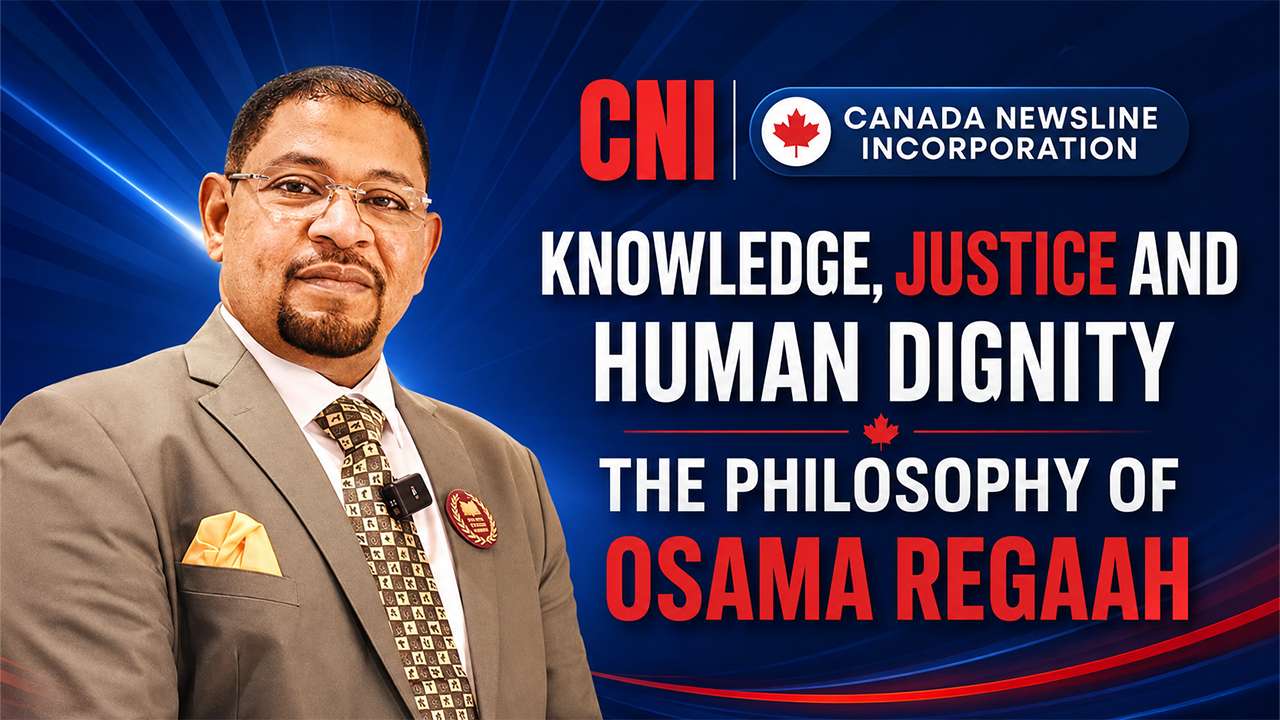
Among the voices advocating for a more human-centered approach to progress is Osama Regaah, a legal scholar, author, researcher, and thinker whose work has consistently emphasized the relationship between knowledge, justice, and human development.
Throughout his academic, professional, and literary journey, Regaah has argued that sustainable progress cannot be measured solely through economic growth, institutional expansion, or technological achievement. Instead, he believes that genuine development begins with investing in people, protecting human dignity, and creating opportunities for individuals to reach their full potential.
His philosophy offers a perspective that is increasingly relevant in a rapidly changing world.
The Power of Knowledge Beyond Education
For Osama Regaah, knowledge has always represented far more than academic achievement.
While formal education played a significant role in shaping his career, his understanding of knowledge extends beyond classrooms, degrees, and professional qualifications. He views knowledge as a lifelong pursuit that empowers individuals to understand themselves, contribute to society, and make informed decisions.
This belief has influenced both his legal scholarship and literary work.
According to Regaah's philosophy, education should not simply prepare people for employment. It should also cultivate critical thinking, ethical awareness, and a sense of responsibility toward others.
In many of his reflections, he emphasizes that societies flourish when knowledge is treated as a public good rather than a personal asset. When learning becomes accessible, inclusive, and purposeful, it creates the foundation for stronger institutions and healthier communities.
This idea is particularly relevant in an era where information is abundant but wisdom often remains scarce.
Why Justice Matters
A central pillar of Regaah's thinking is the concept of justice.
Having studied and practiced within the field of law, he developed an understanding of justice that goes beyond legal procedures and technical frameworks. While laws are necessary for regulating societies, he believes their ultimate purpose should be the protection of human dignity.
For Regaah, justice is not simply about resolving disputes or enforcing regulations. It is about creating conditions in which individuals can live with security, fairness, and opportunity.
This perspective has shaped his professional approach to legal scholarship and governance. He frequently highlights the importance of legal systems that balance authority with accountability and regulation with compassion.
In his view, societies become stronger when institutions earn public trust through transparency, fairness, and equal treatment under the law.
Justice, therefore, becomes more than a legal principle—it becomes a social responsibility.
Human Dignity as the Foundation of Progress
Perhaps the most defining aspect of Osama Regaah's philosophy is his emphasis on human dignity.
Throughout his writings and public reflections, he repeatedly returns to the idea that every individual possesses inherent value regardless of background, status, or circumstance.
This belief influences his views on education, governance, leadership, and social development.
He argues that policies, institutions, and organizations should ultimately be evaluated by their impact on people. Economic success, technological innovation, and political achievements may all contribute to development, but they lose meaning if human dignity is neglected.
For Regaah, respecting human dignity means creating environments where individuals can learn, contribute, and thrive.
It means recognizing that sustainable progress depends not only on infrastructure and investment but also on empathy, inclusion, and opportunity.
The Influence of Law on His Worldview
Law has played a significant role in shaping Regaah's intellectual journey.
His legal education provided a framework for understanding rights, responsibilities, governance, and social order. However, rather than viewing law as an isolated discipline, he came to see it as deeply connected to broader questions about ethics and humanity.
This perspective is reflected in his legal publications, which often explore comparative legal systems and the relationship between legal principles and social realities.
For Regaah, effective laws are those that strengthen communities, protect vulnerable populations, and contribute to long-term stability.
His work demonstrates a belief that legal systems should serve people rather than simply govern them.
Literature as a Window into Human Experience
While law helped shape his understanding of institutions and governance, literature offered another path toward understanding humanity.
As an author and novelist, Regaah has explored themes of identity, morality, social change, and personal growth.
Through literature, he examines the emotional and psychological dimensions of human life that cannot always be captured through legal analysis or academic research.
His novels and literary writings reveal a consistent interest in understanding how individuals navigate challenges, relationships, and societal transformations.
This combination of legal thought and literary expression has become one of the distinctive characteristics of his intellectual work.
It allows him to approach complex issues from both analytical and human perspectives.
Leadership Through Service
Another important aspect of Regaah's philosophy is his understanding of leadership.
Rather than defining leadership through power or authority, he associates it with service and responsibility.
True leaders, in his view, are those who create opportunities for others, encourage learning, and contribute positively to society.
This philosophy was influenced in part by his interactions with prominent business and community leaders, including the late Saeed Ahmed Lootah, whose commitment to education and social development left a lasting impression on him.
The lessons he drew from such experiences reinforced his belief that leadership should be measured not by personal achievements but by lasting contributions to people and communities.
Building Bridges Through Dialogue
In a world often divided by differences in culture, politics, religion, and ideology, Regaah consistently advocates for dialogue and understanding.
He believes that meaningful progress requires the ability to listen, engage respectfully, and learn from different perspectives.
Throughout his writings, he has emphasized the importance of building bridges rather than barriers.
Whether through law, literature, education, or public discourse, he encourages individuals to seek common ground while respecting diversity.
This commitment to dialogue reflects a broader belief that peaceful societies are built not only through institutions but also through communication, empathy, and mutual respect.
Human Development in the Twenty-First Century
As global societies confront challenges ranging from economic inequality and social fragmentation to technological disruption, Regaah's emphasis on human development remains particularly relevant.
He argues that development strategies should focus not only on economic indicators but also on education, ethics, civic engagement, and social well-being.
Investing in people, he suggests, produces benefits that extend far beyond immediate outcomes.
Communities become more resilient, institutions become more effective, and societies become more capable of adapting to change.
In this sense, human development becomes both a moral objective and a practical necessity.
A Philosophy for the Future
The philosophy of Osama Regaah cannot be reduced to a single discipline or profession.
It draws from law, literature, education, governance, and personal experience. Yet across these different fields, a consistent theme emerges: the belief that knowledge should serve humanity, justice should protect dignity, and leadership should create opportunities for others.
At a time when many societies are searching for models of sustainable and inclusive progress, these ideas offer a reminder that development is ultimately about people.
Technology may transform economies, institutions may shape policies, and markets may drive growth, but lasting progress depends on how societies treat human beings.
For Osama Regaah, the future belongs not only to those who possess knowledge, but to those who use it wisely, ethically, and in service of humanity.
Editor's Note: The content of this feature is derived from information, materials, and personal accounts provided by Osama Regaah. All statements regarding personal experiences, achievements, and opinions reflect the author's own perspective.