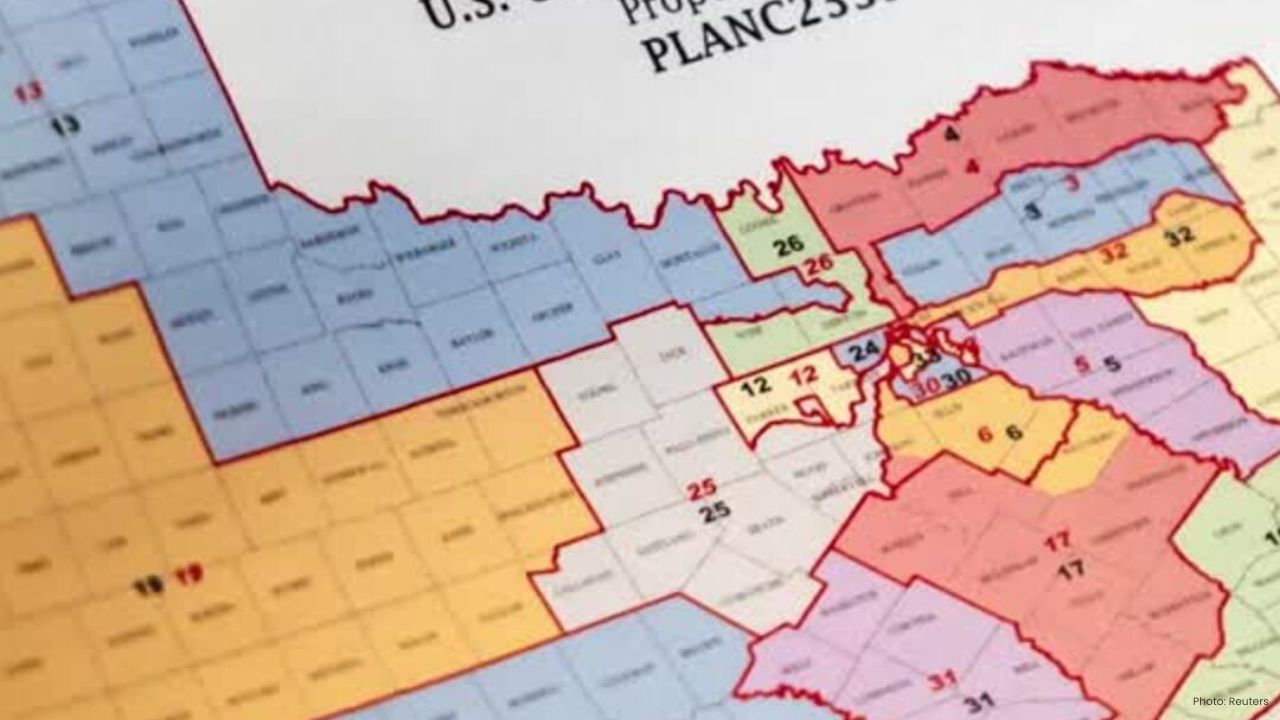
In Texas, a major political fight has ended with Republicans passing new congressional voting maps designed to strengthen their control in Washington. The maps were approved after weeks of drama in which Democrats fled the state to stop the vote.
Republicans argue that the new maps are fair and necessary, but Democrats say they are illegal and racially unfair. This battle has drawn attention from across the United States, with both parties accusing each other of trying to grab power.
Why the Maps Matter
Voting maps decide how people in Texas are grouped into districts to elect members of the U.S. House of Representatives. Every ten years, states redraw their maps using new Census data. But this time, Republicans pushed for changes much earlier.
The new Texas maps create five more Republican-leaning districts. This will help the party hold on to its slim majority in the U.S. House. Democrats say the maps take away voting power from minority communities, especially Latino and Black voters.
Democrats Flee the State to Stop the Vote
The fight turned dramatic when Texas Democrats left the state to prevent Republicans from holding a quorum and thus prevent a vote. Without enough lawmakers in the chamber, the Texas House could not pass the bill.
For nearly three weeks, Democrats stayed away, some traveling to other states. Texas Governor Greg Abbott, a Republican, ordered police to arrest the missing lawmakers and bring them back. Some Democrats said their homes were watched by law enforcement while they were gone.
The Democrats finally returned, saying their goal was to draw national attention to what they saw as an unfair power grab.
Locked Doors and Police Escorts
When Democrats came back, Texas House Speaker Dustin Burrows took unusual steps to ensure the vote happened. He ordered the chamber doors locked and assigned police officers to escort Democratic lawmakers into the chamber so they could not leave again.
One lawmaker, Nicole Collier, chose to sleep inside the chamber instead of being escorted by an officer. Other Democrats joined her protest by ripping up their police escort agreements.
Republicans Push Ahead
Despite these protests, Republicans moved forward and approved the maps with an 88–52 vote. Republican legislator Todd Hunter, who introduced the bill, criticized Democrats for leaving.
“Don’t say we didn’t include you,” he told them. “You left us for 18 days, and that was wrong.”
Democrats Call It a Power Grab
Democrats strongly disagreed, calling the maps unfair and illegal. Legislator Ann Johnson said, “The root of all this is racism and power. This is a pure power grab.”
Civil rights groups and Democratic lawmakers argue that the maps weaken the influence of minority voters. They say this could violate federal laws that protect voting rights. Many groups are preparing lawsuits to challenge the new districts.
Gerrymandering Debate
The fight in Texas is part of a bigger national issue called gerrymandering—when political parties redraw maps to give themselves an advantage. Both Republicans and Democrats have been accused of doing this in different states.
In California, lawmakers are pushing new maps that would give Democrats an edge in five districts, which could cancel out the gains Republicans made in Texas. Governor Gavin Newsom of California even posted on social media after the Texas vote, saying, “It’s on, Texas.”
History of Map Fights in Texas
This is not the first time Texas maps have been challenged. After the last Census in 2020, maps drawn in 2021 were also accused of racial discrimination and are still being fought over in court.
Democrats say changing the maps again before the next Census in 2030 is unfair and illegal. Republicans reject that, saying the changes are about balancing populations and ensuring fair representation.
What Happens Next
The maps passed in the Texas House now go to the state Senate, where Republicans also hold the majority. They are expected to approve the maps quickly. Once approved, they will shape the 2026 midterm elections and may play a big role in which party controls Congress.
If lawsuits are filed, the maps could end up in federal courts, where judges will decide if they violate civil rights protections.
A Battle That Could Shape the Future
This battle in Texas shows how important voting maps are to American politics. They can change which party has power in Washington for years. With the U.S. House majority very slim, every seat matters.
For Republicans, the new Texas maps are a way to secure their hold. For Democrats, the fight is about protecting voting rights and stopping what they see as unfair rules.
What is clear is that the debate is not over. Texas may have passed the maps, but the legal battles and political arguments are only just beginning.