Dattatreya Hosabale, General Secretary of Rashtriya Swayamsevak Sangh, has strongly rejected comparisons of the RSS with the Ku Klux Klan, calling such claims misleading and based on long-standing misconceptions. He made these remarks during an interactive session at the New India Conference organised by the Hudson Institute in the United States.
Hosabale stated that the RSS has often been portrayed incorrectly over the years, both within India and internationally. He said that narratives describing the organisation as a “Hindu supremacist” group or as anti-minority, anti-Christian, or anti-modern are not accurate. According to him, such views have developed over time due to selective representation and misunderstanding of the organisation’s activities and philosophy.
During the discussion, Hosabale emphasised that the RSS does not promote any form of supremacy. He explained that Hindu philosophy is rooted in the idea of universal unity and harmony, where the world is seen as one family. Based on this principle, he argued that the idea of supremacy does not align with the cultural values that the RSS follows. He also pointed out that historically, India has not followed an expansionist approach, reinforcing his argument against the supremacist label.
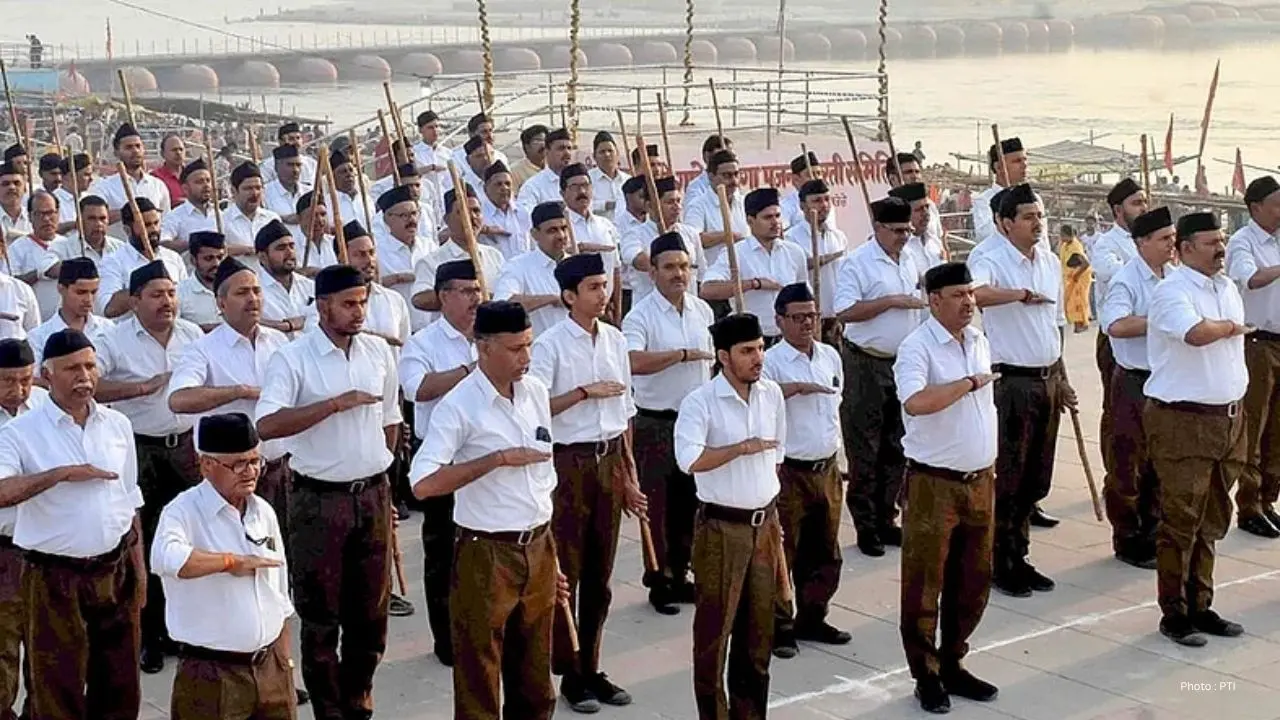
Hosabale described the RSS as a volunteer-driven organisation that focuses on character-building, discipline, and social service. He highlighted that the organisation conducts daily and weekly gatherings, known as shakhas, where individuals are trained in values such as self-confidence, community service, and social responsibility. These activities, he said, aim to create responsible citizens who contribute positively to society.
He further explained that the RSS views “Hindu” identity as a civilisational concept rather than a strictly religious one. According to him, this identity reflects shared cultural and historical values rather than exclusion. He added that tensions between communities are often influenced by political factors and misinterpretations of history, rather than the core principles of the organisation.
Addressing international perceptions, Hosabale noted that misunderstandings about the RSS are similar to misconceptions about India in some parts of the world. He stressed the importance of dialogue and engagement to bridge these gaps and provide a clearer understanding of the organisation’s work.
The RSS leader also spoke about the organisation’s large network, stating that it conducts tens of thousands of shakhas across the country. He said RSS volunteers are involved in various social initiatives, including disaster relief, education, healthcare, rural development, and environmental efforts. These activities, he added, reflect the organisation’s focus on service and nation-building.
On the issue of modernisation, Hosabale said that cultural values and modern development are not in conflict. He explained that societies can adopt technological and economic progress while still preserving their cultural identity. He pointed to examples of countries that have modernised while maintaining their traditions, suggesting that India can follow a similar path.
Overall, Hosabale’s remarks aimed to present the RSS as a cultural and social organisation focused on unity, service, and development, while addressing criticism and clarifying its position on global platforms.