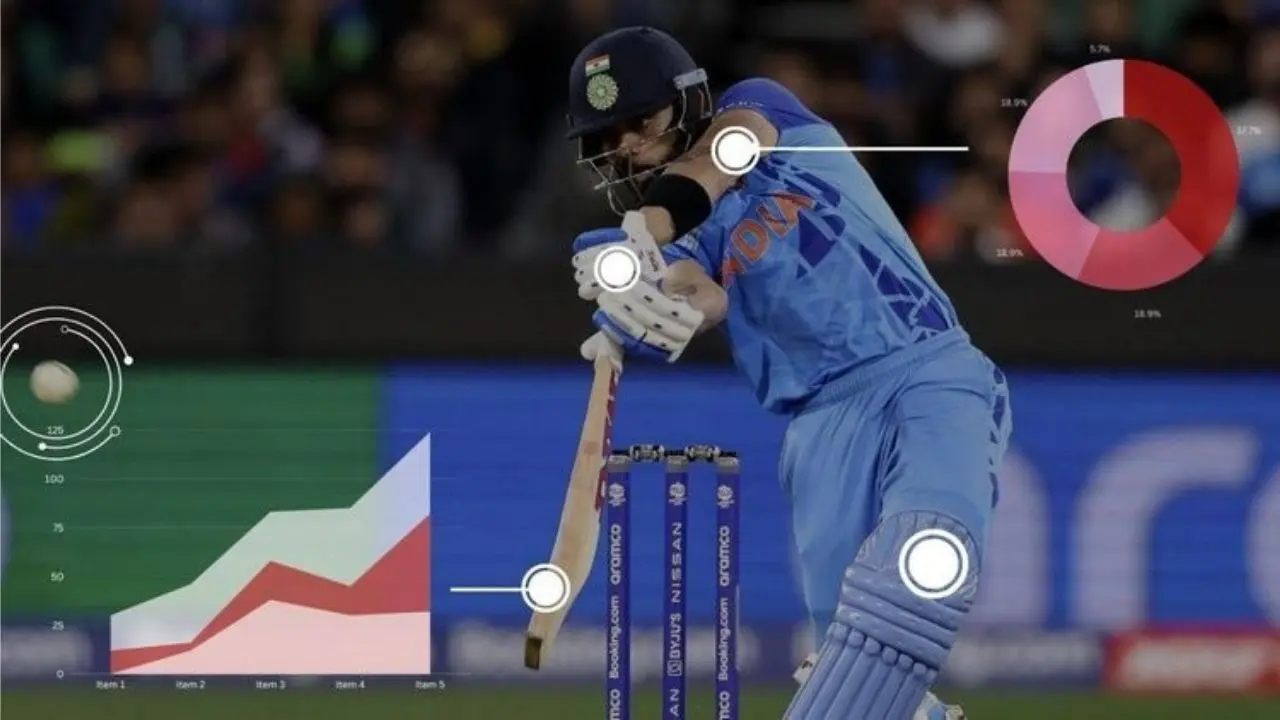
Welcome to the Analytics Revolution in Cricket
Once driven by intuition and instinct, cricket is experiencing a seismic shift toward data-driven decision-making. Captains relied on their experience, while selection committees prioritized familiar reputations. Those days are long gone.
Now, algorithms, data scientists, and analysts hold as much sway in the game as the traditional tools like bats and balls. Every delivery is scrutinized, shot data recorded, and every movement tracked within expansive databases.
Cricket has transcended mere spectator enjoyment.
It has become a calculated endeavor.
Understanding Data Analytics in Cricket
In cricket, data analytics involves aggregating extensive match and player statistics to inform decisions.
It’s not about guesswork.
It’s about uncovering what the naked eye fails to catch.
Every match yields crucial information, such as:
Batting performance against various bowlers
Bowling effectiveness in high-pressure scenarios
Fielding success based on positions
Athlete fitness trends across seasons
Injury likelihood assessments
Performance variables across different venues
Results in key phases like powerplays
These figures are analyzed using sophisticated software that spots patterns invisible to human analysts.
Algorithm-Based Team Selection
Gone are the days when reputation weighed heavily in team selections.
Today, it’s all about statistical probability.
Before finalizing a team, analysts study:
Batsmen's effectiveness on specific pitches
Bowlers' performances against various batting styles
Players' abilities against spin in slower conditions
How players handle swing in overcast conditions
Who excels under pressure during chases
Recovery rates between matches
The final team list is now about assembling the optimal players for each match situation.
Match Conditions Over Player Names
Cricket takes place in unique environments.
A ground in Chennai behaves drastically differently from one in Perth.
Data enables teams to scrutinize questions such as:
Does this player struggle on tacky pitches?
Does this bowler lose precision in humid conditions?
Is this batter effective on shorter boundaries?
Does performance peak in daylight over night games?
Answers derive from historical data rather than conjecture.
Dynamic Batting Orders
In today’s cricket, batting positions are dictated by data.
Adjustments in lineups are determined by:
Strategic combinations let teams counter the effectiveness of bowlers.
With data-driven adjustments, the team sheet is now flexible.
The Science Behind Bowling Strategies
Bowling has evolved beyond sheer speed and swing.
It encompasses psychology, patterns, and probabilities.
Data reveals:
Where batters typically accumulate runs
What shots they attempt under pressure
Which lines tend to induce errors
When wickets are usually taken
Which bowler should engage at various overs
Bowling plans are adjusted in real-time, similar to field arrangements, using previous match data.
Predicting Match Outcomes with Data
There's no magic involved in predicting match results.
It’s about likelihood.
Algorithms evaluate:
They simulate thousands of hypothetical matches mathematically, estimating probabilities rather than certainties.
Prediction models won’t assert:
"This team will definitely win."
They’ll more likely say:
"Historically, this team has a 67% chance of victory."
That’s compelling.
Embracing Data Without Losing the Essence of Cricket
Some critics argue that data-driven approaches render cricket mechanical.
Numbers, not emotions.
But using data doesn’t strip away human elements.
It simply minimizes uncertainties.
The thrill remains intact.
The pressure persists.
What changes is:
Decisions are now informed.
Not based on whims.
Fielding Strategies Have Evolved
Previously, field placements were based on instincts.
Today, they’re meticulously planned.
Data indicates:
Common areas where batters score
Shots that batters typically shy away from
Frequency of edges
Gaps likely to attract mistakes
Fielders are positioned to anticipate rather than react.
It’s akin to chess on the field.
Predicting Injuries Before They Strike
Workload analytics monitor:
This data enables teams to rest their athletes proactively.
An athlete may sit out not for weakness, but rather due to analytics predicting potential burnout.
Ironically, data may prolong careers.
Not hinder them.
Selector Trust in Numbers Over Fan Sentiment
Fans often choose players based on emotions.
Selectors rely on statistics and data.
Analytics provide unbiased insights.
Two similar players?
One thrives under stress.
One excels on challenging pitches.
One has a faster recovery rate.
One better endures match scenarios.
Numbers reveal these crucial distinctions.
How Data Influences Captaincy
Captains are no longer isolated in their decisions.
They have analysts, data, and models supporting them.
Tactical choices now involve:
Determining optimal times for bowler changes
When to be aggressive
When to adopt a defensive stance
Who to target and when
Using part-timers at the right moments
Strategies are no longer left to chance.
They’re backed by robust data insights.
The Youth Advantage
Data provides:
Immediate feedback for skill enhancement
Clear identification of weaknesses
Early skill adjustments
Monitoring fitness levels
Strategic career planning
Young athletes don’t wait years to pinpoint their flaws.
Data exposes these issues right away.
Can Algorithms Replace Human Insight?
Absolutely not.
Data aids decisions.
People ultimately decide.
Confidence, vision, and bravery are beyond quantification.
An algorithm may suggest one path.
A captain might choose otherwise.
Sometimes instinct trumps analysis.
That's the essence of the game.
Changing Fan Engagement with Cricket
Fans now explore:
Wagon wheels and performance heat maps
Strike zones and probability metrics
Comprehensive player performance metrics
Cricket has become more than watching a match.
It’s about engaging with the narrative behind the numbers.
Is Cricket Becoming Excessively Technical?
This is true only if we forget...
Cricket remains human.
Unpredictability lingers.
Emotions endure.
The game retains its magic.
No statistic foretells an incredible catch.
No algorithm captures a hero’s moment.
Data enhances the game.
It does not diminish its wonder.
Your Final Takeaway: Cricket's Evolution with Data
Analytics haven’t eradicated cricket.
They’ve refined it.
Players are stronger.
Strategic insight is sharper.
Matches are closer.
Performances have become smarter.
The sport has advanced.
It hasn’t vanished.
Cricket will always remain a players’ game.
Data merely empowers them to excel.
DISCLAIMER
This piece serves as informational content and does not reflect the official views of any cricket associated organization. Insights are derived from market trends and industry observations.