Restricted Access: 6 Spots in India Off-Limits to Indians, Including 3 in Tamil Nadu
India boasts a wealth of culture and an array of travel destinations, attracting tourists to its mountains, beaches, and historic sites. However, few are aware that there are specific areas in India where citizens cannot venture freely, or can only access with special permissions.
These limitations aren't arbitrary; they are put in place to ensure the safety of national security, wildlife, sensitive sites, tribal communities, and environmental integrity. Surprisingly, three of these restricted locales are situated in Tamil Nadu, a state renowned for its attractions and heritage.
Here’s a comprehensive overview of six places in India where Indians cannot visit freely, including the justifications for these restrictions.
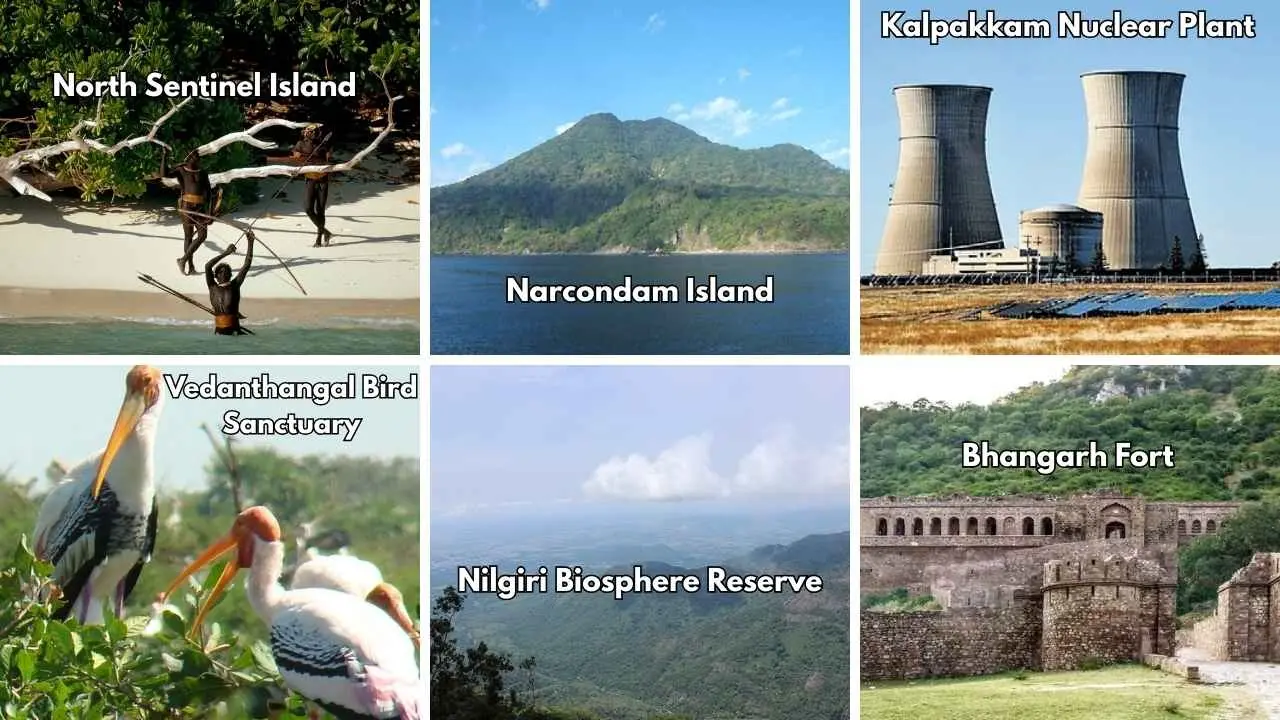
1. North Sentinel Island (Andaman & Nicobar Islands)
Regarded as one of the most strictly regulated areas in India, No citizen, whether Indian or foreign, is permitted to set foot on this island.
Home to the Sentinelese tribe, one of the last groups on Earth living untouched by modern civilization, the government has prohibited all contact to shield them from diseases and to honor their traditional way of life. Any interaction could pose risks to their health.
Access to the island is legally forbidden, with severe consequences for those who attempt to approach.
2. Narcondam Island (Andaman & Nicobar Islands)
Narcondam Island can only be accessed with explicit permission. This wildlife sanctuary is dedicated to conserving the critically endangered Narcondam Hornbill.
Due to the delicate ecosystem, only scientists, researchers, and approved personnel are allowed entry. The public is barred from visiting.
These controls are crucial for preserving the island's integrity.
3. Kalpakkam Nuclear Plant (Tamil Nadu)
Kalpakkam hosts a key nuclear power installation, qualifying it as a high-security zone.
Indians cannot mingle in the restricted areas unless they possess official clearance. Only designated personnel, like scientists and government employees, may enter. Public access, tourism, and photography are strictly prohibited.
These regulations are in place to ensure public and national security.
4. Vedanthangal Bird Sanctuary – Restricted Zones (Tamil Nadu)
Though Vedanthangal is one of India's earliest bird sanctuaries open to tourists, certain sections are completely off-limits to citizens.
During breeding seasons, core areas are cordoned off to safeguard eggs and hatchlings. Human activity and noise in these places can disrupt bird life and hinder their survival.
These measures help preserve thousands of migratory birds that flock to the sanctuary annually.
5. Nilgiri Biosphere Reserve – Core Forest Areas (Tamil Nadu)
Covering parts of Tamil Nadu, Kerala, and Karnataka, the Nilgiri Biosphere Reserve has areas open to tourists, but the core forest sections in Tamil Nadu remain entirely off-limits.
Access is tightly controlled, with only authorized entries permitted to safeguard endangered wildlife, rare flora, and tribal populations.
These restrictions support environmental preservation and maintain the region’s ecological balance.
6. Bhangarh Fort – After Sunset (Rajasthan)
Bhangarh Fort, a historic site in Rajasthan, allows daytime admission, but entry is prohibited after sunset and before sunrise.
This regulation, instituted by the Archaeological Survey of India, is designed primarily for safety. At night, the region can become hazardous due to wildlife, poor visibility, and uneven terrain.
Warning signs are prominently displayed, and nighttime access is deemed illegal.
Reasons for Restricted Access
Various factors compel the government to restrict access to certain venues:
-
National security considerations
-
Safety around nuclear or defense facilities
-
Conservation of wildlife and forest areas
-
Respect for indigenous communities
-
Environmental safeguarding
Such rules aim to safeguard individuals, nature, and India’s cultural heritage—not to deter tourism without cause.
While India presents an array of travel opportunities, some sites remain inaccessible even to its citizens. These protections are essential for safety, security, and conservation. Understanding these areas can help travelers remain within legal boundaries and honor the regulations designed to protect fragile spaces.
Traveling is about more than exploration; it encompasses awareness of limits and responsible actions. Knowing where not to tread is as crucial as discovering new terrains.
Disclaimer
This article is provided for general awareness and informational purposes. Entry permissions and restrictions may change based on government actions, security needs, environmental factors, or local laws. Readers are encouraged to check official resources for the latest updates before planning any excursions. None of the information shared should be seen as legal, travel guidance, or official advice. The publisher does not assume responsibility for any subsequent alterations or decisions made post-publication.