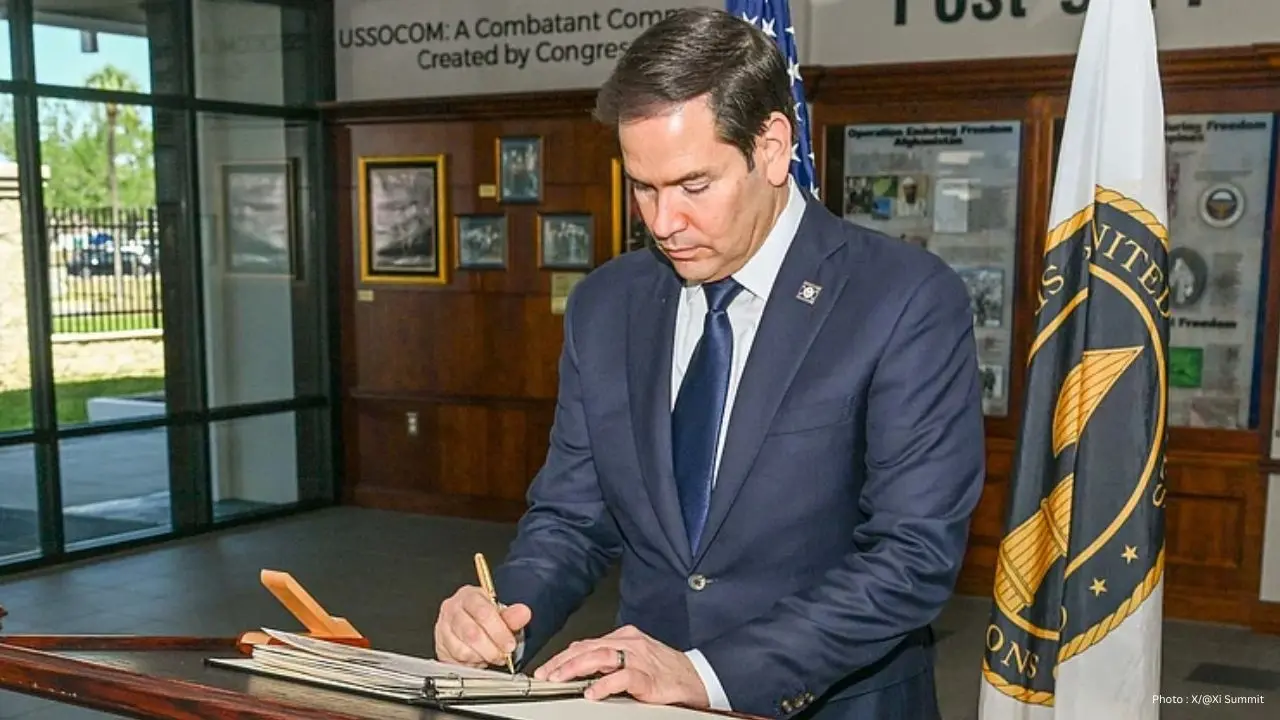
The upcoming summit between U.S. President Donald Trump and Chinese President Xi Jinping is bringing renewed attention to Senator Marco Rubio’s long-standing and aggressive position on China. As Washington prepares for another major round of talks with Beijing, Rubio’s views on trade, security, technology, and human rights are once again becoming part of the wider debate over America’s strategy toward China.
Rubio has spent years positioning himself as one of the strongest critics of the Chinese government in American politics. The Florida senator repeatedly warned about China’s growing global influence, military expansion, technology ambitions, and alleged interference activities. He has supported tougher economic restrictions, stronger security alliances in Asia, and stricter action against Chinese companies operating in sensitive industries.
The renewed attention comes as Trump and Xi prepare for discussions expected to cover trade tensions, tariffs, Taiwan, cybersecurity, artificial intelligence, and global supply chains. Analysts say Rubio’s hardline approach reflects a growing bipartisan attitude in Washington where many politicians now see China as America’s main strategic competitor.
Rubio has especially focused on issues involving technology and national security. Over recent years, he strongly supported restrictions on Chinese technology firms and pushed for tighter controls on semiconductor exports, telecommunications equipment, and artificial intelligence partnerships. He argued that China’s technological growth could eventually threaten American economic and military leadership.
Human rights issues have also been central to Rubio’s position on China. He repeatedly criticized Beijing over allegations involving Hong Kong, Xinjiang, censorship, religious freedoms, and pressure on political activists. Rubio previously supported sanctions and legislation targeting Chinese officials accused of involvement in human rights abuses.
The Trump-Xi summit is expected to test how aggressively the United States continues confronting China while also trying to avoid deeper economic conflict. Some analysts believe Trump may seek limited economic cooperation with Beijing to reduce market uncertainty and stabilize trade relations. However, others argue that political pressure inside Washington makes any major softening toward China difficult.
Rubio’s position has often aligned with hawkish national security officials who believe the United States should reduce dependence on Chinese manufacturing and strengthen alliances with countries such as Japan, India, South Korea, and the Philippines. Supporters of this strategy argue China’s expanding influence requires a long-term competitive response rather than short-term diplomatic compromises.
At the same time, critics of overly aggressive China policies warn that escalating tensions could damage global trade, increase military risks, and worsen economic instability. Business groups in the United States continue expressing concern about tariffs, supply chain disruptions, and uncertainty surrounding future U.S.-China relations.
Rubio’s comments and policies have frequently angered Chinese officials. Beijing previously imposed sanctions on Rubio and other American politicians accused of interfering in China’s internal affairs. Chinese state media often portrayed Rubio as one of the leading anti-China voices in Washington politics.
The summit also comes during increasing global competition between the United States and China over technology, energy, military influence, and international diplomacy. Both countries are attempting to strengthen alliances and economic partnerships while competing for influence in regions including Asia, Africa, and the Middle East.
Political observers say Rubio’s strong anti-China position reflects broader changes in American politics where skepticism toward Beijing has grown sharply across both major parties. Even politicians who disagree on domestic issues often support tougher trade protections, security measures, and technological restrictions involving China.
As the Trump-Xi meeting approaches, the spotlight on Rubio highlights how China policy has become one of the defining issues shaping modern American foreign policy. Whether the summit leads to cooperation or deeper rivalry, the debate over how the United States should handle China is expected to remain one of Washington’s most important political and strategic challenges.