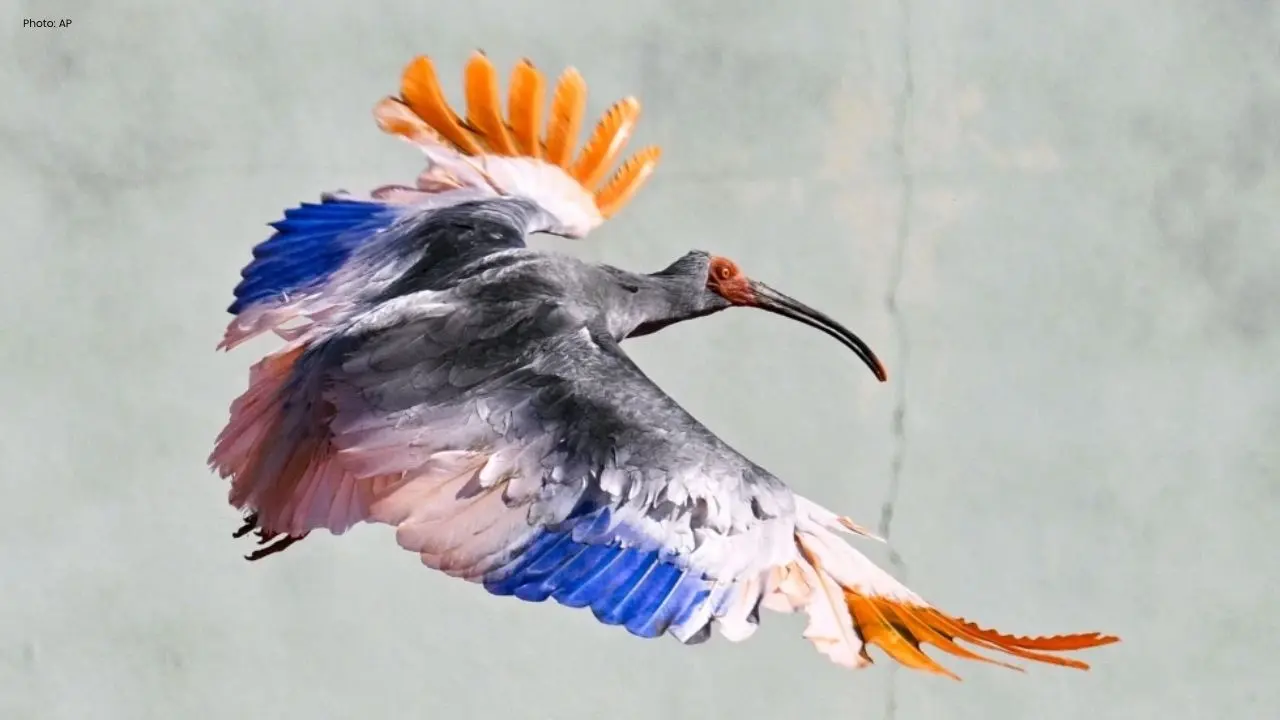
In a milestone for wildlife conservation, Japan has successfully released eight endangered crested ibises into the wild in Hakui City. This event marks a pivotal moment in efforts to revive a species that had been extinct in the country for decades. The release took place in the Noto region, once a common habitat for these rare birds before their disappearance.
The crested ibis, revered in local culture as "Toki,", is one of East Asia's most iconic birds, known for its beautiful white plumage, orange-pink wing hues, and unique red eye markings. It has significant cultural and ecological importance in Japan.
The ceremony attracted numerous residents, conservationists, and dignitaries, including Crown Prince Akishino and Princess Kiko. As the birds emerged from their custom wood cages and took flight, it represented a hopeful moment for their successful repopulation in their natural environment.
During the twentieth century, the crested ibis population plummeted due to overhunting, habitat loss, and environmental issues. By the 1970s, they were extirpated from Honshu, and the last native ibis was recorded dead on Sado Island in 2003.
The conservation turnaround has been aided by a collaboration with China. In 1999, a couple of crested ibises gifted from China successfully bred, kickstarting a program aimed at restoring the species. Today, the wild population on Sado Island is approximated at about 500 individuals.
The birds released were nurtured at a conservation center on Sado Island in Niigata Prefecture. Officials plan to introduce ten more birds in the future to further boost the population and extend their habitat.
This event holds particular importance for the Noto region, which is still recovering from a severe earthquake in 2024. The return of the beloved Toki is hoped to symbolize renewal, resilience, and the balance between humanity and nature.